What Is Spinal Muscular Atrophy (SMA)?
Spinal muscular atrophy (SMA) is a neurodegenerative disorder caused by mutations in SMN1 (encoding survival motor neuron protein (SMN)). It is an autosomal recessive genetic disease. Mutations in SMN1 lead to the progressive loss of motor neurons in the anterior horn of the spinal cord, resulting in muscle weakness and atrophy. The incidence of Spinal Muscular Atrophy (SMA) is approximately 1 in 10,000 to 1 in 20,000 live births, with a carrier frequency of 1 in 40 to 1 in 70 in the general population. Because of its severity in infants, SMA is often referred to as “the leading genetic killer of infants.”
SMA was once considered an incurable disease. However, since the beginning of the 21st century, advancements in SMA diagnosis and treatment have changed its outlook. The discovery of SMN1 and SMN2 genes, along with the development of FDA-approved SMA therapies, now offers patients real hope.
SMA Symptoms and Classification
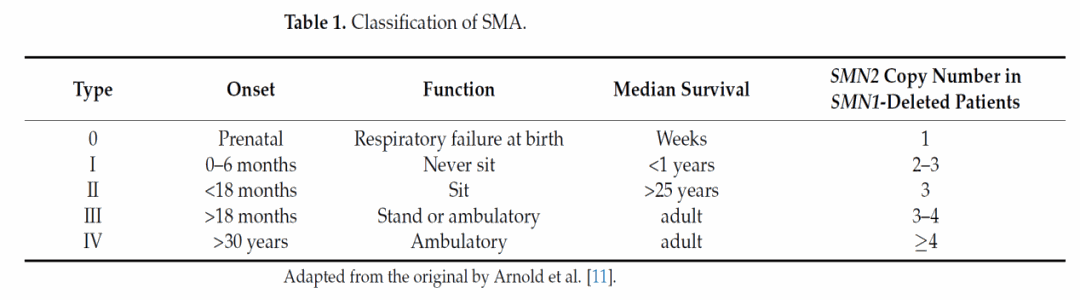
The clinical presentation of SMA varies according to the age of onset and disease severity. SMA is classified into five main types (Type 0–IV):
- Type 0 – The most severe form, with onset before birth and rapid progression to severe respiratory failure after delivery.
- Type I (Werdnig–Hoffmann disease) – Severe type, with onset before 6 months of age; affected infants are unable to sit independently.
- Type II (Dubowitz disease) – Intermediate type, with onset before 18 months of age; patients can sit without support but cannot stand or walk independently.
- Type III (Kugelberg–Welander disease) – Mild type, with onset after 18 months of age; patients can stand and walk independently.
- Type IV – The mildest form, with onset after 30 years of age.
Genetics of SMA: SMN1 and SMN2 Genes
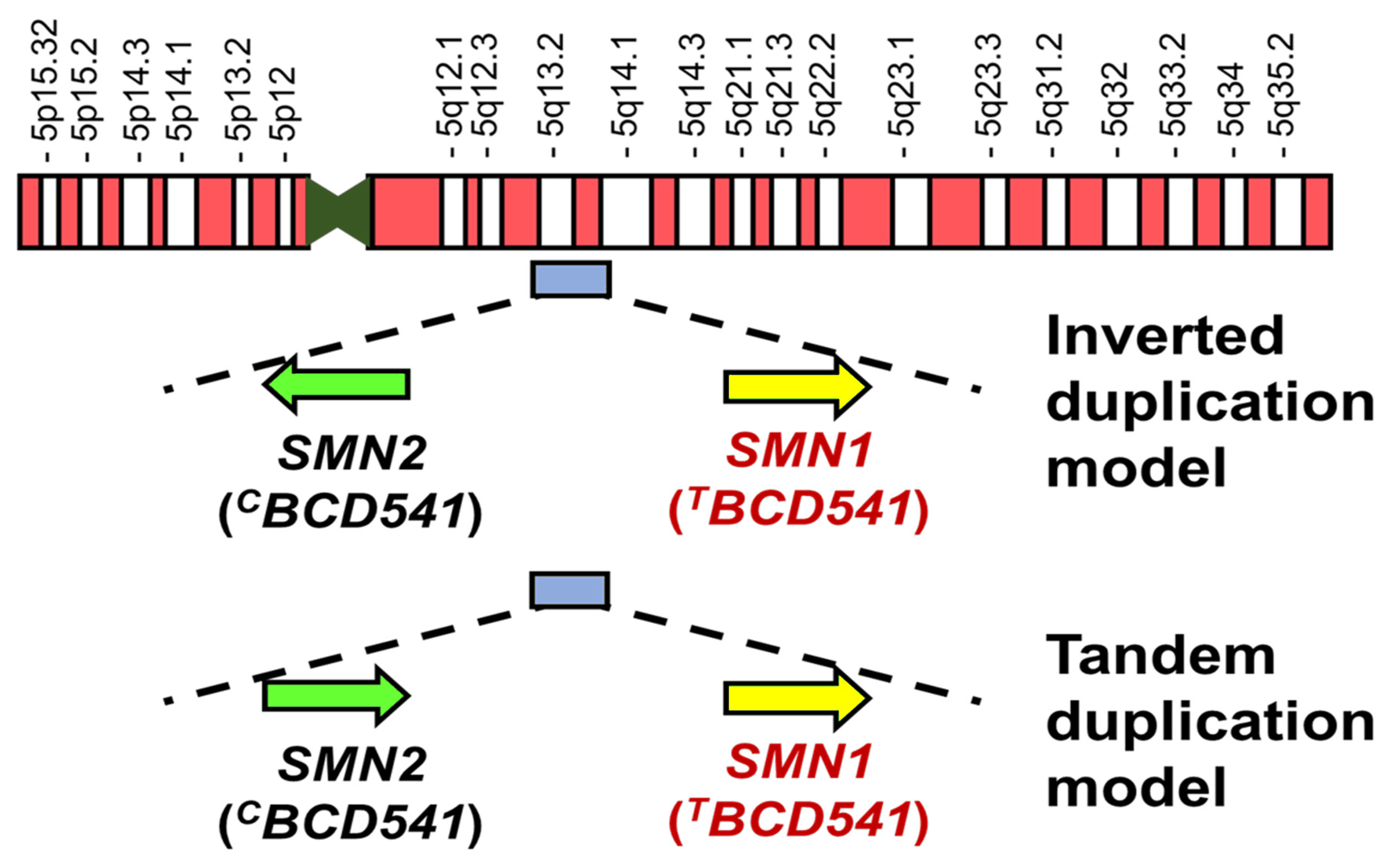
In 1990, Gilliam et al. in the United States and Melki et al. in France independently mapped the genetic locus of SMA to the same region on chromosome 5q13. In 1995, two SMA-related genes, SMN1 and SMN2, were identified in 5q13 region. These two genes were paralogs. The SMN1 gene, located in the telomeric side, is the gene responsible for SMA; its loss or defect causes SMA with different phenotypes. The SMN2 gene, located in the centromeric side, is a modifier gene for SMA; its copy number is associated with the severity of the disease. SMN1 and SMN2 were originally reported to exist in an inverted duplication; however, recently, a tandem duplication model has been presented.
Historical Stages of SMA Research
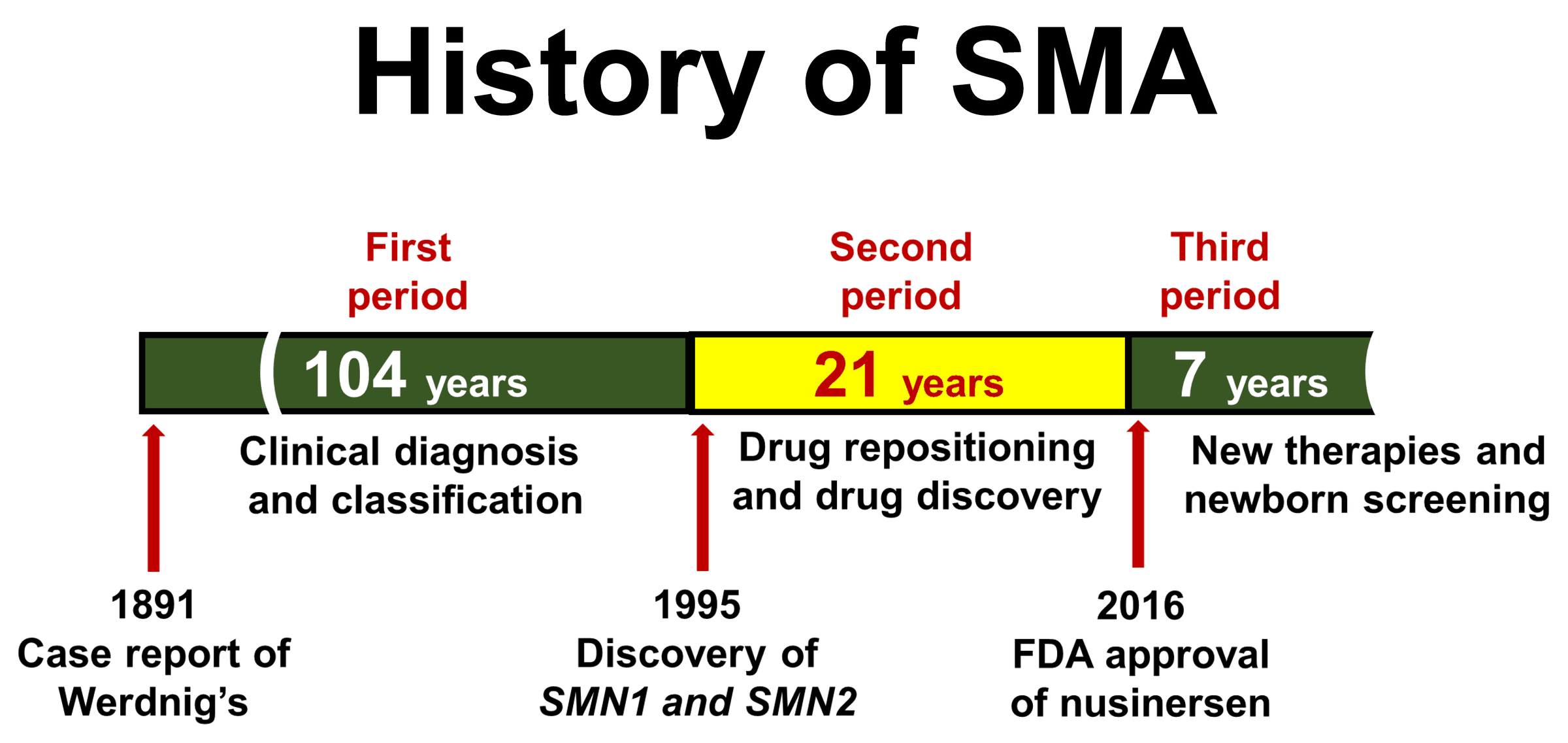
Stage I: Clinical Diagnosis and Classification (104 years)
Stage II: Discovery of Causative Genes and Clinical Drug Research (21 years)
Stage III: Development of New Therapies and Implementation of Newborn Screening (7 years)
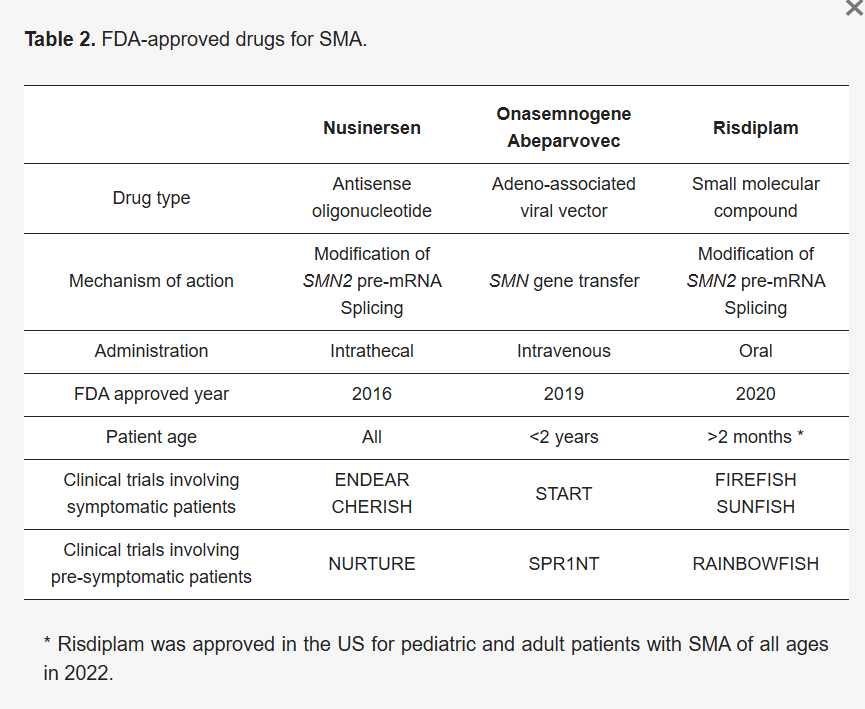
FDA-Approved Drugs for SMA
Historically, no drugs were effective enough to stop the progression of SMA. Thus, SMA was recognized as an incurable disease. However, since the appearance of nusinersen at the beginning of the 21st century, the medical situation around patients with SMA has completely changed.
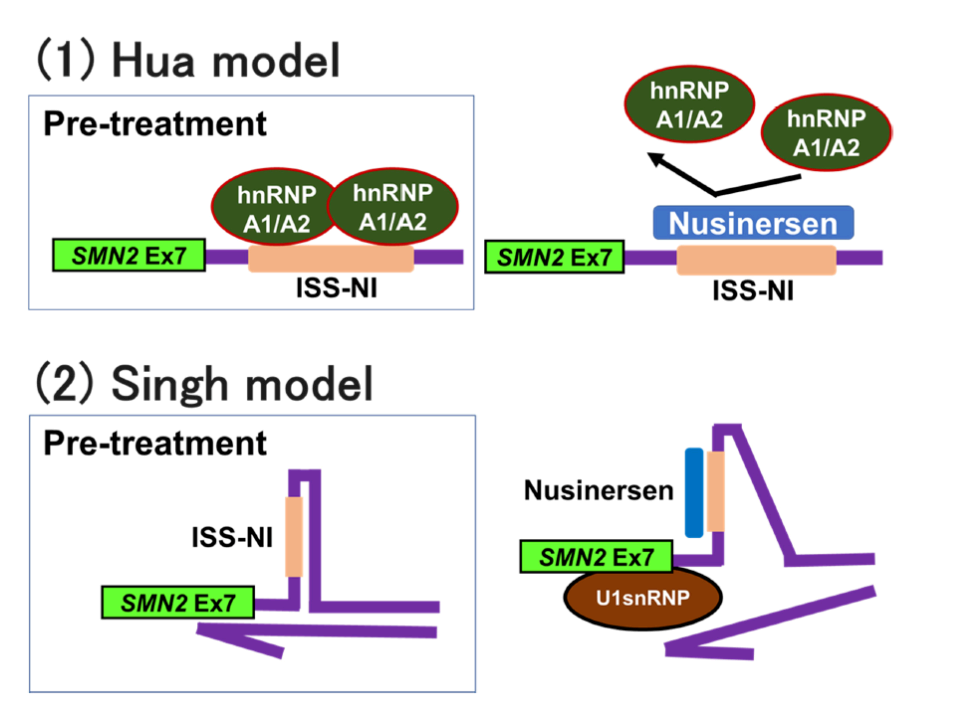
- Mechanism of Action of Nusinersen
Nusinersen binds to ISS-N1 (or masks ISS-N1) and inhibits the binding of other splicing factors, stimulating the inclusion of exon 7 into mRNA. Hua et al. proposed that the inhibitory effect of ISS-N1 is due to the interaction of ISS-N1 with hnRNP A1/A2.
However, Singh et al. suggested that ISS-N1 may be a composite landing site for several splicing factors. They did not believe that hnRNP A1/A2 was the sole regulator associated with the negative effect of ISS-N1. Instead, they proposed a different mechanism, alteration of the secondary structure of pre-mRNA, by which the ISS-N1-targeting ASO promotes the recruitment of U1 snRNP at the 5’-splice site of exon 7.
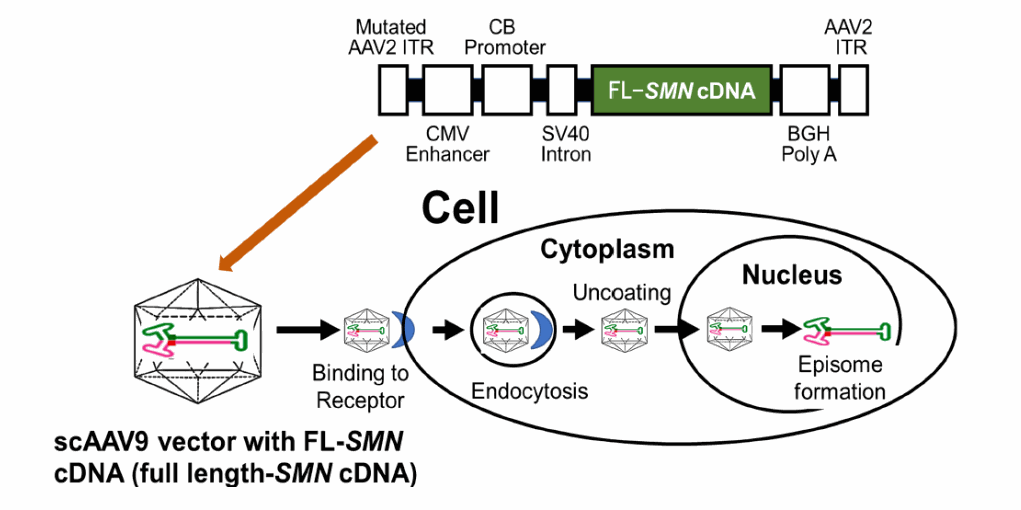
- Mechanism of Action of Onasemnogene Abeparvovec
Onasemnogene abeparvovec is an scAAV9 vector-based drug crossing the blood–brain barrier. A vector containing SMN gene cDNA is used to deliver a functional SMN1 gene into the patient’s body, thereby restoring the function of motor neurons and other affected cells.
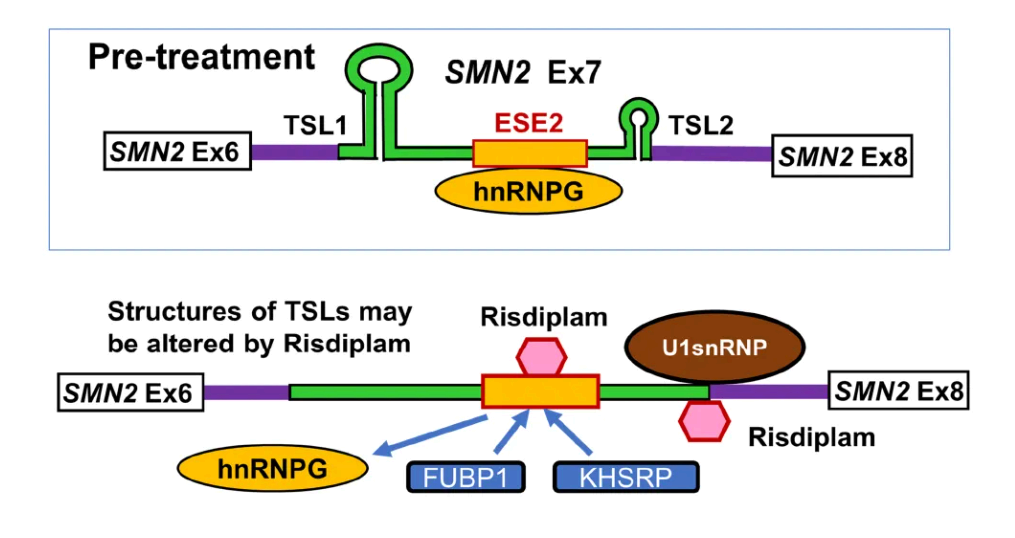
- Mechanism of Action of Risdiplam
Risdiplam is distributed in central and peripheral cells and acts in the nucleus. It regulates the alternative splicing of SMN2. However, there is no consensus on the mechanism by which risdiplam promotes SMN2 exon 7 inclusion with high specificity.
Previous studies have suggested that it may act on two regions of SMN2 exon 7 for highly selective pre-mRNA splicing. In SMN2 pre-mRNA, exon 7 and its flanking regions have two stem-loop structures (terminal stem-loop 1 (TSL1) near 3′-splice site and terminal stem-loop 2 (TSL2) near 5’-splice site) and they are closely related to alternative splicing of SMN2 exon 7. Risdiplam may influence these stem-loop structures.
The first region is the 5’-splice site of exon 7 of the pre-mRNA transcribed from the SMN2 gene. A risdiplam analogue may bind to the stem-loop structure, TSL2, at the end of SMN2 exon 7 and stabilize the duplex of the 5’-splice site RNA sequence and the U1 snRNP RNA sequence and promote splicing initiation.
The second region is the internal structure around exonic splicing enhancer 2 (ESE2) at the middle of SMN2 exon 7. A risdiplam analogue binds to the ESE2 region, which alters the stem-loop structure, TSL1, in the first half of SMN2 exon 7. Risdiplam analogues bound to the ESE2 region inhibit hnRNPG protein binding while promoting the binding of two splicing regulatory proteins: far upstream element binding protein 1 (FUBP1) and its homolog, KH-type splicing regulatory protein (KHSRP). TSL1 includes a cis-acting element that suppresses SMN2 exon 7 splicing, and FUBP1 and KHSRP proteins are trans-acting factors that promote SMN2 exon 7 splicing.
Necessity of SMA Newborn Screening
- Detection of Pre-Symptomatic SMA
With the introduction of effective therapies with new drugs (nusinersen, onasemnogene abeparvovec, and risdiplam) into the clinical setting, the timing and accuracy of SMA diagnosis have become much more important than ever before. If the treatment cannot be initiated at the proper time because of delayed diagnosis or misdiagnosis, the therapeutic efficacy may be markedly reduced.
Clinical trials of nusinersen and onasemnogene in pre-symptomatic patients showed that nearly all patients achieved good motor function. Patients enrolled in these clinical trials were those who, without treatment, would be expected to exhibit symptoms of SMA type I or II. If treated before symptoms develop, even infants predicted to have SMA type I (genetically diagnosed but asymptomatic) would be able to sit without support. Additionally, if treated before symptoms develop, even infants predicted to have SMA type II (genetically diagnosed but asymptomatic) would be able to walk independently .
Following the success of clinical trials, population-based newborn screening programs for SMA (more precisely, SMN1-deleted SMA) have been increasingly implemented worldwide.
Establishing a neonatal screening system for SMA is essential to initiate treatment in the pre-symptomatic stage and to maximize the therapeutic efficacy.
It should be noted here that neonatal screening for SMA detects homozygous deletion of the SMN1 gene, not intragenic SMN1 mutations.
- Prevention of Delayed Diagnosis of SMA
It has long been noted that the diagnosis of SMA tends to be delayed. Before SMA newborn screening started, the diagnosis of SMA type I was often delayed until the sixth month of life. SMA types II and III were diagnosed at 20 and 50 months of age, respectively.
However, newborn screening would prevent such delays in diagnosis and allow patients to receive treatment as early as possible. Both pre-symptomatic and symptomatic SMA can now be detected by newborn screening and treated within 3 to 4 weeks after birth.
In addition, SMA newborn screening is very useful for patients with SMA who have comorbidities. Differential diagnosis for hypotonia is difficult, particularly in the neonatal period. Development of respiratory or other problems in an infant with hypotonia can hamper the suspicion of SMA. In such cases, SMA cannot be diagnosed without newborn screening, and its diagnosis will be delayed by several weeks or months because of the time needed for clinical referrals and investigations.
Frequently Asked Questions (FAQ)
Q1. What causes spinal muscular atrophy (SMA)?
SMA is caused by mutations or deletions in the SMN1 gene on chromosome 5q13.
Q2. How is SMA diagnosed?
Through genetic testing to detect SMN1 gene deletions and SMN2 copy number analysis.
Q3. What are the latest SMA treatments?
Spinraza (nusinersen), Zolgensma (onasemnogene abeparvovec), and Evrysdi (risdiplam) are the main FDA-approved SMA drugs.
Q4. Why is SMA newborn screening important?
Early detection enables pre-symptomatic treatment, greatly improving patient outcomes.
Reference:
Spinal Muscular Atrophy: The Past, Present, and Future of Diagnosis and Treatment. Int J Mol Sci. 2023 Jul 26;24(15):11939.
https://www.mdpi.com/1422-0067/24/15/11939
