Understanding the role of HPV DNA genotyping in risk stratification, follow-up capacity assessment and risk-based management for cervical cancer screening.
Cervical cancer remains the fourth most common cancer among women worldwide and continues to pose a significant public health challenge. To further advance the global strategy for cervical cancer elimination, the World Health Organization (WHO) released the 2026 guideline, WHO Guideline for Screening and Treatment of Cervical Pre-Cancer Lesions for Cervical Cancer Prevention: Use of Human Papillomavirus (HPV) DNA Genotyping.
The update focuses on the role of HPV DNA genotyping in cervical cancer screening and provides clearer guidance on management pathways associated with different genotyping strategies across varying follow-up capacity settings. Importantly, the 2026 guideline does not change the recommendation that HPV DNA testing should be used as the preferred primary screening method for cervical cancer. Instead, it focuses on a question of growing clinical importance:
How can HPV-positive women be more effectively triaged and managed based on their risk profiles?
Two Key Objectives of the Guideline
The guideline has two primary objectives. First, it aims to provide evidence-based recommendations on the use of HPV DNA testing within cervical cancer screening strategies based on different levels of genotyping. Second, it supports countries and national screening programs in selecting screening and treatment strategies that are appropriate for their specific settings, with the aim of preventing cervical cancer among women in the general population.
Understanding HPV DNA Genotyping
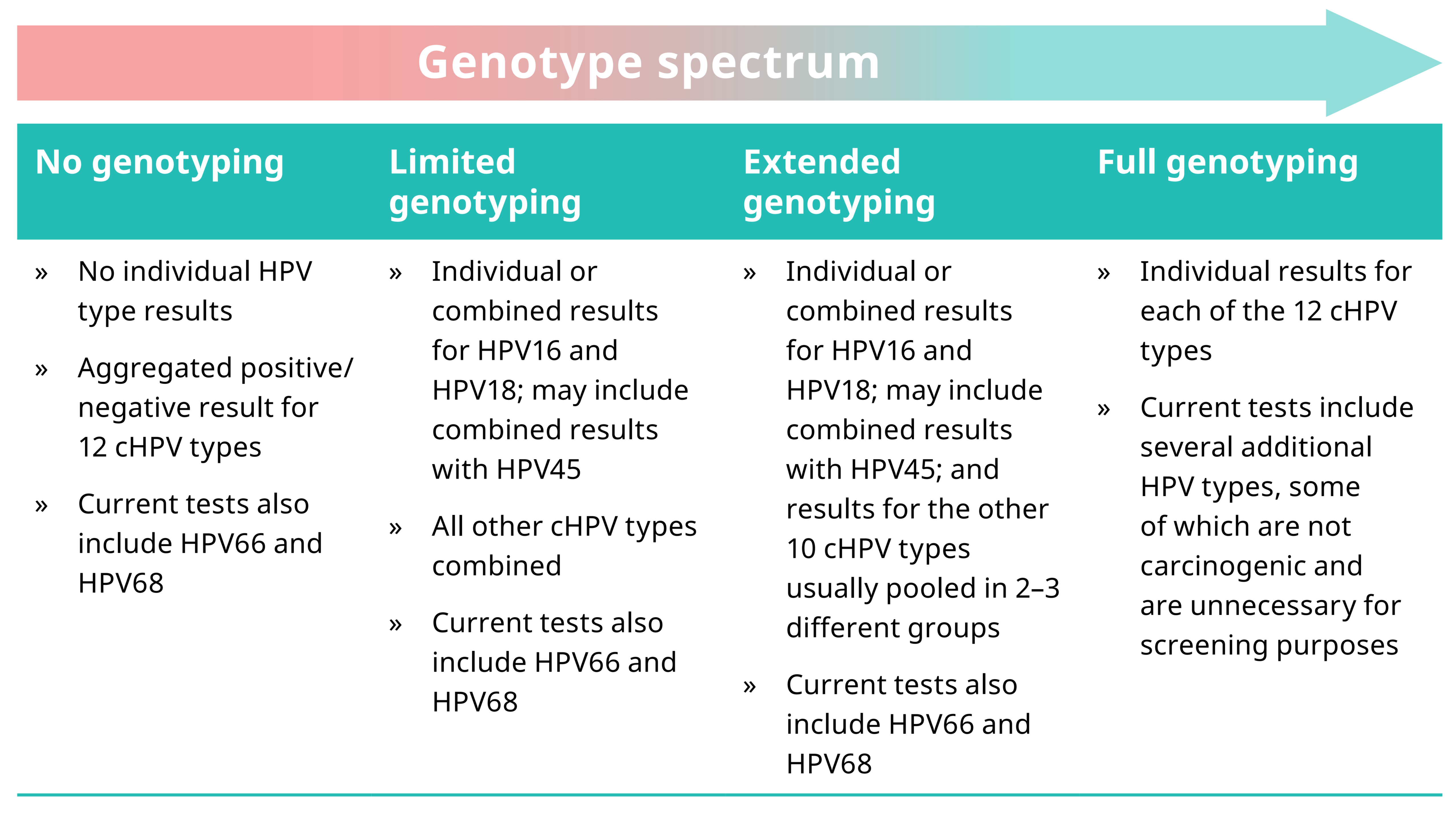
The guideline clearly defines the role of HPV DNA testing within cervical cancer screening strategies based on different levels of genotyping. Current HPV tests can identify carcinogenic HPV types either individually or in grouped categories.
Within the guideline, the terms limited genotyping and extended genotyping are used to describe HPV tests capable of identifying HPV16 and HPV18/45, as well as other carcinogenic HPV types at different levels of resolution.
Risk Stratification of Carcinogenic HPV Genotypes
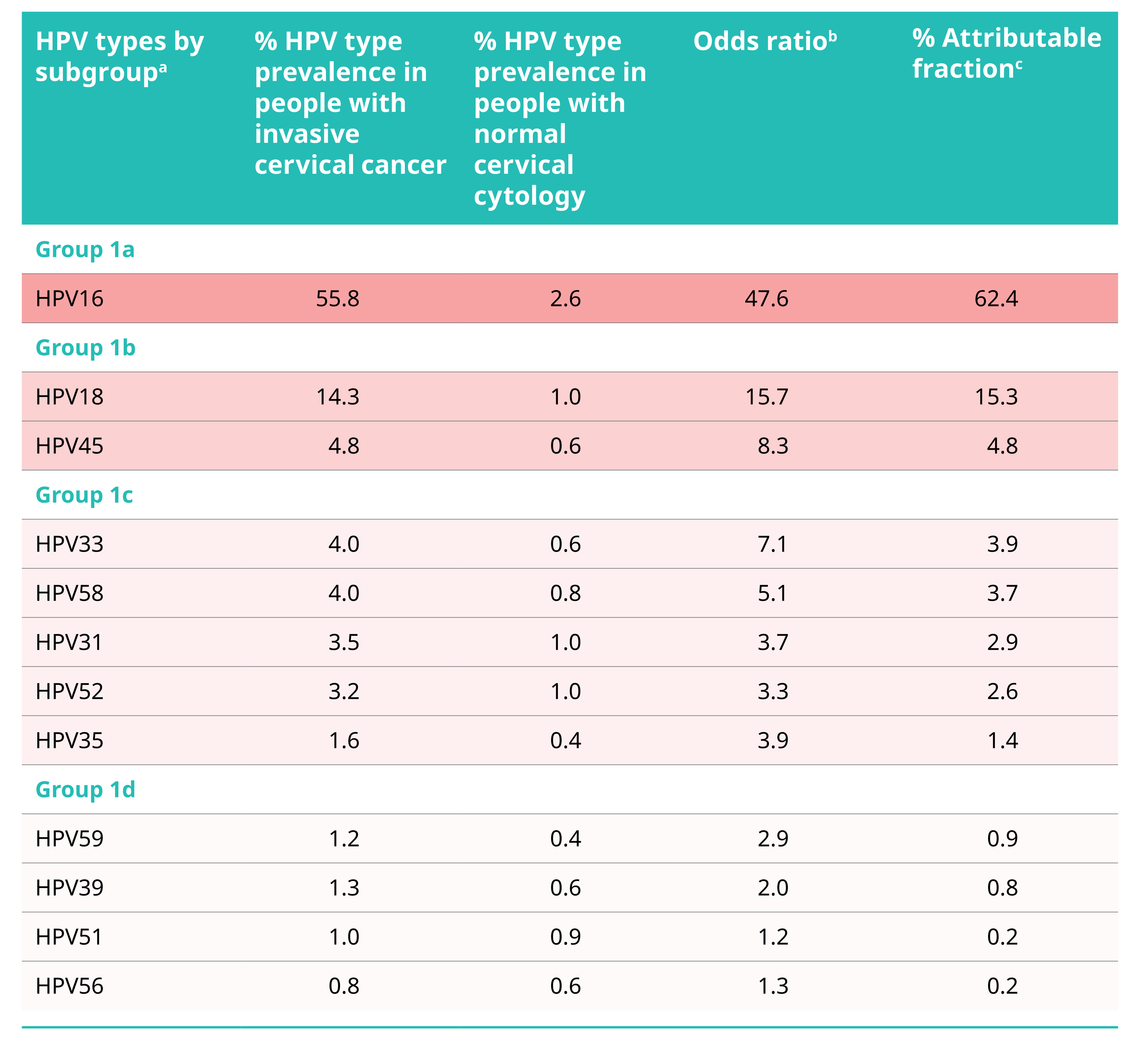
WHO stratifies 12 carcinogenic HPV genotypes into different risk groups, including HPV16, HPV18, HPV45, HPV31, HPV33, HPV35, HPV52, HPV58, HPV51, HPV59, HPV56 and HPV39. Different carcinogenic HPV genotypes are associated with varying levels of cervical cancer risk. As a result, limited and extended genotyping can serve as molecular triage tools for risk-based management.
By identifying specific HPV genotypes or genotype groups, healthcare providers can stratify HPV-positive women according to their risk level and prioritize management for those at higher risk. This represents an important evolution in cervical cancer screening. HPV testing is no longer used solely to detect infection, but also to support risk stratification and more personalized patient management.
WHO-Recommended Clinical Pathways
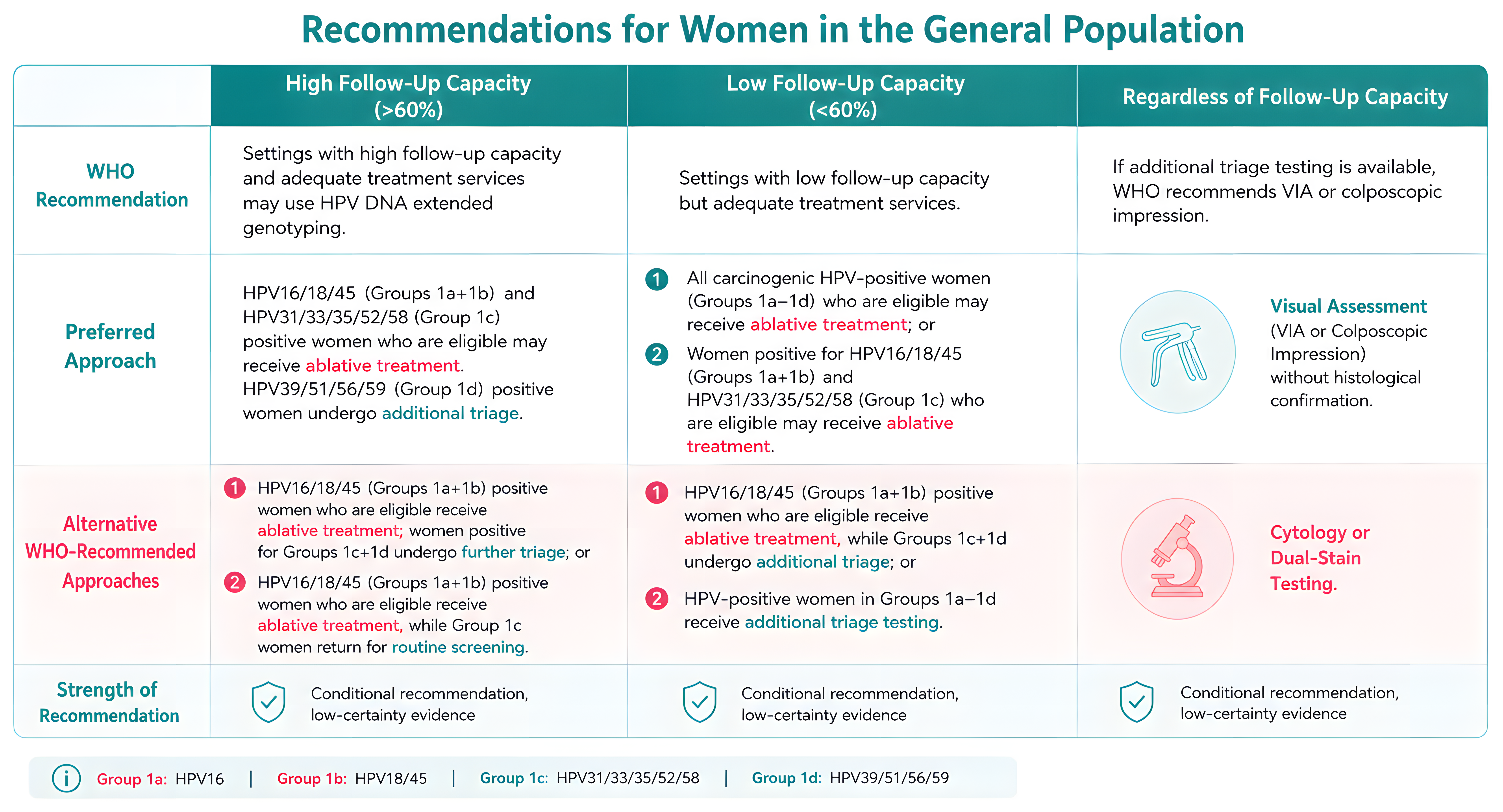
Recommendations for Women in the General Population
Follow-up capacity: The choice of screening strategy should take into account the follow-up capacity of the screening program. WHO defines high follow-up capacity as a setting in which more than 60% of women successfully complete each step across the continuum of screening, diagnosis, treatment and follow-up care. If completion rates fall below 60% at any stage of this pathway, the setting may be considered to have low follow-up capacity.
It is important to note that some of the evidence supporting these recommendations is based on modelling studies. Therefore, implementation should be adapted to local contexts, taking into account screening coverage, follow-up capacity and available treatment resources.
Recommendations for Women Living with HIV
The 2026 WHO update does not introduce new recommendations on the use of HPV DNA genotyping for women living with HIV. Management of this population should continue to follow the recommendations outlined in previous WHO cervical cancer screening guidelines.
Looking Ahead
The 2026 WHO update represents more than a refinement of screening strategies—it reflects an evolution in the approach to cervical cancer prevention and management. The role of HPV testing is expanding from infection detection to risk stratification and risk-based management, providing countries with new evidence to optimize screening pathways according to their healthcare resources and follow-up capacity.
Ultimately, these advances are expected to support more effective cervical cancer prevention and contribute to the WHO goal of eliminating cervical cancer as a public health problem.
