As International Men’s Health Week 2026 draws attention to men’s health awareness, preventive care, and early health-seeking behaviors, it is also an opportunity to address a critical but often overlooked area in global public health.
Historically, epidemiological surveillance and prophylactic interventions surrounding sexually transmitted infections (STIs)—particularly Human Papillomavirus (HPV)—have been overwhelmingly female-centric. This focus was primarily driven by the severe global morbidity and mortality associated with cervical cancer. However, contemporary epidemiological data and transmission-dynamic modeling have contributed to a shift in understanding. It is now recognized that men can play a critical role in HPV and STI transmission dynamics.
Understanding the prevalence, regional disparities, and clinical impacts of these infections in males is no longer just about gender equity. It is an important epidemiological consideration for the successful global elimination of cervical cancer, the containment of antimicrobial-resistant pathogens, and the broader control of STIs.
The Global Baseline of Male HPV Infection
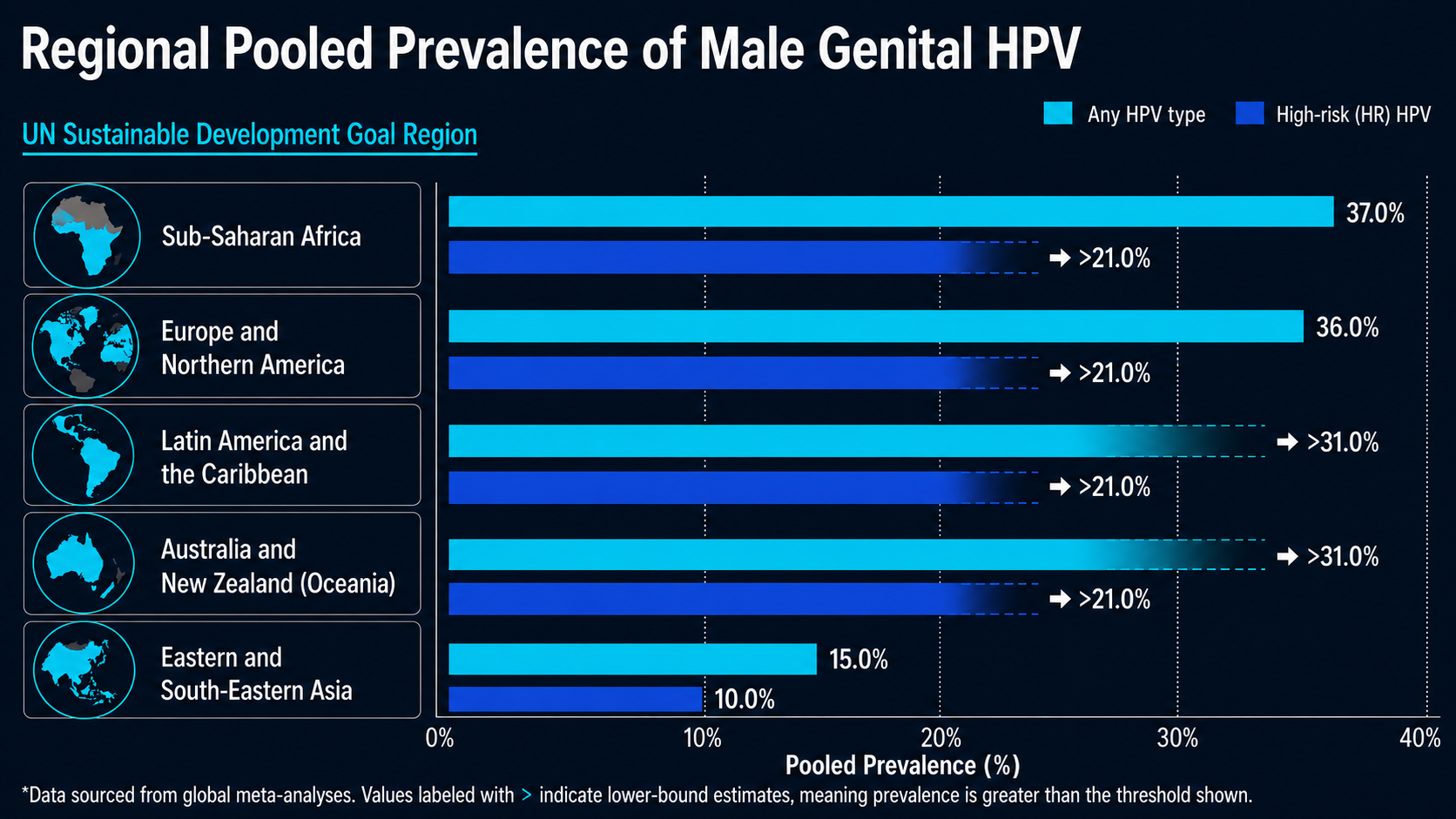
Recent systematic reviews and meta-analyses have established epidemiological baselines for male genital HPV prevalence worldwide. The data reveal a substantial infectious burden:
- Globally, almost one in three men over the age of 15 is infected with at least one genital HPV type, representing a pooled global prevalence of 31%.
- Approximately 21% of men are actively infected with one or more high-risk, oncogenic HPV types.
Unlike the typical female prevalence curve, which drops after age 30, the male prevalence curve remains remarkably stable across older age cohorts, making sexually active men a continuous, lifelong reservoir for HPV transmission. Genotypically, HPV-16 is the single most prevalent strain (5%), followed by HPV-6 (4%).
Regional Disparities in Viral Burden
The distribution of male HPV infection is highly heterogeneous across the globe, influenced by regional sexual networking behaviors, baseline immunological health, and localized prophylactic programs.
Anatomical Site-Specific Variations
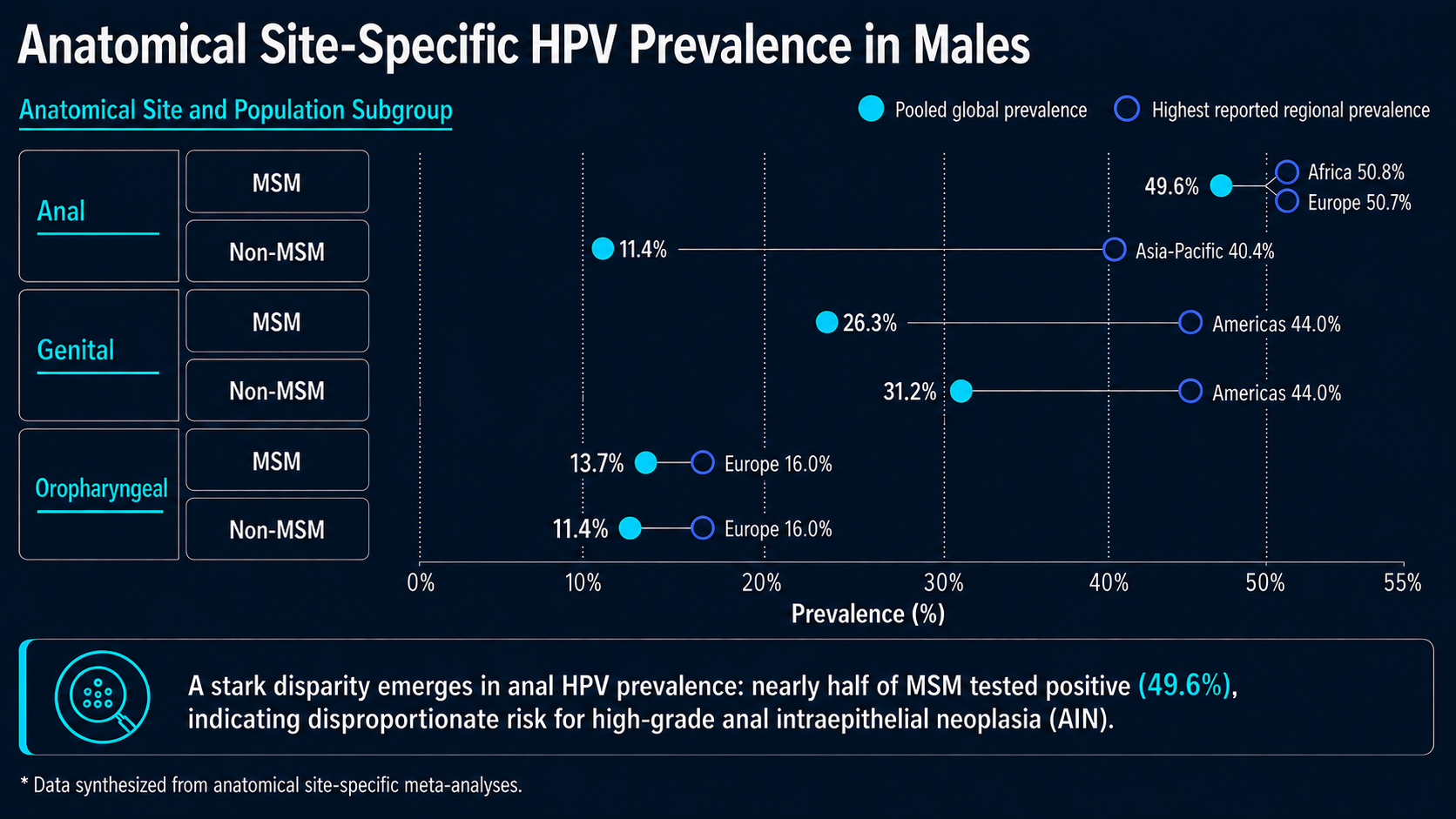
HPV exhibits different physiological affinities for various epithelial surfaces. The prevalence at these anatomical sites varies significantly, particularly when stratifying the population by sexual behavior, including men who have sex with men (MSM) and non-MSM populations.
Clinical Impact and HPV-Associated Malignancies
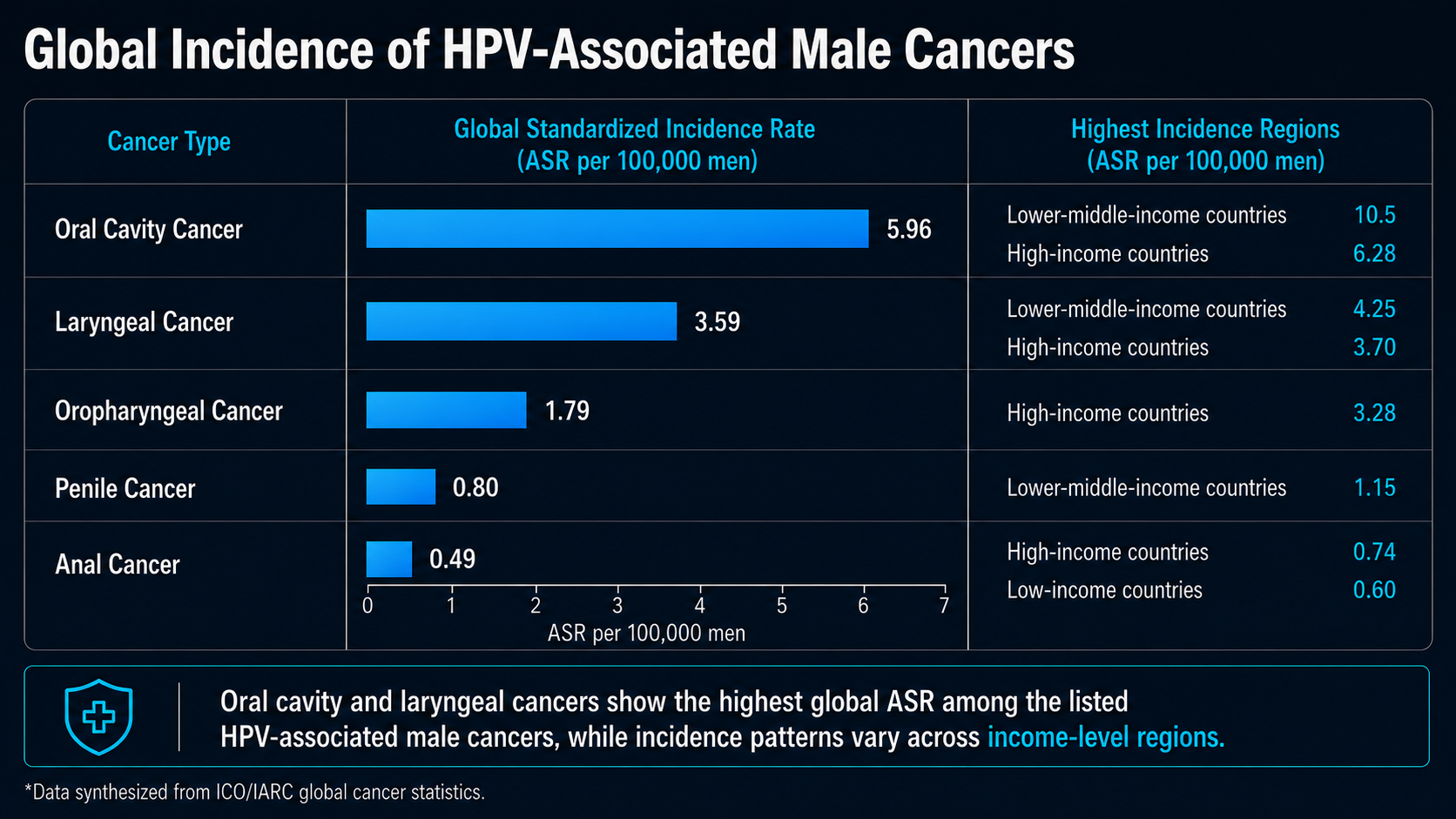
Persistent high-risk HPV infection is associated with several HPV-related malignancies in males. In 2018, an estimated 69,400 incident cancer cases in men globally were directly attributable to HPV infections.
The Health Economics of Male Prevention Strategies
Evaluating the cost-effectiveness of male HPV vaccination—specifically Gender-Neutral Vaccination (GNV)—requires comprehensive economic modeling. When early models restricted parameters solely to preventing female cervical cancer, vaccinating boys appeared economically unattractive. However, modern models that incorporate male anogenital cancers and warts demonstrate substantial potential savings.
- China: A dynamic model analyzing 14-year-old boys vaccinated with the 9-valent vaccine coupled with HPV testing yielded a highly favorable Incremental Cost-Effectiveness Ratio (ICER) of ¥139.58 RMB per QALY.
- Norway: Transitioning to a gender-neutral 9vHPV strategy is projected to save between €62 and €68 million in averted oncological treatment costs.
Furthermore, herd immunity from HPV vaccination may support future optimization of cervical cancer screening strategies in some settings, although screening policies should be adapted based on local epidemiology, vaccination coverage, and public health guidelines.
The Broader Burden of Curable Male STIs
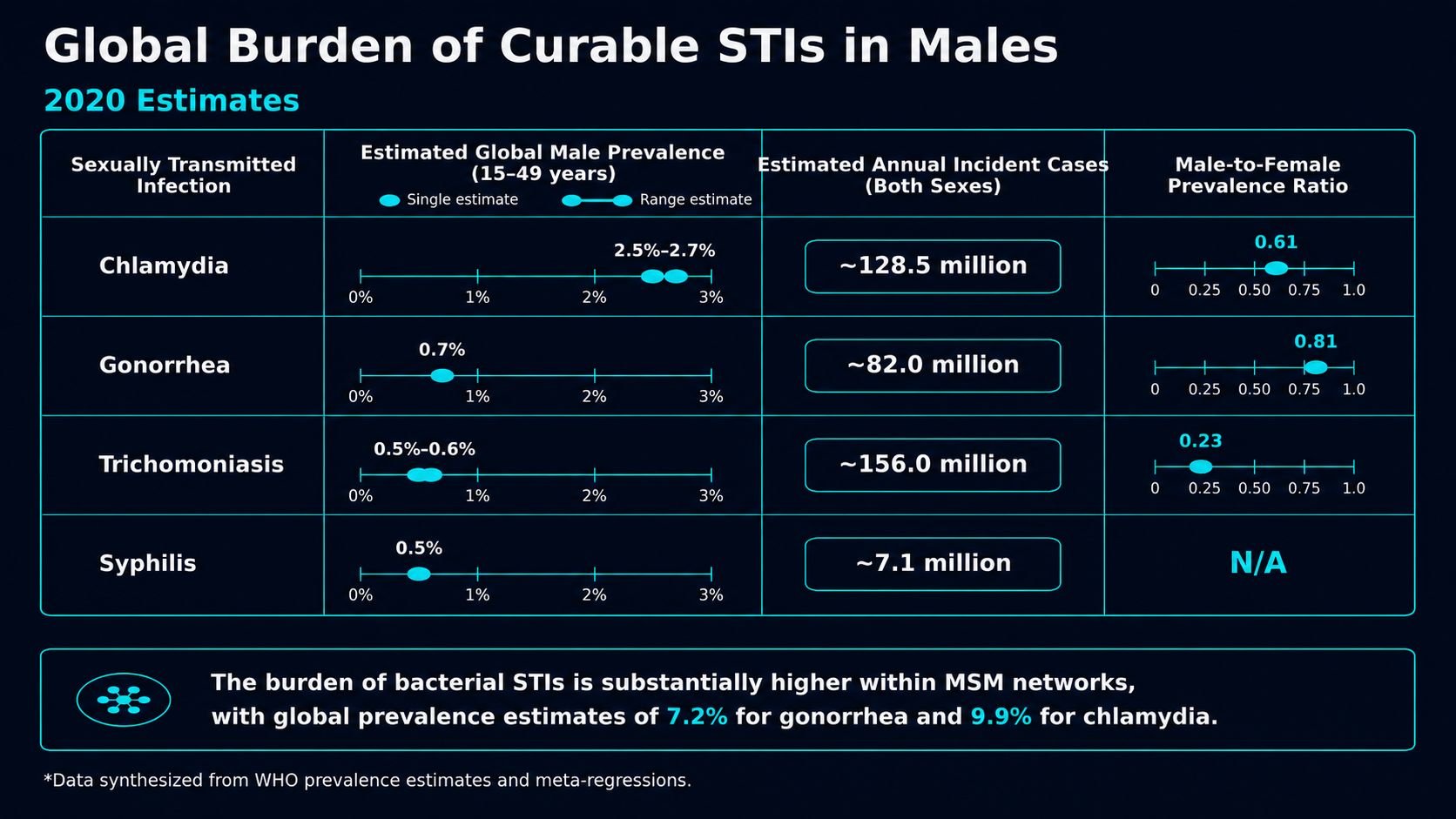
Beyond the viral burden of HPV, the global public health landscape is contending with a massive burden of curable bacterial and protozoan STIs. According to the World Health Organization (WHO), more than one million curable STIs are acquired every day among individuals aged 15 to 49 years.
Strategic Takeaways
The available epidemiological data highlight the importance of including men in HPV and STI prevention strategies. Male HPV and STI burden is not only relevant to men’s health, but also closely connected to broader public health goals, including STI control, antimicrobial resistance containment, and cervical cancer elimination efforts.
A more comprehensive approach to prevention should therefore consider both women and men. Gender-neutral strategies, supported by vaccination, health education, timely testing, and robust molecular diagnostic capacity, can help reduce transmission risks, improve disease awareness, and strengthen public health prevention systems.
As International Men’s Health Week 2026 draws attention to men’s health awareness and preventive care, male HPV and STI epidemiology deserves greater visibility in global health discussions. Addressing these infections through evidence-based prevention and testing strategies can contribute to better health outcomes for men and support broader efforts to control HPV and other sexually transmitted infections worldwide.
References
Bruni, L., et al. (2023). Global and regional estimates of genital human papillomavirus prevalence among men: A systematic review and meta-analysis. The Lancet Global Health, 11(9), e1345–e1362.
Dall, C. (2025, February 11). Sexually transmitted infections continue to rise in Europe. Center for Infectious Disease Research and Policy, University of Minnesota.
Diakite, I., et al. (2023). Public health impact and cost-effectiveness of switching from bivalent to nonavalent vaccine for human papillomavirus in Norway: Incorporating the full health impact of all HPV-related diseases. Journal of Medical Economics, 26(1), 1085–1098.
Naber, S. K., et al. (2016). Cervical cancer screening in partly HPV vaccinated cohorts: A cost-effectiveness analysis. PLOS ONE, 11(1), e0145548.
Wang, D., et al. (2026). Economic evaluation of 22 HPV vaccination strategies to minimize the risk of penile, anal, and oropharyngeal cancers in Chinese males: A Markov model analysis. Human Vaccines & Immunotherapeutics, 22(1), 2646398.
World Health Organization. (2025, September 10). Sexually transmitted infections (STIs).
