ADLM 2026 brought together scientific sessions, laboratory professionals, and a large clinical laboratory expo spanning automation, mass spectrometry, point-of-care testing, immunology, microbiology, and other disciplines. Viewed as an industry snapshot, the meeting offers a useful lens on how laboratory medicine is evolving.
Across laboratory medicine, the priorities remain consistent: accurate and clinically meaningful results, lower pre- and post-analytical risk, shorter turnaround time (TAT), patient safety, and sustainable laboratory operations. What is changing is the combination of automation, digital tools, analytical sensitivity, and care settings used to pursue those goals.
This article uses illustrative clinical contexts to explain three broad industry shifts: increasingly integrated core laboratories, more precise biological characterization, and diagnostic testing moving closer to the patient.
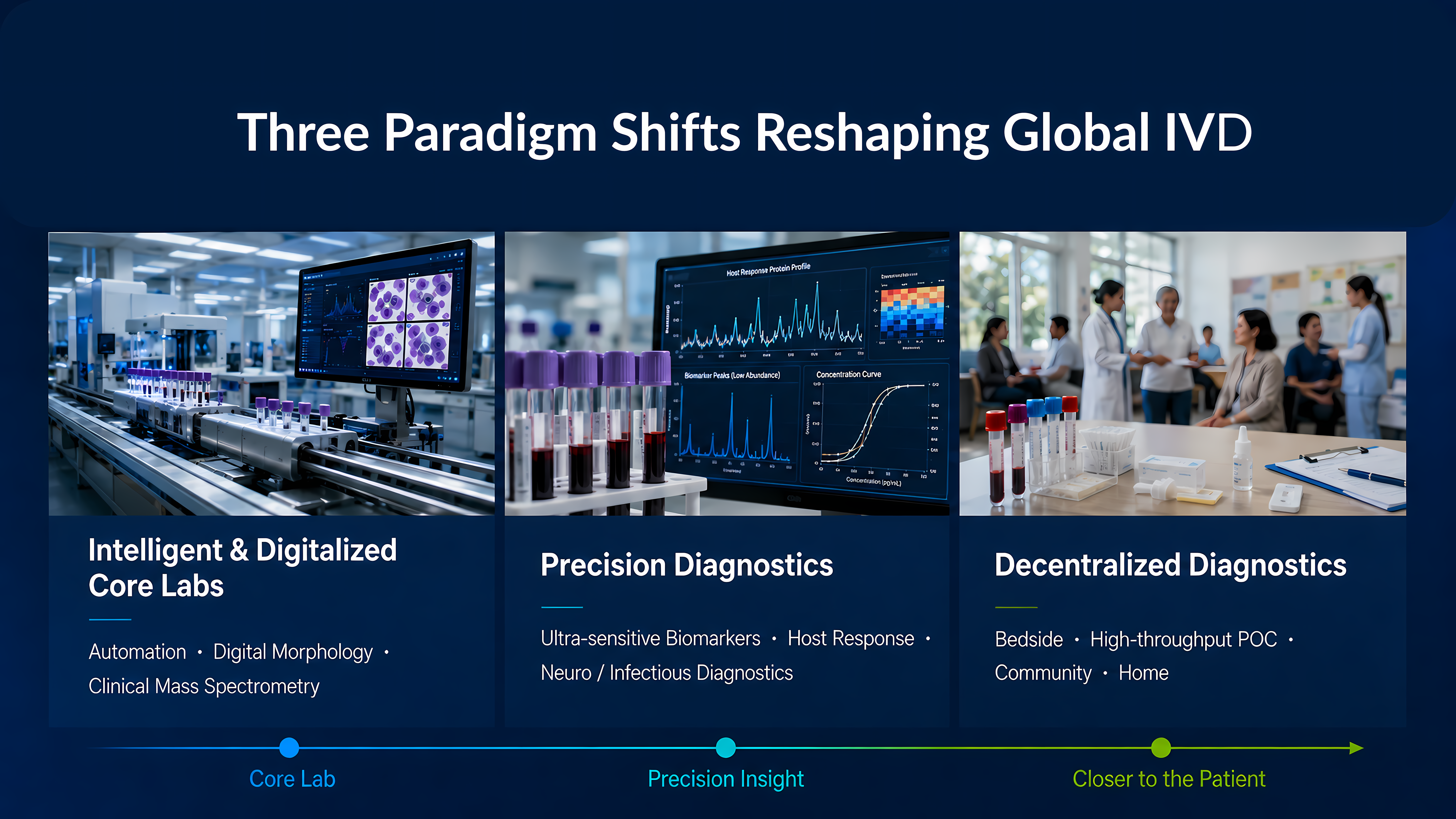
Figure 1. Three Paradigm Shifts Reshaping Global IVD. Conceptual overview of intelligent and digitalized core laboratories, precision diagnostics, and decentralized testing. Illustrative industry-trend graphic; not a product-specific performance claim.
Trend 1: From Fragmented Testing to Intelligent Core Labs
Illustrative Scenario: Emergency Multidisciplinary Testing
In an emergency setting involving acute heart failure and renal insufficiency, a clinical team may require information from several laboratory disciplines, including blood gas analysis, cardiac biomarkers, urine sediment morphology, and therapeutic drug monitoring (TDM).
In a fragmented laboratory model, these testing needs may span separate chemistry, immunoassay, hematology, morphology, and mass spectrometry workflows. Multiple handoffs, manual sample preparation, and separate review steps can increase operational complexity and lengthen the time required to assemble a complete set of results.
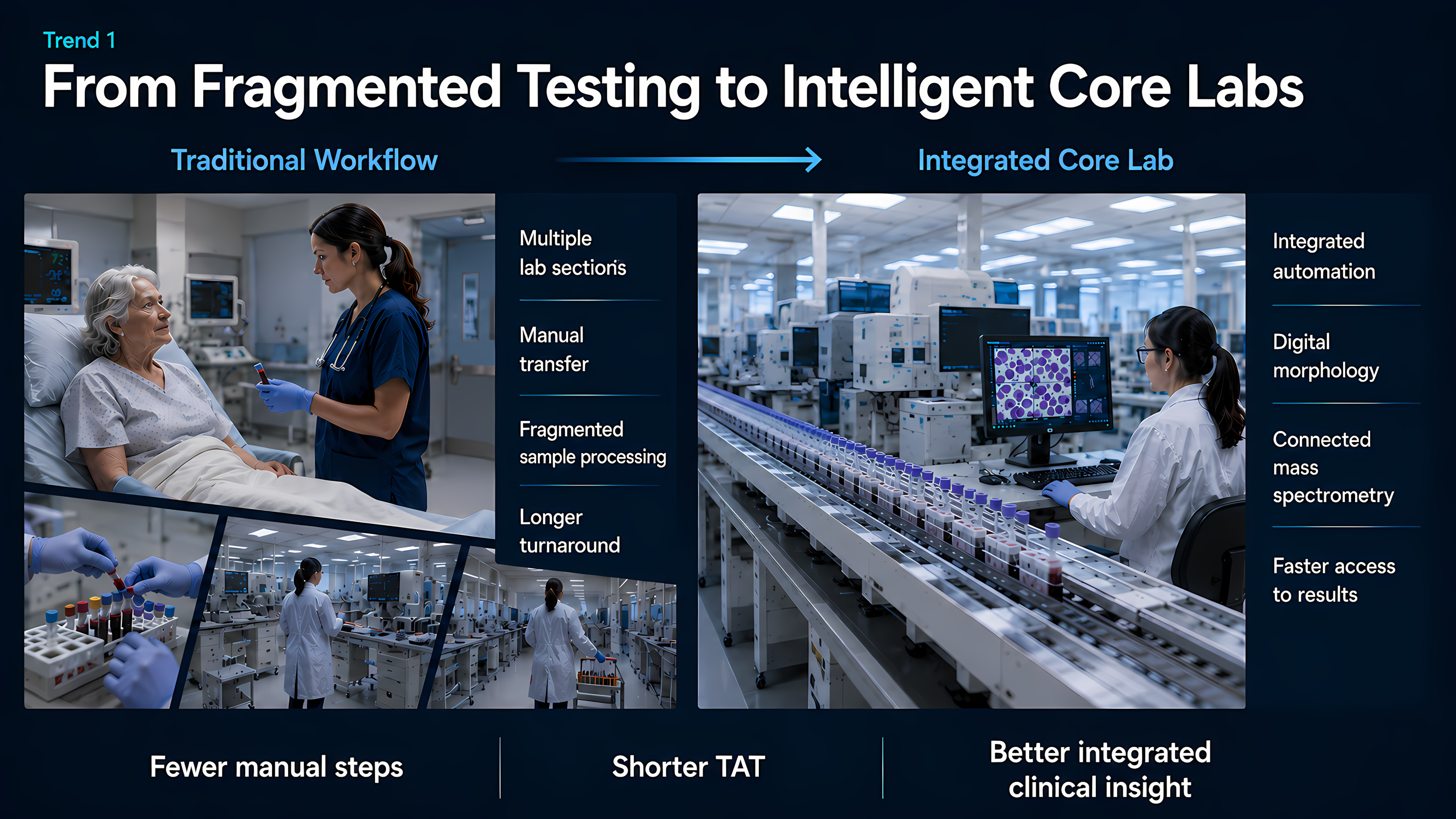
Figure 2. Trend 1 — From Fragmented Testing to Intelligent Core Labs. Conceptual comparison of fragmented multi-department workflows and increasingly integrated core-laboratory models. Illustrative industry-trend graphic; not a product-specific performance claim.
Technical Evolution & Workflow Logic
This illustrative scenario highlights why laboratories continue to prioritize lower pre-analytical risk, shorter TAT, workflow consistency, and more efficient use of skilled staff. Several technology directions are contributing to this shift:
- Automated integration of clinical mass spectrometry. Online sample-preparation modules and greater connectivity between LC-MS/MS workflows and laboratory automation can reduce manual handoffs and support more standardized sample processing. Actual workflow design and turnaround time depend on the assay, platform, laboratory configuration, and local validation.
- AI-assisted digital morphology. Digital microscopy and computer-assisted image analysis are increasingly used to support review and classification in areas such as urinalysis and blood-cell morphology. These tools are intended to complement validated laboratory workflows and professional review rather than replace clinical interpretation.
- More integrated laboratory automation. Connected pre-analytical and analytical systems can consolidate steps such as sorting, centrifugation, decapping, routing, analysis, and archiving. The practical value is less about a single performance number and more about reducing avoidable manual handling, improving consistency, and creating a more connected workflow.
Taken together, these developments point toward a core laboratory that is increasingly integrated, digitally supported, and designed to make multidisciplinary results easier to access and manage.
Trend 2: From Generic Screening to Precision Diagnostics
Illustrative Scenarios: Early Neurodegenerative Evaluation & Acute Infection Assessment
In an early neurodegenerative evaluation scenario, conventional pathways may include cerebrospinal fluid (CSF) biomarker assessment or brain imaging in appropriate clinical contexts. Interest in blood-based biomarkers is growing because they may provide additional, less invasive biological information when used within validated clinical pathways.
In an acute infection assessment scenario, persistent fever and abnormal hematological findings may not immediately clarify the underlying cause, particularly when the clinical picture is incomplete. This uncertainty illustrates the potential role of diagnostic approaches that complement direct pathogen testing with additional biological context.
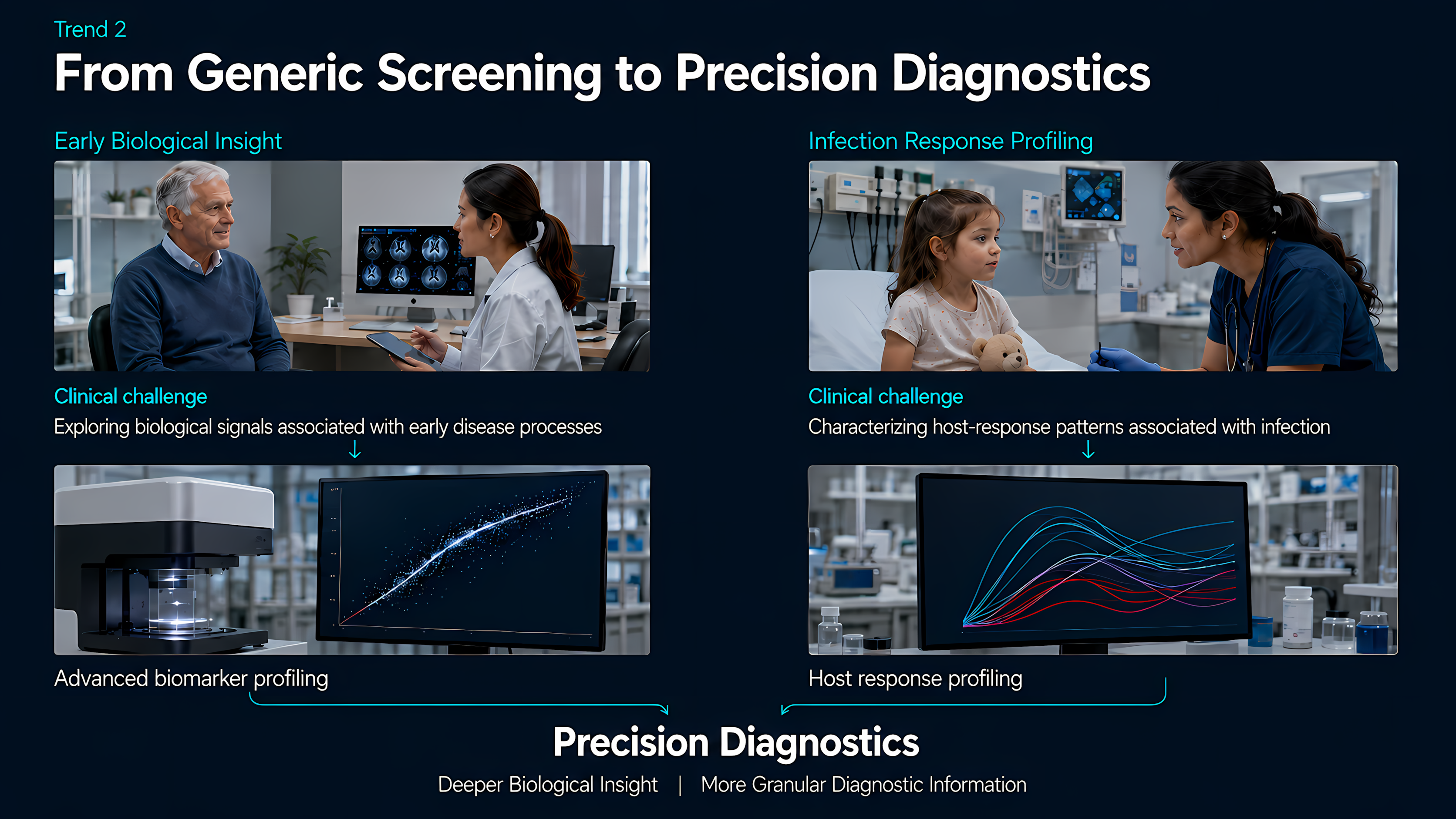
Figure 3. Trend 2 — From Generic Screening to Precision Diagnostics. Conceptual illustration of advanced biomarker profiling and host immune-response profiling as emerging precision-diagnostics approaches. Illustrative industry-trend graphic; not a product-specific performance claim.
Technical Evolution & Diagnostic Logic
- Ultra-sensitive low-abundance biomarker detection. Advances in assay chemistry, signal detection, and analytical platforms are expanding the ability to measure very low-abundance proteins. Blood-based biomarkers, including phosphorylated tau species, remain an active area of research and clinical evaluation in neurodegenerative disease. Interpretation depends on the specific assay, validated use, clinical context, and applicable guidance.
- Host immune-response profiling. Rather than relying only on direct pathogen detection, host-response approaches analyze patterns of immune proteins or other biological signals generated by the patient’s response to infection. When appropriately validated, these approaches may provide additional biological context alongside conventional testing.
The broader shift is from broad screening toward diagnostics that provide more specific biological context. The goal is not simply to generate more data, but to translate analytically robust signals into information that can be interpreted within validated clinical workflows.
Trend 3: From Centralized Testing to Diagnostics Closer to the Patient
Illustrative Scenario: Remote Post-Transplant Monitoring
For an organ-transplant recipient living far from a tertiary medical center, ongoing therapeutic drug monitoring (TDM) may be part of immunosuppressant management. When samples need to be transported to a distant central laboratory, the interval between sample collection and result availability may make timely follow-up more difficult.
At the same time, community healthcare settings may need to support infectious-disease screening while operating with fewer specialized laboratory resources. These pressures are contributing to a broader movement toward validated testing models that can operate closer to the point of care.
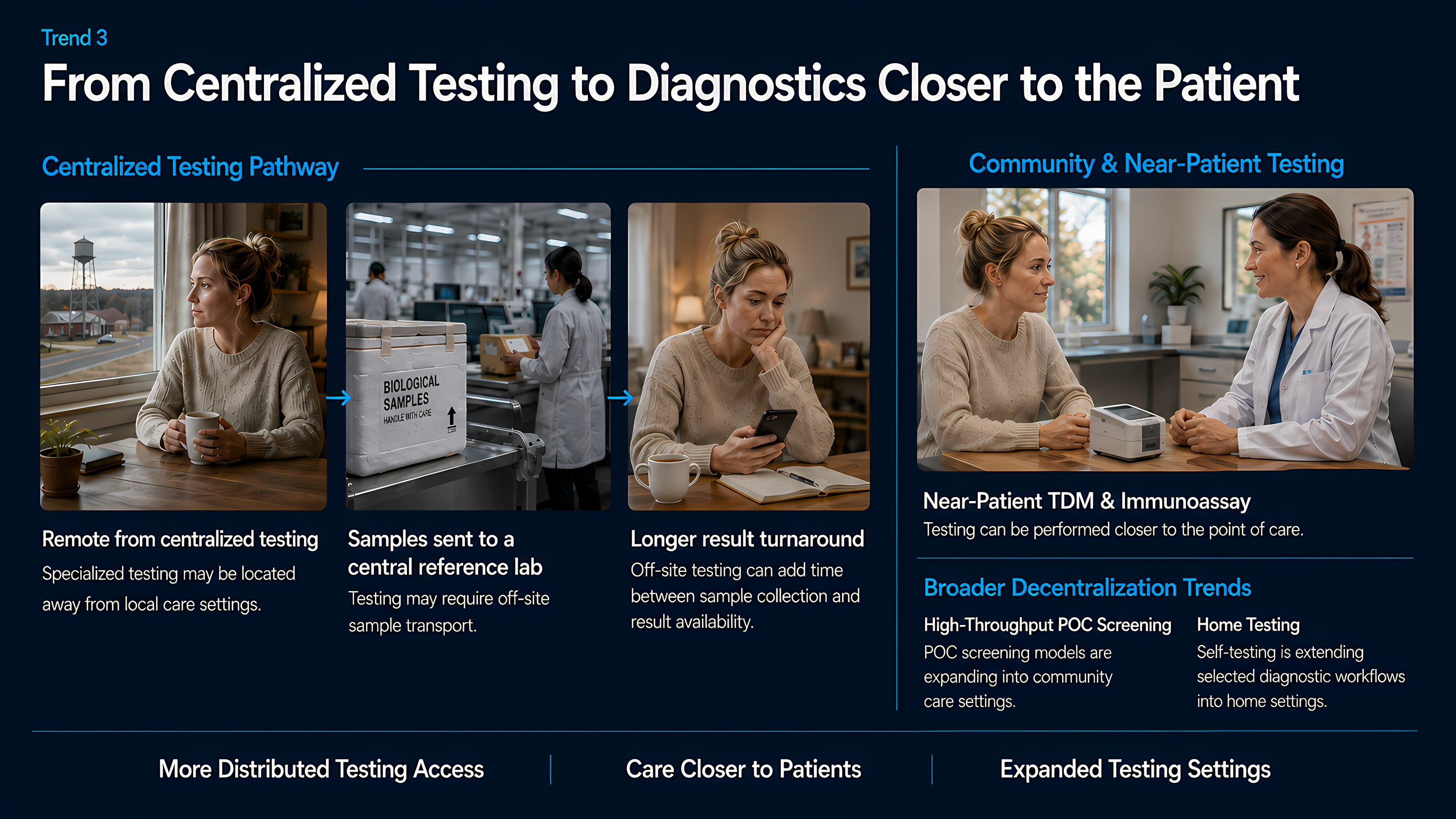
Figure 4. Trend 3 — From Centralized Testing to Diagnostics Closer to the Patient. Conceptual illustration of off-site centralized testing, near-patient workflows, point-of-care screening, and selected home-testing settings. Illustrative industry-trend graphic; not a product-specific performance claim.
Technical Evolution & Care-Setting Logic
- Miniaturized and automated near-patient TDM and immunoassay. Microfluidics, compact optical systems, and simplified sample handling are enabling more quantitative testing workflows to move closer to the point of care. In remote-monitoring scenarios, validated near-patient workflows can bring testing closer to local care settings. Performance, sample type, and intended use remain platform-specific.
- Higher-throughput point-of-care screening. Automation of steps such as sample preparation, incubation, and signal detection is being developed to support larger screening workflows in decentralized healthcare settings, provided the workflow is appropriately validated for the intended setting and user.
- Expansion of selected home-testing applications. Selected molecular and antigen self-testing workflows have moved into home settings for some infectious diseases, particularly respiratory infections. This broader home-testing trend is distinct from the near-patient TDM example and reflects a separate extension of diagnostics into everyday settings.
Across decentralized models, adoption depends on intended use, analytical and clinical validation, local regulatory requirements, quality systems, user training, connectivity, and appropriate escalation pathways. The trend is therefore best understood as an expansion of the diagnostic footprint—not a replacement for centralized laboratories.
Conclusion: Stable Essentials, Evolving Pathways
Across these three trends, the underlying priorities of laboratory medicine remain stable: diagnostic quality, timely results, patient safety, efficient use of resources, and reliable clinical interpretation.
What continues to evolve are the pathways used to deliver those priorities. Core laboratories are becoming more connected and digitally supported; analytical technologies are providing deeper biological information; and selected testing workflows are moving closer to patients and communities.
For IVD organizations, the strategic question is therefore not simply which new technology to adopt, but how to combine automation, analytical performance, digital tools, workflow design, validation, and care-setting needs in ways that align with laboratory operations and appropriately validated clinical use.
