Acute vulvovaginal candidiasis and its recurrent form affect an estimated 138 million women each year. Although VVC is frequently regarded as a straightforward fungal infection, recurrent symptoms, asymptomatic Candida colonization, overlapping vulvovaginal conditions, and emerging antifungal resistance continue to complicate diagnosis and long-term management.
A 2026 state-of-the-art review published in Clinical Infectious Diseases examines current evidence on vulvovaginal candidiasis (VVC) and recurrent vulvovaginal candidiasis (RVVC), covering disease mechanisms, risk factors, vaginal microbiome interactions, diagnostic challenges, treatment strategies, and emerging therapies.
The review reinforces an important principle: detecting Candida is only one part of the diagnostic process. Clinical context, symptom assessment, species identification, and the surrounding vaginal ecosystem all influence whether a laboratory result represents active infection or asymptomatic colonization.
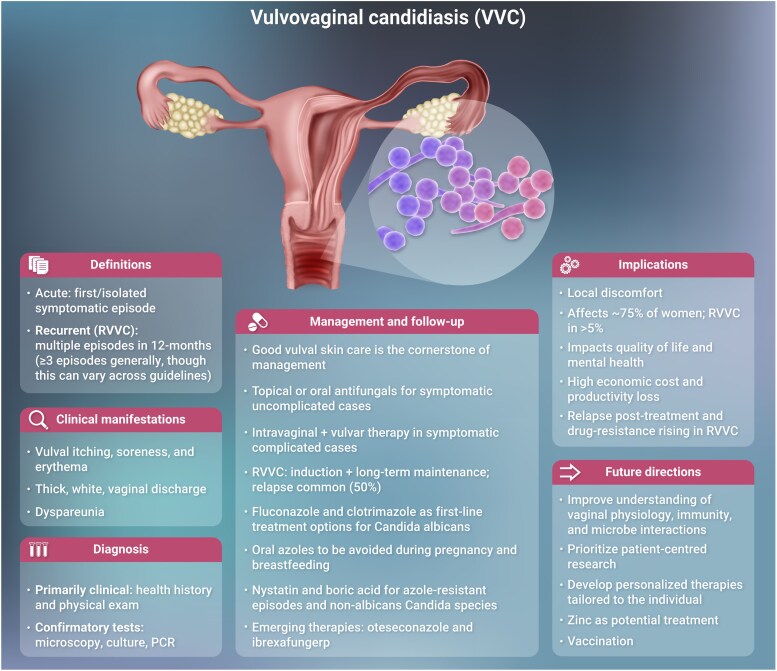
Figure 1. Overview of vulvovaginal candidiasis, including definitions, clinical manifestations, diagnostic approaches, management and follow-up, implications, and future directions. Reproduced from Rautemaa-Richardson R, Sobel JD, Stone N, et al. State-of-the-Art Review: Managing Vulvovaginal Candidiasis. Clinical Infectious Diseases. 2026;82(3):371–382.
A Substantial but Often Underestimated Disease Burden
Approximately 75% of women experience at least one episode of VVC during their lifetime, while an estimated 5%–10% develop RVVC. Although definitions vary slightly among clinical guidelines, RVVC is commonly defined as at least three symptomatic episodes within a 12-month period.
VVC primarily affects women of reproductive age, but it may also occur in adolescents and postmenopausal women. Common manifestations include vulval itching, burning, soreness, erythema, fissures, dysuria, abnormal vaginal discharge, and dyspareunia.
The impact extends beyond physical symptoms. VVC and RVVC have been associated with anxiety, depression, social isolation, impaired sexual health, and reduced quality of life. The review cites annual treatment costs exceeding USD 368 million in the United States and estimated global productivity losses of approximately USD 14 billion.
Two broader challenges contribute to this burden. The first is unequal access to healthcare and diagnostic services, which may contribute to delayed diagnosis, inappropriate antifungal use, and regional antifungal resistance hotspots. The second is insufficient patient education combined with the overmedicalization of vulval symptoms.
VVC is not classified as a sexually transmitted infection, and transmission between partners is considered uncommon. Clear education is therefore important for reducing stigma and encouraging women with persistent or recurrent symptoms to seek appropriate clinical evaluation.
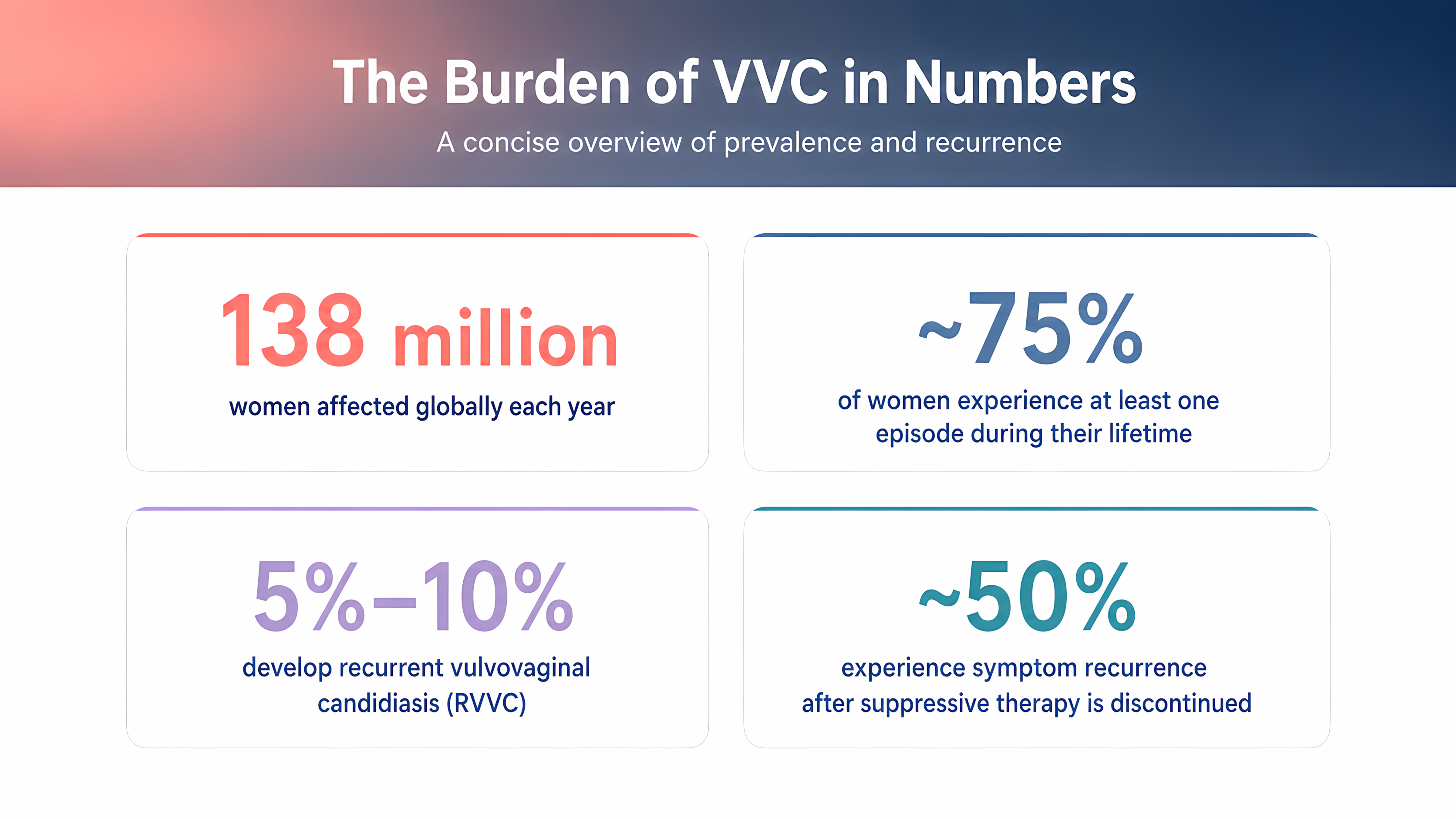
Figure 2. Key figures illustrating the burden and recurrence of vulvovaginal candidiasis. Acute VVC and its recurrent form affect an estimated 138 million women globally each year; approximately 75% of women experience at least one lifetime episode, 5%–10% develop recurrent vulvovaginal candidiasis, and symptoms recur in approximately 50% of patients after suppressive therapy is discontinued.
Pathophysiology: Candida Persistence, Host Inflammation, and Impaired Clearance
Acid Tolerance in a Lactobacillus-Dominant Environment
The healthy vaginal microbiome is commonly dominated by lactobacilli. These bacteria maintain lactic acid concentrations of approximately 55–111 mM and support an acidic vaginal pH of around 3.5–4.7.
Although this environment inhibits many potential pathogens, Candida species are acid-tolerant and can persist under low-pH conditions. A vaginal pH within the expected acidic range should therefore not, by itself, be used to exclude VVC.
The development of symptomatic infection depends on more than the presence of the organism. It reflects a complex interaction among fungal virulence, host immune responses, hormonal conditions, epithelial integrity, and the vaginal microbiome.
Fungal Virulence and Inflammation Without Effective Clearance
Candida albicans remains the predominant cause of VVC. Its ability to transition between yeast, pseudohyphal, and hyphal forms is closely linked to tissue invasion and pathogenicity.
The review highlights several virulence factors involved in fungal persistence and the inflammatory response:
- pH-regulated antigen 1 (Pra1): Supports fungal survival by scavenging zinc from the local environment and promotes neutrophil recruitment.
- Candidalysin: Contributes to epithelial damage and inflammation.
- Secreted aspartyl proteinases (SAPs): May support tissue invasion and amplify host responses.
Neutrophils are recruited to the vaginal mucosa during infection, but their presence does not always result in effective fungal clearance. Excessive activation can instead drive the release of neutrophil extracellular traps, proteases, and reactive oxygen species, contributing to inflammation and tissue injury.
Neutrophil Dysfunction and Species-Specific Differences
Experimental evidence suggests that vaginal epithelial heparan sulfate may bind to CD11b on neutrophils and impair reactive oxygen species production and NETosis. Estrogen may intensify this effect by increasing heparan sulfate expression.
These findings help explain why VVC may involve both inadequate pathogen clearance and excessive local inflammation. Non-albicans Candida species may behave differently: Candida glabrata, currently classified as Nakaseomyces glabratus, generally induces a weaker inflammatory response and less neutrophil recruitment than C. albicans. This may partly explain why some non-albicans infections produce less typical or less pronounced symptoms.
Much of the mechanistic evidence comes from cell culture and animal models that do not fully reproduce the acidic environment of the human vagina. Further translational research is therefore required.
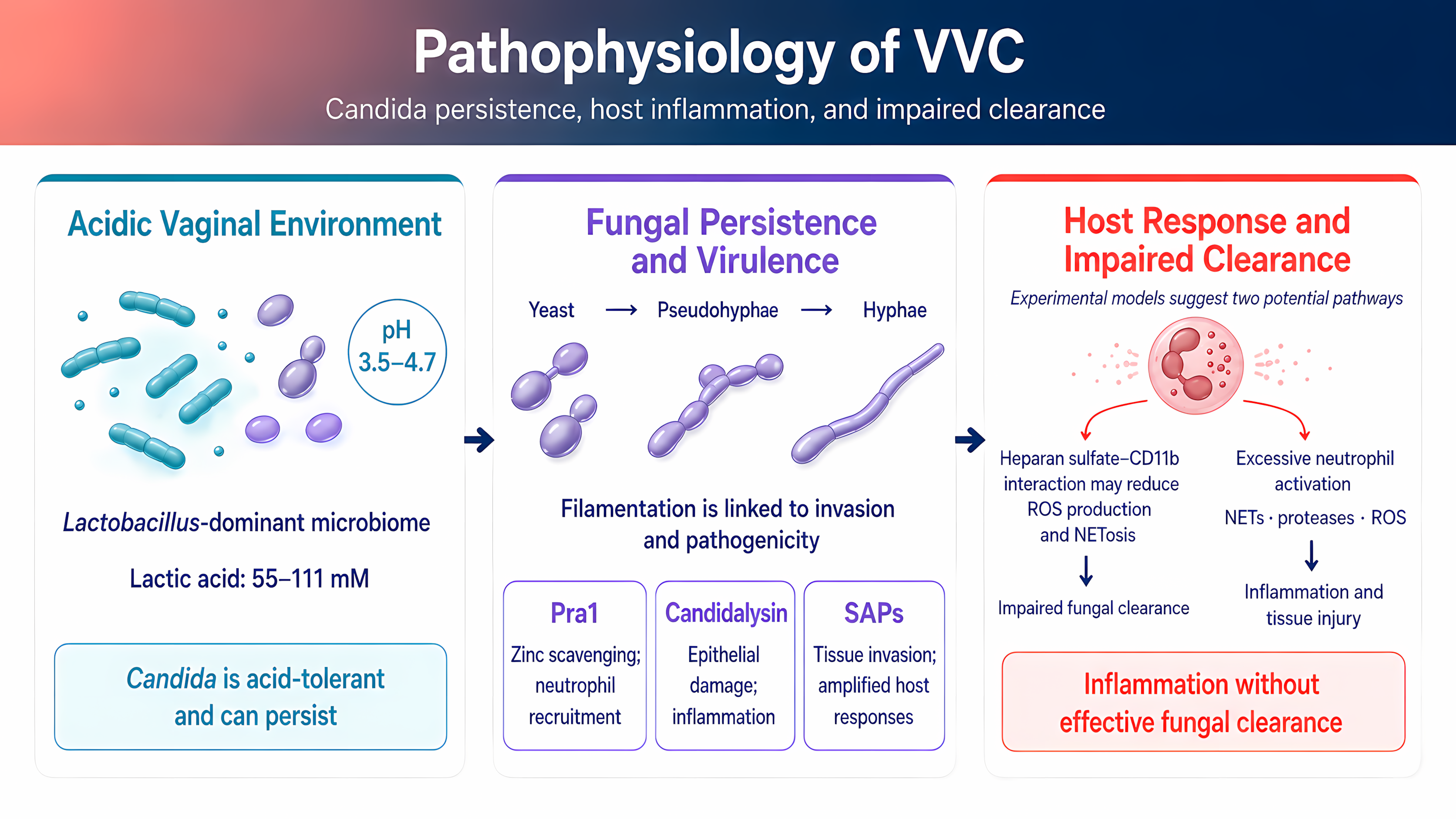
Figure 3. Proposed interactions among the acidic vaginal environment, fungal persistence and virulence, and the host inflammatory response in vulvovaginal candidiasis. Acid-tolerant Candida may persist in a Lactobacillus-dominant environment, while filamentation and selected virulence factors contribute to pathogenicity. Experimental models suggest that impaired neutrophil function and excessive neutrophil activation may result in inflammation without effective fungal clearance.
The Vaginal Microbiome: The Species May Matter More Than the Genus
Lactobacilli are generally considered protective members of the vaginal microbiome, but their relationship with VVC is more complex than a simple distinction between “high” and “low” Lactobacillus abundance.
Although lactic acid and vaginal acidification inhibit many potential pathogens, Candida species can tolerate low pH and may metabolize lactate to support hyphal growth and tissue invasion.
Different Lactobacillus species—and potentially different strains—may have different functional effects. For example, Lactobacillus crispatus may inhibit the adhesion of C. albicans to epithelial cells. Certain Lactobacillus strains have also demonstrated an ability in vitro to suppress fungal growth, reduce virulence-factor expression, and inhibit the transition from yeast to hyphal forms.
However, epidemiological studies do not consistently show that overall Lactobacillus dominance protects against VVC. Some women with RVVC retain substantial Lactobacillus populations but show greater microbial diversity, increased dominance of Lactobacillus iners, and reduced abundance of species such as L. crispatus and L. gasseri.
Antibiotic exposure may increase susceptibility to VVC by disrupting protective Lactobacillus communities and altering the balance among individual species. These observations suggest that reporting only the total proportion of lactobacilli may not fully describe the functional state of the vaginal microbiome.
Probiotics are frequently promoted for the prevention or adjunctive treatment of VVC. Nevertheless, the review concludes that evidence from well-designed studies with a lower risk of bias does not currently support their routine use for this purpose.、
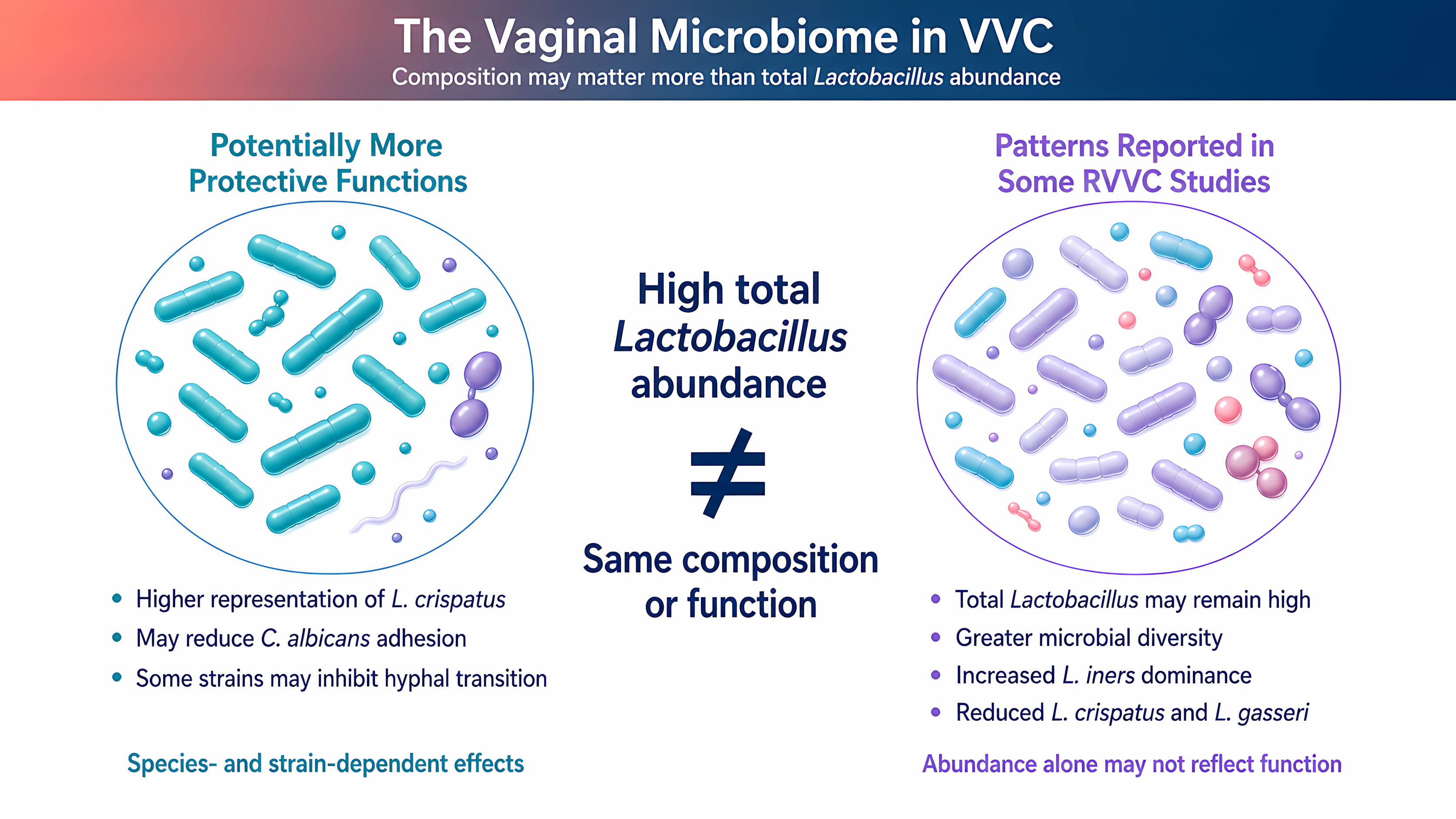
Figure 4. Vaginal microbiome composition may be more informative than total Lactobacillus abundance alone. Some potentially protective functions have been associated with greater representation of Lactobacillus crispatus, whereas patterns reported in some RVVC studies include greater microbial diversity, increased Lactobacillus iners dominance, and reduced L. crispatus and L. gasseri despite relatively high total Lactobacillus abundance. These patterns represent research associations and are not standalone diagnostic criteria. Colors and microbial forms are schematic and do not represent species-specific morphology.
Clinical Manifestations and Diagnostic Interpretation
Colonization or Active Infection?
Vulval itching, burning, soreness, erythema, discharge, and dyspareunia are not specific to VVC. Similar symptoms may occur in vulval eczema, lichen sclerosus, vulvodynia, low-grade herpes simplex virus reactivation, and other dermatological or inflammatory conditions.
At the same time, asymptomatic vaginal colonization by Candida is common, occurring in up to 20%–30% of healthy women. The presence of Candida in a specimen therefore does not automatically establish that it is responsible for the patient’s symptoms.
Diagnosis should begin with a detailed clinical history and physical examination, supported where appropriate by microscopy, fungal culture, or polymerase chain reaction testing.
Highly sensitive molecular methods offer important analytical advantages, but sensitivity must be accompanied by careful clinical interpretation. The more sensitive the method, the greater the possibility of detecting colonization that is not causing active disease.
A positive PCR result should consequently not be interpreted in isolation. It should be evaluated together with symptoms, examination findings, previous treatment exposure, recurrence history, and possible alternative diagnoses.
The review does not recommend microbiological testing or treatment for asymptomatic women, even when relatively high numbers of Candida cells are detected.
Confirmatory testing is particularly important in women with RVVC or a poor or partial response to treatment. It may also assist when non-albicans Candida, antifungal resistance, or an alternative or additional diagnosis is suspected.
If microbiologically effective antifungal treatment does not resolve the symptoms, clinicians should reconsider the diagnosis rather than assuming that persistent symptoms necessarily indicate persistent candidiasis.
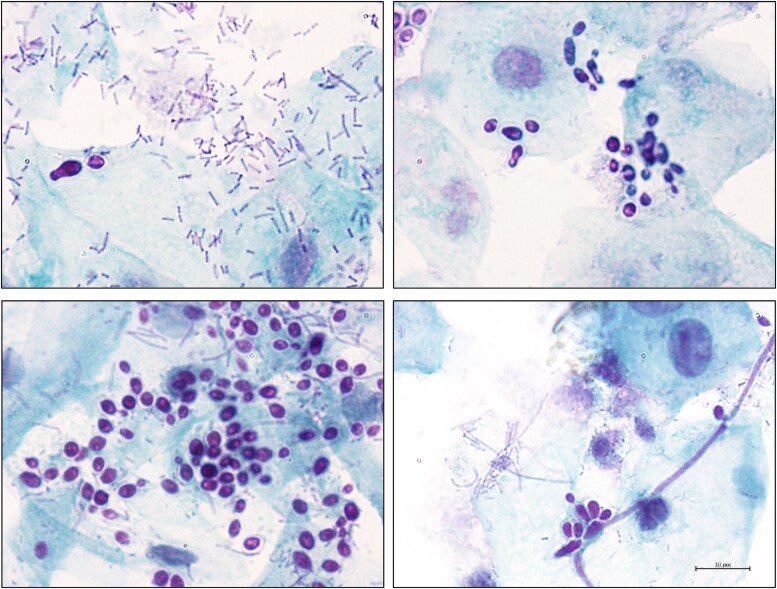
Figure 5. Vaginal smear micrographs from women with or without VVC symptoms who were culture-positive for Candida albicans. The upper row shows samples from two asymptomatic women and the lower row shows samples from two symptomatic women. Samples were stained using the Papanicolaou technique and visualized at 1000× magnification (scale bar = 10 μm), illustrating why laboratory detection must be interpreted together with clinical presentation. Reproduced from Rautemaa-Richardson R, Sobel JD, Stone N, et al. State-of-the-Art Review: Managing Vulvovaginal Candidiasis. Clinical Infectious Diseases. 2026;82(3):371–382.
Non-albicans Candida: Detection Does Not Establish Causation
Non-albicans species—including N. glabratus, Pichia kudriavzevii (formerly Candida krusei), Candida parapsilosis, and Candida dubliniensis—are increasingly reported in VVC.
They may be more common among women with diabetes and those who have received multiple courses of fluconazole. Many non-albicans species also show reduced susceptibility to commonly used azole antifungals.
However, isolating a non-albicans organism from a symptomatic woman does not prove causation. These species are generally less virulent than C. albicans and may represent colonization rather than active infection. This is particularly relevant to N. glabratus.
Before attributing persistent symptoms to a non-albicans isolate, other causes—including vulval dermatoses and vulvodynia—should be systematically considered.
Antifungal susceptibility testing may assist the management of selected refractory cases, but testing is not always readily available. Moreover, susceptibility breakpoints specifically reflecting the acidic vaginal environment have not been established. Laboratory findings must therefore be interpreted alongside clinical response and specialist assessment.
Management and Follow-up
Controlling Symptoms While Addressing Underlying Factors
Good vulval skin care is described as a cornerstone of management. The review emphasizes protecting the local skin barrier, avoiding overwashing, and limiting unnecessary feminine hygiene products that may contribute to dryness and irritation.
For uncomplicated symptomatic VVC, topical and systemic antifungal treatments remain the main therapeutic approaches. Treatment selection depends on symptom severity, pregnancy status, previous response, the suspected organism, and local clinical guidance.
RVVC typically requires a two-stage approach consisting of induction treatment followed by longer-term maintenance or suppressive therapy. The goal of suppression is to provide a sustained symptom-free period, improve quality of life, and allow local immune and microbial conditions to stabilize.
However, suppression does not permanently eliminate Candida from the body. Symptoms recur in approximately 50% of patients after suppressive therapy is discontinued. Treatment success should therefore be assessed primarily by symptom control during therapy rather than by assuming that recurrence will not occur after treatment ends.
Modifiable factors should also be reviewed. These may include unnecessary antibiotic exposure, poorly controlled diabetes, immunosuppressive therapy, hormonal influences, vulval skin damage, and other conditions that may predispose to recurrence.
New Antifungals Expand the Treatment Landscape
The review discusses ibrexafungerp and oteseconazole as important additions to the antifungal treatment landscape.
Ibrexafungerp inhibits fungal 1,3-β-D-glucan synthase and has demonstrated in vitro activity against multiple azole-resistant Candida species. It may offer an alternative for women who are allergic to or intolerant of azole antifungals. However, a clear clinical advantage over established azoles has not yet been demonstrated for most patients with azole-susceptible VVC.
Oteseconazole is a highly selective fungal CYP51 inhibitor with activity against a range of Candida species, including fluconazole-resistant vaginal isolates. Clinical studies have evaluated it in acute VVC and in the prevention of recurrent VVC. Its prolonged half-life supports extended tissue exposure but substantially restricts its use in females of reproductive potential.
Approved indications, availability, and prescribing restrictions for these medicines vary among countries and regions. Their use should follow applicable local regulatory approvals and professional clinical guidance.
Emerging Directions: Zinc-Based Immunomodulation and Vaccines
Beyond conventional antifungal treatment, researchers are investigating approaches that target the interaction between fungal virulence and host immunity.
Because C. albicans uses Pra1 to acquire zinc and stimulate neutrophil recruitment, local zinc supplementation has been explored as a way to downregulate Pra1 expression and reduce the associated inflammatory response.
In a small pilot study, five of six women with RVVC remained recurrence-free after using a zinc-containing vaginal gel for three months. At the time of the review, an ongoing clinical trial was evaluating a local zinc gel for the prevention of RVVC in a broader population.
These results remain preliminary. The strategy is also likely to be species-dependent because several non-albicans species, including N. glabratus and P. kudriavzevii, have lost the PRA1 gene during evolution.
RVVC may also be a potential target for vaccination. Two subunit vaccine candidates have entered clinical studies:
- NDV-3A: Targeting the Als3 adhesin, this vaccine was evaluated in a Phase II trial involving 188 women with RVVC and was associated with fewer recurrences and a longer time to recurrence, particularly among women younger than 40.
- PEV7: Targeting the Sap2 proteinase, this vaccine entered Phase I/IIa evaluation and produced neutralizing anti-Sap2 immunoglobulin G antibodies in serum, vaginal fluid, and cervical fluid.
No significant safety signals were reported in the studies summarized by the review. Nevertheless, these vaccines remain investigational. The review notes that neither development program appears to have progressed further in clinical evaluation, possibly because of budget limitations.
What Does This Mean for Diagnostic Laboratories?
The evidence supports a shift from the simple detection of Candida toward clinically contextualized diagnostic assessment.
For laboratories, several principles are especially relevant:
- A positive result does not always distinguish colonization from symptomatic infection.
- Species-level identification may provide additional value in recurrent, refractory, or suspected non-albicans cases.
- Molecular sensitivity should be accompanied by appropriate clinical interpretation.
- Persistent symptoms after microbiological clearance should prompt consideration of other or coexisting conditions.
- Diagnostic access and responsible antifungal use are closely connected to efforts to reduce resistance.
The goal is not merely to determine whether Candida DNA or viable organisms are present. It is to generate information that can be interpreted meaningfully within the patient’s clinical, microbiological, and treatment context.
Conclusion
VVC and RVVC are not solely problems of fungal overgrowth. They arise from a complex interaction among fungal virulence, host immunity, epithelial health, hormonal influences, and the vaginal microbiome.
Current antifungal therapies remain essential, but treatment alone may be insufficient when underlying risk factors, alternative diagnoses, or ecosystem disruption are not addressed. At the same time, increasingly sensitive diagnostic technologies require increasingly careful interpretation to avoid treating asymptomatic colonization or overlooking other causes of vulvovaginal symptoms.
Future progress will depend on integrated, patient-centered strategies that combine accurate diagnosis, appropriate species identification, responsible antifungal use, prevention, immune modulation, and maintenance of vaginal microbial homeostasis.
For diagnostic laboratories and women’s health professionals, the central message is clear: better outcomes require not only more sensitive detection, but also a more precise understanding of what each result means.
Reference
Rautemaa-Richardson R, Sobel JD, Stone N, et al. State-of-the-Art Review: Managing Vulvovaginal Candidiasis. Clinical Infectious Diseases. 2026;82(3):371–382.
