Malaria is still a daily diagnostic decision in endemic regions. The World Health Organization (WHO) estimated 282 million cases and 610,000 deaths worldwide in 2024, and the WHO African Region carried about 94% of those cases (WHO World Malaria Report 2025).
Three methods dominate the laboratory bench: rapid diagnostic tests (RDTs), microscopy, and polymerase chain reaction (PCR). Each answers a slightly different question, and mixing up those questions is where diagnostic errors usually begin.
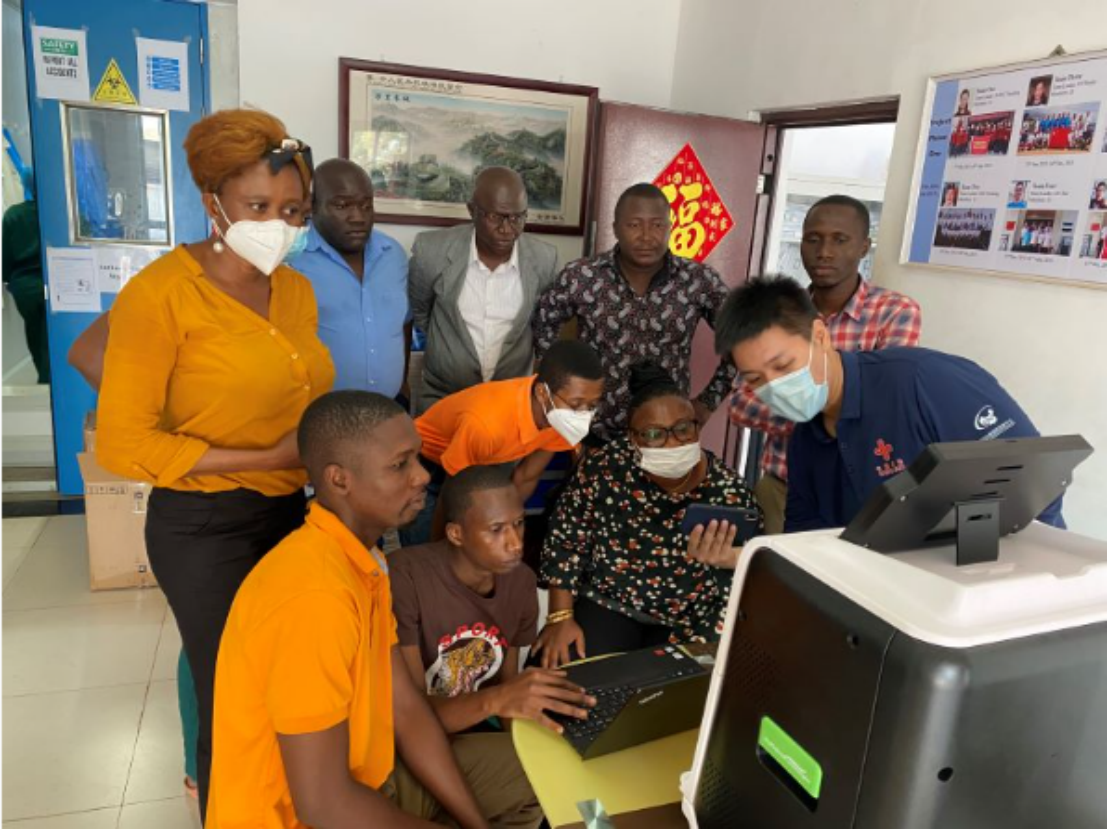
How Does a Malaria Rapid Diagnostic Test Detect HRP2 and pLDH Antigens?
A malaria rapid diagnostic test detects parasite proteins in a blood sample using antibodies on a test strip. An HRP2/pLDH format reads two different proteins in one run, which shows whether any Plasmodium parasite is present and whether it is Plasmodium falciparum (Pf).
What Does the HRP2 Line Tell You?
The HRP2 line points specifically to Pf, because histidine-rich protein 2 (HRP2) is produced by that species. Pf is the parasite responsible for most malaria deaths in Africa (WHO), so a Pf-specific signal carries clinical weight.
What Does the pLDH Line Add?
The pLDH line adds coverage of the other species. Plasmodium lactate dehydrogenase (pLDH) is an enzyme shared across species, so “Pan” in a Pf/Pan test covers P. falciparum, P. vivax, P. ovale and P. malariae. HRP2 alone cannot signal the three non-falciparum species.
How Do You Read a Pf/Pan Result?
Read the two lines together, because the combination narrows the species. The table shows the typical logic; always follow the kit’s instructions for use.
| HRP2 |
pLDH |
Typical interpretation |
Suggested next step |
| Positive |
Positive |
Pf infection; mixed-species infection possible |
Treat per national guidelines |
| Positive |
Negative |
Pf infection likely |
Treat per national guidelines |
| Negative |
Positive |
Non-falciparum species, or Pf lacking HRP2 |
Confirm species by microscopy or PCR |
| Negative |
Negative |
No antigen detected |
Review clinically; retest if symptoms persist |
When Does a Malaria Rapid Diagnostic Test Work Best, and Where Does It Fall Short?
An HRP2/pLDH RDT works best for symptomatic patients when quality microscopy is unavailable. It falls short at very low parasite densities and when antigens behave unexpectedly.
Which Application Scenarios Suit an HRP2/pLDH Test?
Four scenarios stand out:
- No trained microscopist on site. WHO recommends confirming malaria before treatment, using quality-assured RDTs where quality microscopy is not available.
- Point-of-care and satellite sites. A 15-minute result is short enough to inform decisions during the same patient visit.
- Reducing unnecessary antimalarial use. A Cochrane review reports that RDT-based guidelines can cut unnecessary drug use when clinicians follow the results.
- Species triage. The Pf-versus-Pan split shows when species confirmation is needed.
When Should You Confirm a Result by Another Method?
Confirm a result by another method whenever it conflicts with the clinical picture, because three known limits can mislead an antigen test:
- Gene deletions. Pf parasites lacking the pfhrp2 and pfhrp3 genes produce no HRP2 and can cause false negatives. WHO recommends shifting away from exclusive reliance on HRP2-based RDTs when the prevalence of symptomatic P. falciparum infections with pfhrp2 deletions causing false-negative results meets the specified 5% threshold, assessed using the applicable surveillance criteria.
- Persistent HRP2. HRP2 can remain detectable for 1–5 weeks after effective treatment, so a positive result during this period does not necessarily indicate an active infection.
- Low parasite density. RDTs typically detect roughly 100 to 200 parasites/µL, and PAHO training materials describe RDTs and microscopy as insufficiently sensitive for asymptomatic infections.
How Do Microscopy and PCR Compare With Rapid Diagnostic Tests?
Microscopy delivers species identification and parasite counts, PCR reaches the lowest detection limits, and RDTs need the least equipment.

What Can Microscopy Do, and What Are Its Limits?
Microscopy remains the reference method, but accuracy depends on the person reading the slide. Expert microscopists detect roughly 10 to 20 parasites/µL, while routine microscopy is considered unreliable below about 50 parasites/µL (Diagnosis and Treatment of Plasmodium vivax Malaria, PubMed Central). WHO therefore publishes quality assurance guidance for microscopy.
Where Does PCR Fit in the Diagnostic Workflow?
PCR detects parasites at densities far below what microscopy or RDTs reach, but it requires laboratory equipment and trained staff. One review reported a real-time PCR detection limit of about 0.7 parasites/µL for Pf. However, detection limits depend on blood volume and PCR target, and a 2023 Malaria Journal analysis cautions that PCR does not always outperform expert microscopy. In practice, PCR suits surveys, species confirmation and investigation of suspected RDT false negatives.
How Do the Three Methods Compare Side by Side?
| Method |
Typical detection limit |
What it tells you |
Main requirement |
| Microscopy |
10–20 parasites/µL (expert); about 50 (routine) |
Species and parasite count |
Trained microscopist |
| RDT |
Roughly 100–200 parasites/µL |
Antigen presence; Pf versus Pan |
Whole-blood sample and a test kit |
| PCR |
Below 1 parasite/µL (real-time, one review: 0.7) |
Species and low-density infections |
Laboratory equipment and trained staff |
What Does the BioPerfectus Malaria Pf/Pan (HRP2/pLDH) Ag Rapid Test Kit Offer?
BioPerfectus is a molecular diagnostics company serving laboratories in more than 100 countries and regions through its infectious disease diagnostics portfolio. Its Malaria Pf/Pan (HRP2/pLDH) Ag Rapid Test Kit sits within its vector-borne diagnostics range and turns the HRP2/pLDH logic above into a ready-to-use malaria test kit.
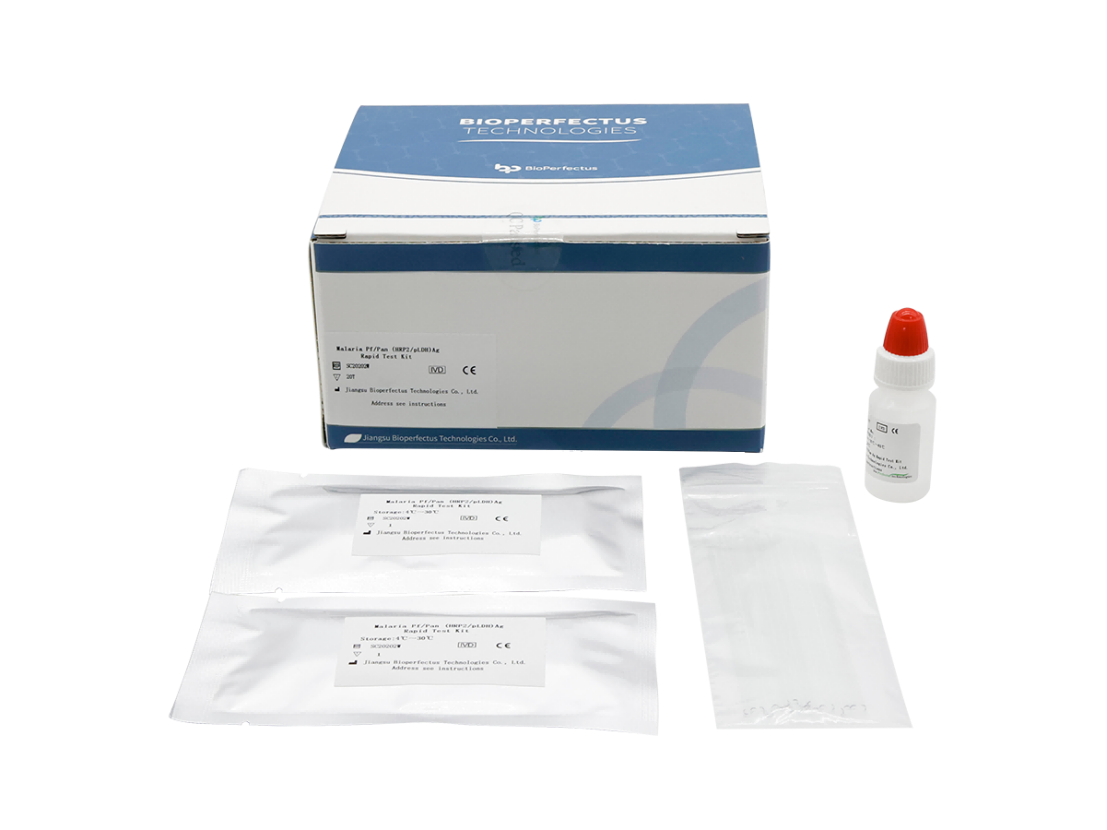
How Does the Kit Cover Both Pf and Pan Malaria in a Single Test?
The kit detects HRP2 from Pf and pLDH from Pan species in human whole blood within a single test. Operators follow a three-step procedure, results appear within 15 minutes, and a built-in control supports result validity. It is intended for professional use when malaria infection is clinically suspected.
How Does the Kit Perform for Pf and Pan Infections?
Clinical sensitivity is 97.2% for Pf and 91.7% for Pan, while clinical specificity is 98.5% for Pf and 99.6% for Pan. A Pan sensitivity of 91.7% means roughly 8 in 100 true Pan-positive samples would be missed, so a negative result in a symptomatic patient still deserves clinical review.
What Should Procurement Teams Check Before Ordering?
Storage, transport and ordering details decide whether a kit suits your supply chain:
| Item |
Detail |
| Storage temperature |
4°C to 30°C |
| Transport temperature |
-20°C to 45°C |
| Shelf life |
24 months |
| Pack sizes |
1, 20, 25 or 50 tests per kit |
| Approvals |
CE-IVDR, NMPA, Anvisa |
Conclusion: Which Malaria Testing Method Should You Choose?
Match the method to the clinical question, and combine methods when the result matters:
- HRP2/pLDH RDT: First-line testing of symptomatic patients, especially where microscopy is unavailable.
- Microscopy: Severe malaria (WHO programme materials prefer it), parasite counts and species confirmation.
- PCR: Low-density infections, surveys, and investigation of RDT false negatives.
Used this way, the BioPerfectus Malaria Pf/Pan (HRP2/pLDH) Ag Rapid Test Kit handles the first decision, and microscopy and PCR handle the exceptions.
References
