Most delays in a molecular testing lab do not come from the polymerase chain reaction (PCR) step itself. They come from manual pipetting, sample handoffs, and contamination checkpoints that add hours before amplification even starts. For labs running high sample volumes, closing these gaps often separates a workflow that scales from one that plateaus.
This article looks at where molecular in vitro diagnostic (IVD) workflows lose time, how sample preparation and PCR kit selection affect result reliability, and what an integrated approach to in vitro diagnostic solutions looks like in practice.
Where Does Time Actually Get Lost in a Molecular IVD Workflow?
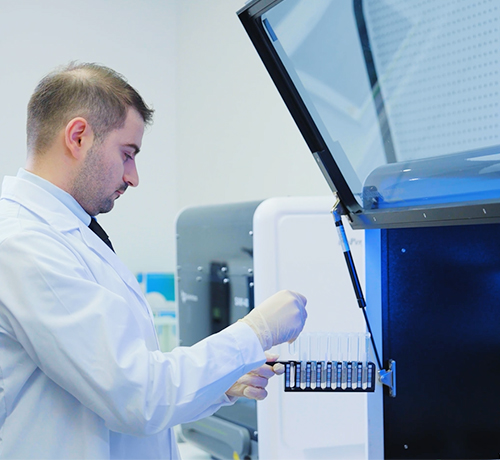
Most workflow delays happen at the handoff points, not during amplification itself. Manual sample loading, tube transfers between extraction and PCR setup, and repeat testing due to inconsistent results all add non-productive hours to a lab's day.
Each handoff is also a contamination risk. Open-tube pipetting between extraction and PCR setup raises the chance of aerosol contamination, which can trigger a repeat run and consume reagents and staff time a lab cannot easily recover.
As a result, the PCR reaction itself, often under two hours, becomes a small fraction of total turnaround time. The greater burden lies in sample handling and error correction around it.
How Should Labs Structure Sample Preparation for Consistent Nucleic Acid Yield?
Consistent nucleic acid yield starts with standardized magnetic bead extraction, not with the PCR reaction that follows it. Because downstream amplification can only be as reliable as the template it receives, variability introduced at the extraction stage propagates directly into inconclusive or repeat results.
What Causes Inconsistent Extraction Recovery?
Inconsistent recovery is usually a mixing and processing volume problem, not a reagent chemistry problem. Manual extraction workflows vary from operator to operator in mixing speed, incubation timing, and elution consistency, which introduces variability that automated systems are designed to remove.
The BioPerfectus SAW-48 Automated Nucleic Acid Extraction Workstation, for example, is built around magnetic bead separation with a documented recovery efficiency of ≥98%, oscillating mixing across more than 20 speed settings, and a processing volume range of 20–1,000 μL. Because these parameters are fixed by the instrument rather than the operator, run-to-run variability drops accordingly.
How Does Automation Reduce Hands-On Time?
Automation reduces hands-on time by consolidating loading, extraction, and PCR setup into a single walk-away sequence. As a result, technicians shift from repetitive pipetting to review and interpretation work, which is a better use of trained laboratory staff.
The table below summarizes documented sample-handling parameters for reference:
| Parameter |
Documented Specification |
| Sample throughput |
1–48 samples per run |
| Total process time |
Under 45 minutes |
| Magnetic bead recovery efficiency |
≥98% |
| Compatible sample types |
Plasma, serum, whole blood, swab, urine |
| Contamination control |
UV disinfection, HEPA filtration, electrostatic particulate filtration, scientific zoning |
How Do You Choose the Right PCR Kit for a Given Assay?
The right PCR kit depends on target specificity, sample type, and whether the clinical question calls for single-target or multiplex detection. Because IVD assays are validated against a defined intended use, a kit is not interchangeable across sample types or patient populations without re-validation.
Why Do Internal Controls Matter for Result Confidence?
Internal controls matter because they distinguish a true negative from a failed reaction. Without an internal control, a negative result could reflect either the absence of the target or a technical failure in extraction, inhibition, or amplification, and the two are clinically very different.
A concrete example is the BioPerfectus Measles and Rubella Viruses Real-Time PCR Kit, an assay for qualitative detection and differentiation of measles virus and rubella virus nucleic acids in throat swab specimens. It targets the N gene of measles virus and the E1 gene of rubella virus in one multiplex reaction, with RNase P included as an internal control. Per the product specifications, the assay shows 100% clinical sensitivity for both targets, clinical specificity of 99.5% (measles) and 99.6% (rubella), and supports 96 tests in 109 minutes on compatible instruments.
This kind of multiplex design illustrates a broader principle: combining two clinically related targets into one reaction, with a built-in internal control, reduces reagent consumption and the number of separate runs a lab needs to manage.
- Confirm the assay's validated sample type before ordering.
- Check whether an internal control is included, and what it monitors.
- Match the kit's instrument compatibility to your existing real-time PCR platform.
- Review clinical sensitivity and specificity figures against your intended patient population.
An Integrated Approach to the PCR Workflow
BioPerfectus is a global molecular diagnostics company focused on infectious disease testing and women's and children's health, serving clinical laboratories in more than 100 countries and regions. The company integrates research and development, manufacturing, and service support to deliver in vitro diagnostic solutions across assays, instruments, and testing workflows.
Its Total PCR Solution connects the SAW series of automated nucleic acid extraction workstations with the STC series of real-time PCR systems, so a lab moves from sample loading through amplification and result interpretation on one connected sequence rather than a set of disconnected instruments.
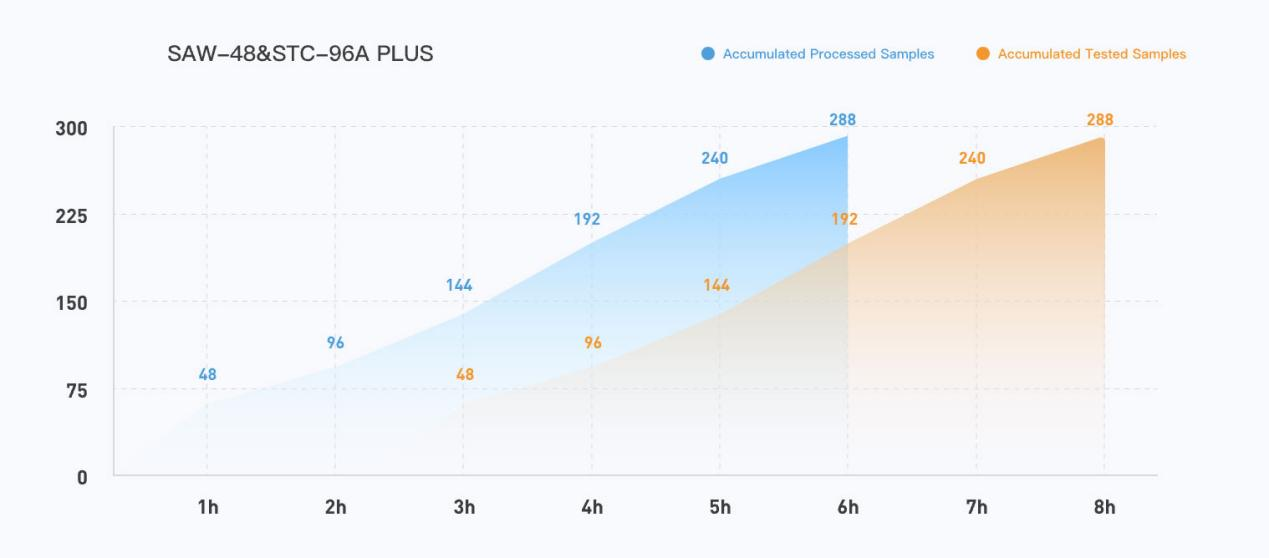
In the SAW-48 plus STC-96A PLUS configuration, extraction runs in under 45 minutes, and the STC-96A PLUS completes two experiments in 90 minutes on its dual 48/48 reaction blocks. BioPerfectus states this combination requires less than one hour of daily hands-on time and only three operator interactions across the full run.
How Can Labs Reduce Turnaround Time Without Compromising Accuracy?
Turnaround time drops without sacrificing accuracy when instrument precision reduces the need for repeat testing. Because a failed or ambiguous run costs more time than a well-controlled first run, precision at the amplification stage has a direct, compounding effect on overall lab throughput.
What Role Does Instrument Precision Play in Repeat-Test Rates?
Instrument precision reduces repeat-test rates by minimizing the technical variability that produces borderline or inconclusive results. The STC-96A PLUS Real-Time PCR System, for instance, is specified with well-to-well temperature uniformity of 0.1°C, a maximum ramp rate of 4.0°C per second, and reproducibility with a coefficient of variation below 0.5%. Its dual 48/48 reaction block design also lets two independent assays run on one instrument at the same time, rather than requiring two separate runs.
For laboratories comparing real-time PCR platforms, these parameters are useful benchmarks: better thermal uniformity can improve consistency near the detection threshold, while higher ramp rates can shorten thermal cycling and overall run time.
Conclusion: Building a Scalable Molecular Testing Workflow
Optimizing a molecular IVD workflow is less about any single fast instrument and more about how consistently sample preparation, PCR kit selection, and amplification hardware work together. Standardized extraction reduces upstream variability, well-chosen multiplex kits with internal controls improve result confidence, and precise thermal control on the PCR instrument lowers the rate of repeat testing.
For laboratories evaluating where to invest first, the practical answer is usually the connection points between stages, not the stages in isolation. Labs that treat sample preparation, kit selection, and detection as one continuous workflow, rather than three separate purchasing decisions, tend to see the more durable improvements in both turnaround time and result reliability.
