Why Do Laboratories Struggle to Scale PCR Testing?
Most labs hit a capacity wall long before they run out of demand. Sample volumes climb, but staff hours and bench space don't grow at the same rate. As a result, technicians end up batching runs, waiting on single-assay cycles, and re-testing when contamination slips in.
This isn't a training problem. It's a workflow design problem. A PCR system that only runs one assay at a time forces labs to choose between speed and breadth — test more patients, or test for more targets, rarely both in the same run.
Common bottlenecks labs report include:
- Manual plate loading that eats into technician time
- Single-block instruments that can't run two different assays simultaneously
- Cross-contamination risk from repeated manual handling
- Long turnaround times that delay clinical decisions
Understanding exactly where these bottlenecks originate is the first step toward fixing them. The next two sections break down the two levers that matter most: throughput and multiplexing.
How Many Samples Can a Real-Time PCR Machine Process Per Run?
Most standard PCR machines used in clinical labs process between 48 and 96 samples per run, depending on plate format. Because sample capacity alone doesn't determine daily output, run time and hands-on requirements matter just as much.
| Factor |
Why It Matters |
| Well count |
Sets the ceiling on samples per run |
| Run time |
Determines how many runs fit in a shift |
| Setup steps |
Directly affects technician hours per day |
How Does Run Time Affect Daily Lab Capacity?
Shorter run times mean more cycles per shift, which directly increases daily test volume. For example, a lab running 50-minute cycles fits roughly 8–9 runs into an 8-hour day, versus 5–6 runs at 80 minutes per cycle. As a result, even a modest reduction in run time compounds into a meaningful capacity gain.
How Does Multiplexing Improve Diagnostic Efficiency?
Multiplexing lets one reaction well detect several targets at once, instead of running separate wells for each pathogen or gene marker. Because reagents, sample volume, and instrument time are shared across targets, labs get more diagnostic information from the same run.
What Is Multiplex PCR and Why Does Channel Count Matter?
Multiplex PCR uses multiple fluorescent dye channels within a single well to distinguish between several targets simultaneously. Each channel corresponds to a different dye — for example, FAM, HEX, ROX, or CY5 — and the instrument's optical system must separate these signals cleanly. If channels bleed into each other (crosstalk), results become unreliable and need manual correction.
This is why the optical filter design behind a PCR instrument matters as much as its thermal cycling specs. A system with well-separated channels can run four-target or higher multiplex panels with no crosstalk calibration required.
How Do Dual-Block Systems Support Running Two Assays at Once?
A dual-block real-time PCR system lets a lab run two completely independent assays on one instrument at the same time. In practice, this means a technician can load a respiratory panel in one block and an STI panel in the other, controlling temperature profiles for each block separately. This allows labs to consolidate two independent workflows on a single instrument, potentially increasing testing flexibility while reducing the need for additional bench space and instrument investment.
Which Real-Time PCR System Delivers Both Throughput and Multiplexing?
The gap between wanting higher throughput and wanting broader multiplexing is exactly where instrument selection gets difficult — few systems handle both without trade-offs. BioPerfectus, a molecular diagnostics company serving laboratories in more than 100 countries and regions, built the STC-96A PLUS Real-Time PCR System to close that gap directly.
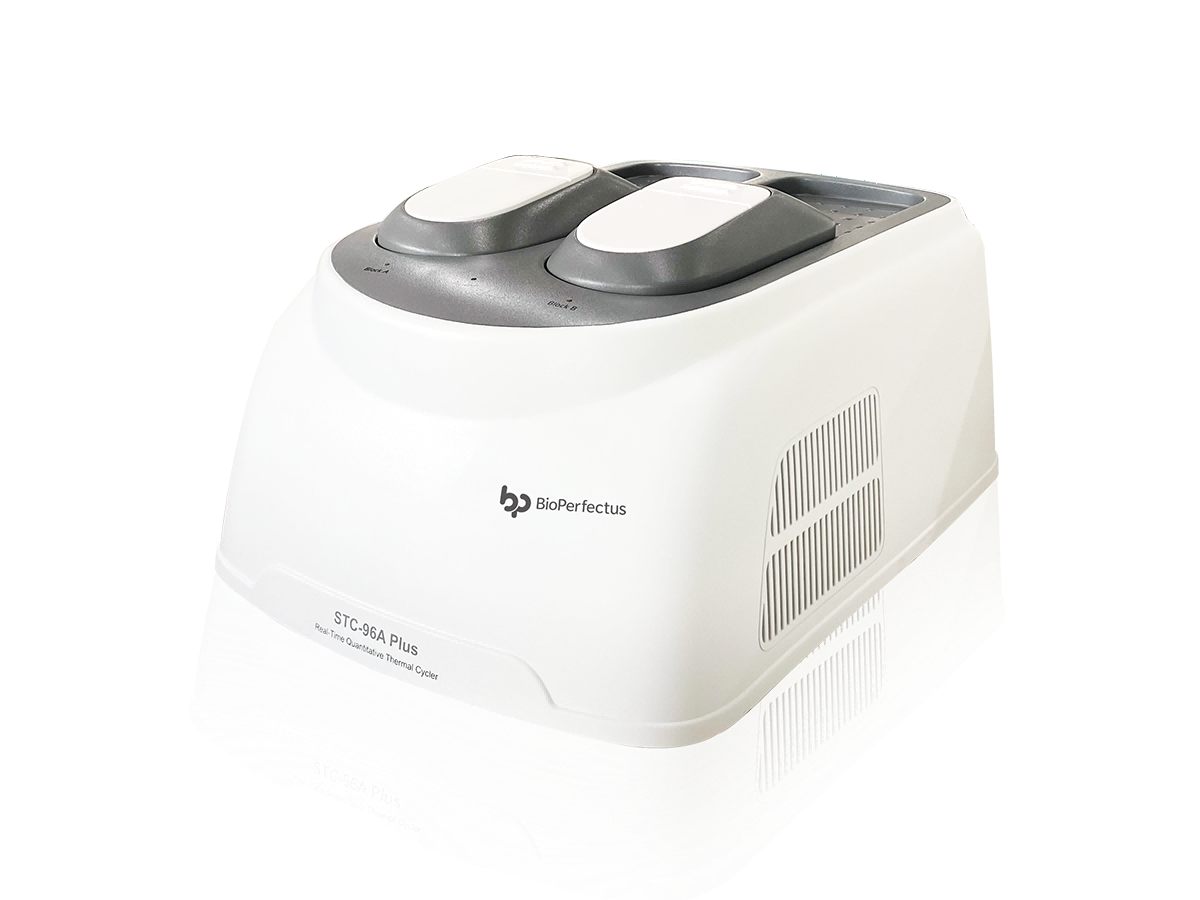
BioPerfectus STC-96A PLUS Real-Time PCR System
How Does the STC-96A PLUS Solve These Throughput and Multiplexing Challenges?
The STC-96A PLUS Real-Time PCR System answers the throughput question with 96-well capacity split across dual 48/48 reaction blocks, letting a lab run two different assays independently on one instrument. On the multiplexing side, its optical filter design separates FAM, HEX, ROX, and CY5 channels without requiring crosstalk calibration, so multi-target panels run cleanly from the first cycle.
| Specification |
STC-96A PLUS |
| Sample capacity |
96 wells (dual 48/48 blocks) |
| Run time |
Under 50 minutes |
| Max ramp rate |
4.0°C/sec |
| Temperature accuracy/uniformity |
0.1°C |
| Sensitivity |
1 copy |
| Reproducibility |
CV < 0.5% |
| Certification |
CE, FDA-listed |
Beyond the specs sheet, the system's dual-block design directly answers the earlier question about running two assays without buying two machines, while its 0.1°C well-to-well uniformity and 4.0°C/sec ramp rate support the fast, precise cycling that shorter run times depend on. For labs evaluating a thermal cycler upgrade, this combination of shared throughput and multiplex flexibility is the practical trade-off most single-block instruments can't offer.
How Should a PCR System Integrate Into a Broader Lab Workflow?
A PCR instrument is only as efficient as the workflow around it. If sample prep, extraction, and result interpretation each require separate manual handoffs, gains at the amplification step get absorbed elsewhere.
What Does End-to-End Integration Look Like in Practice?
End-to-end integration means nucleic acid extraction, PCR setup, amplification, and result interpretation connect with minimal manual intervention between steps.
Consider a mid-sized clinical lab processing 200 respiratory samples daily: extraction happens on an automated workstation, PCR setup transfers directly into 96-well plates, and the real-time PCR system runs two panels simultaneously via its dual blocks. Because each step feeds the next without re-entering data or manually moving plates, daily hands-on time can drop to under an hour, freeing technicians for higher-value tasks like result review.
Real-Time PCR vs. Other Amplification Methods — Which Fits Your Lab?
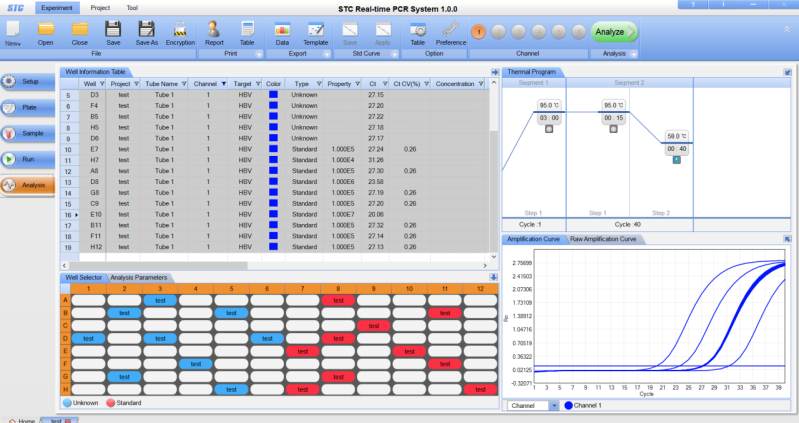
Not every lab needs the same amplification technology, and choosing the wrong one wastes both budget and bench space. The right choice depends on whether a lab prioritizes routine diagnostic volume, absolute quantification precision, or simple presence/absence screening.
| Method |
Best For |
Key Trade-off |
| Real-time PCR (qPCR) |
Routine clinical diagnostics, multiplex panels |
Requires standard curves for quantification |
| Digital PCR (dPCR) |
Rare mutation detection, absolute quantification |
Slower, lower throughput per run |
| Endpoint PCR |
Simple presence/absence testing, research screening |
No real-time quantitative data |
Clinical diagnostic labs processing high daily volumes typically favor real-time PCR because it balances speed, quantification, and multiplexing in one workflow. Research labs studying rare variants may lean toward digital PCR for its precision, even at the cost of throughput. Meanwhile, labs with simple screening needs and tighter budgets sometimes still rely on endpoint PCR, though it sacrifices the quantitative detail that real-time PCR provides.
Choosing a PCR System Built for Your Lab's Needs
The throughput-versus-multiplexing trade-off doesn't have to be a compromise. Labs that treat run time, channel separation, and workflow integration as connected decisions — rather than isolated spec sheet items — end up with instruments that fit their actual daily volume, not just their theoretical capacity.
Whether a lab is scaling routine diagnostic testing or building out multiplex panels for broader pathogen coverage, the underlying question stays the same: does this PCR system reduce hands-on time while expanding what a single run can detect? For labs weighing that question, exploring the BioPerfectus Total PCR Solution is a reasonable next step before committing to a new instrument.
