Cholera can cause severe dehydration within hours, making timely diagnosis essential for effective disease management and outbreak response. While conventional culture remains important for identifying Vibrio cholerae, its processing time can delay laboratory confirmation. Real-time polymerase chain reaction (PCR) offers a molecular approach by detecting bacterial DNA directly from clinical specimens. Understanding how PCR works, how it compares with other methods, and where it fits into laboratory workflows can help improve cholera disease diagnosis.
Why Does Early Detection Matter in Cholera Diagnosis?
Early detection helps identify cholera cases, guide outbreak investigations, and support timely public health interventions. Cholera is an acute diarrheal infection caused by toxigenic strains of Vibrio cholerae, usually transmitted through contaminated food or water. Severe cases can progress rapidly to dehydration and electrolyte loss.[3]
Because symptoms can resemble those of other diarrheal diseases, laboratory confirmation is important for identifying the responsible pathogen. However, the CDC emphasizes that treatment, particularly rehydration, should begin without waiting for laboratory results.[4]
Reliable testing contributes to cholera management in several ways:
- Pathogen identification: Detects V. cholerae or its targeted genetic material in specimens from suspected cases, depending on the testing method.
- Outbreak surveillance: Provides laboratory evidence to help public health teams recognize and investigate transmission.
- Response planning: Supports decisions about surveillance priorities and infection prevention measures.
For these reasons, an effective diagnostic strategy must balance timely results with reliable pathogen identification.
How Does Real-Time PCR Identify Vibrio cholerae?
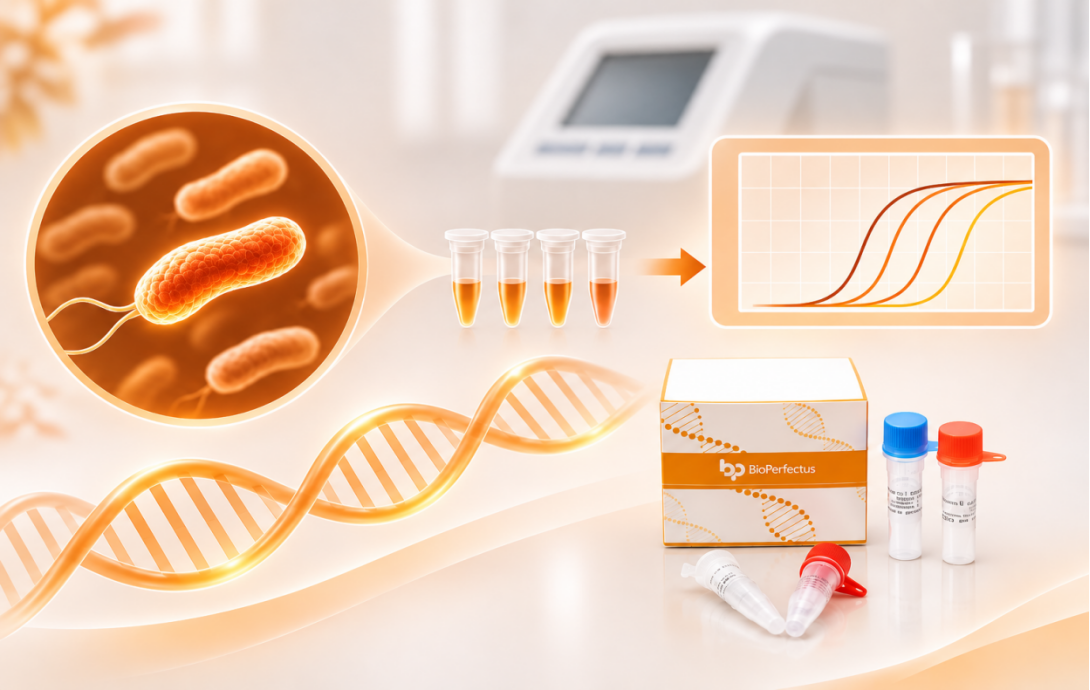
Real-time PCR detects Vibrio cholerae by amplifying specific bacterial DNA sequences and monitoring fluorescent signals during amplification. Unlike conventional culture, which requires bacterial growth, PCR identifies targeted genetic material without first isolating the organism. This makes it a valuable molecular method for laboratory-based cholera detection.
The testing process generally involves three main steps:
- DNA extraction: Genetic material is extracted from a clinical specimen, typically stool, to prepare it for amplification.
- Target amplification: Specific primers and fluorescent probes are used to amplify and detect selected V. cholerae DNA sequences.
- Result interpretation: The real-time PCR instrument monitors fluorescence during amplification, allowing laboratories to determine whether the targeted sequences are detected according to the assay's interpretation criteria.
Beyond identifying the bacterial species, multiplex PCR assays can distinguish clinically important serogroups, depending on the assay design. Toxigenic strains of V. cholerae belonging to serogroups O1 and O139 are associated with epidemic cholera, making their differentiation valuable for laboratory identification and public health surveillance.
PCR vs. Culture vs. RDT: What Are the Key Differences?
PCR, bacterial culture, and rapid diagnostic tests (RDTs) serve complementary roles in cholera detection. Their suitability depends on the required information, available laboratory infrastructure, and urgency of testing.
| Method |
Main Advantages |
Key Limitations |
| Real-Time PCR |
Detects bacterial DNA and can identify specific genetic targets without culture isolation |
Requires molecular instruments, trained personnel, and quality-controlled workflows |
| Bacterial Culture |
Produces bacterial isolates for identification, characterization, and antimicrobial susceptibility testing |
Requires viable bacteria and generally takes longer than molecular amplification |
| RDT |
Supports rapid screening, particularly where laboratory resources are limited |
Performance varies by assay, and appropriate confirmatory testing is required |
Culture remains valuable because recovered isolates enable further microbiological investigations. PCR offers a different advantage: targeted genetic identification without waiting for bacterial growth.
In a 2026 meta-analysis of 22 studies involving 20,353 specimens, Yao et al. reported pooled RDT sensitivity of 95% (95% CI, 93–97%) and specificity of 95% (95% CI, 91–97%).[5] These pooled estimates do not establish the accuracy of every RDT or the performance of a particular PCR assay.
Rather than selecting one method for every situation, laboratories should combine available techniques according to their diagnostic and surveillance objectives.
How Can Laboratories Ensure Reliable Cholera PCR Results?
Reliable cholera PCR testing depends on the entire laboratory workflow, not simply the amplification technology. Specimen quality, contamination prevention, quality controls, and accurate interpretation can all influence test reliability.
Four practices deserve particular attention:
- Proper sample handling: Collect stool specimens promptly and use suitable containers and transport conditions. Delays or inappropriate handling may compromise sample quality and affect testing.
- Contamination prevention: Maintain separation between specimen preparation and amplified DNA handling areas. Appropriate workflow controls help reduce the risk of false-positive results.
- Internal quality controls: Use assay controls to monitor the analytical process and identify potential inhibition or technical problems. A failed control should trigger investigation according to the validated procedure.
- Consistent result interpretation: Apply manufacturer-defined criteria and established laboratory protocols. Results should be considered alongside clinical findings and relevant epidemiological information.
A negative molecular result does not necessarily exclude infection if specimen collection or processing was inadequate.
Standardized procedures, personnel training, and routine quality monitoring help laboratories make molecular findings more dependable.
How Does BioPerfectus Support PCR-Based Cholera Diagnosis?
For laboratories implementing molecular cholera testing, selecting a suitable assay is an important part of establishing a reliable workflow. BioPerfectus provides molecular diagnostic solutions covering nucleic acid extraction, real-time PCR assays, instruments, and laboratory automation.
Its Vibrio Cholerae Real Time PCR Kit is a CE-IVD assay designed for qualitative detection of V. cholerae DNA in human stool specimens. The kit combines several features relevant to laboratory-based cholera disease diagnosis.[1,2]
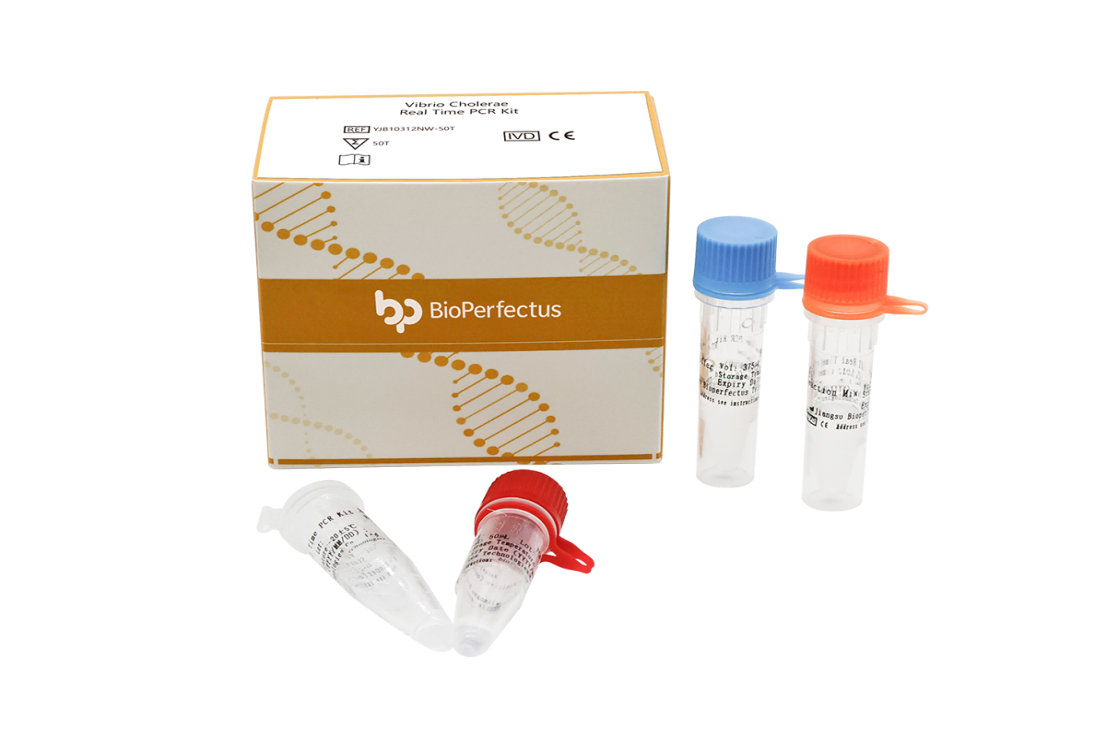
- Multiplex Detection and Serogroup Differentiation: The assay detects V. cholerae DNA while differentiating O1 and O139 serogroups. This provides additional identification information within the specified multiplex testing workflow.
- Analytical Sensitivity and Internal Control: The manufacturer specifies a limit of detection of 5 copies/reaction (10³ copies/mL). An internal control supports quality monitoring, although the analytical detection limit should not be confused with clinical diagnostic sensitivity.
- Efficient Laboratory Throughput: According to the product specifications, the assay processes 96 samples in 62 minutes, with automated result interpretation available on the STC real-time PCR system. This figure does not represent the complete specimen-to-report turnaround time.
- Designed for Stool-Based Testing: The kit is intended for human stool specimens, with a specified sample input volume of 200 μL. It is available in 25-test and 50-test configurations for professional laboratory use.[2]
By combining multiplex detection, internal quality controls, and defined processing capabilities, the Vibrio Cholerae Real Time PCR Kit supports the detection of Vibrio cholerae by PCR within a standardized laboratory workflow. These features help laboratories evaluate the assay against their testing requirements and operational needs.
Conclusion
Real-time PCR strengthens cholera diagnosis by enabling targeted identification of Vibrio cholerae without relying on bacterial culture alone. With proper sample handling and quality controls, it complements culture and rapid screening methods. The BioPerfectus Vibrio Cholerae Real Time PCR Kit provides a molecular testing option for laboratories seeking structured, stool-based cholera detection.
References
[1] BioPerfectus. Official Website. https://www.bioperfectus.com/
[2] BioPerfectus. Vibrio Cholerae Real Time PCR Kit — Official Product Specifications. https://www.bioperfectus.com/productdetail/vibriocholeraerealtimepcrkit
[3] World Health Organization (WHO). Cholera – Fact Sheet. https://www.who.int/news-room/fact-sheets/detail/cholera
[4] Centers for Disease Control and Prevention (CDC). Cholera Clinical Detection. https://www.cdc.gov/cholera/php/laboratories/cholera-clinical-detection.html
[5] Yao, X., et al. (2026). Diagnostic Accuracy of Rapid Diagnostic Tests for Vibrio cholerae Serogroups O1 and O139: A Systematic Review and Meta-Analysis. International Journal of Infectious Diseases. https://pubmed.ncbi.nlm.nih.gov/42349776/
