Group B Streptococcus (GBS), or Streptococcus agalactiae, remains a leading pathogen responsible for severe neonatal infections, including sepsis, meningitis, and pneumonia, as well as significant perinatal morbidity worldwide1. As an intermittent colonizer of the human gastrointestinal and genitourinary tracts in 10% to 30% of pregnant women, vertical transmission to the newborn occurs during labor or following membrane rupture in roughly 50% of colonized pregnancies2. In the absence of intrapartum antibiotic prophylaxis (IAP), 1% to 2% of infants born to colonized mothers develop early-onset GBS disease (EOGBS)2. Early-onset infection carries a neonatal mortality rate of approximately 10%, with surviving infants frequently suffering long-term neurological sequelae such as cerebral palsy and cognitive impairment2.
The implementation of universal antenatal screening combined with targeted intrapartum antibiotic prophylaxis has successfully reduced the incidence of EOGBS from 1.8 cases per 1,000 live births in the 1990s to approximately 0.23 cases per 1,000 live births in modern clinical settings4. Despite these advancements, clinical prevention strategies are constrained by the diagnostic limitations of traditional microbial culture7. Standard culture methods require lengthy incubation periods and demonstrate high false-negative rates, leading to unmitigated neonatal exposures7. Consequently, nucleic acid amplification testing (NAAT) using real-time polymerase chain reaction (real-time PCR) has emerged as an alternative capable of replacing or augmenting culture protocols in selected workflows2. Evaluating the transition from conventional culture to molecular PCR requires a rigorous analysis of diagnostic sensitivity—specifically the reduction of false-negative results—and health economic sustainability across institutional workflows.
Diagnostic Performance and False-Negative Dynamics
The primary clinical vulnerability of traditional microbial culture lies in its limited analytical and operational sensitivity. Standard microbiological guidelines recommend collecting combined rectovaginal swabs between 36 0/7 and 37 6/7 weeks of gestation, incubating the specimens in selective enrichment broth (such as Todd-Hewitt broth supplemented with nalidixic acid and gentamicin) for 18 to 24 hours, and subsequently subculturing onto sheep blood agar or chromogenic media for an additional 24 to 48 hours2. The cumulative processing time of 36 to 72 hours precludes real-time intrapartum assessment, forcing clinicians to rely on antenatal predictions made weeks prior to delivery2.
Analytical Sensitivity and False-Negative Rates
Antenatal microbial culture exhibits a sensitivity ranging from 54.3% to 83.3%, leaving up to 45.7% of GBS-colonized pregnant women unidentified7. This low analytical sensitivity stems from several factors, including the inability of culture agar to detect low bacterial densities, sample degradation during transport, and the overgrowth of commensal vaginal microbiota8. Direct comparative studies demonstrate that quantitative real-time PCR targeting conserved genetic regions—such as the cfb or atr genes—significantly outperforms culture in detecting maternal colonization1. Within identical patient cohorts, verified colonization detection rates rise from 3.8% using standard culture to 17.7% with conventional PCR and 29.2% using real-time PCR8. When evaluated against composite reference standards incorporating microbial culture and DNA sequencing, standard culture exhibits a false-negative rate exceeding 19%, whereas pre-enriched real-time PCR reduces false-negative results to less than 4%7.
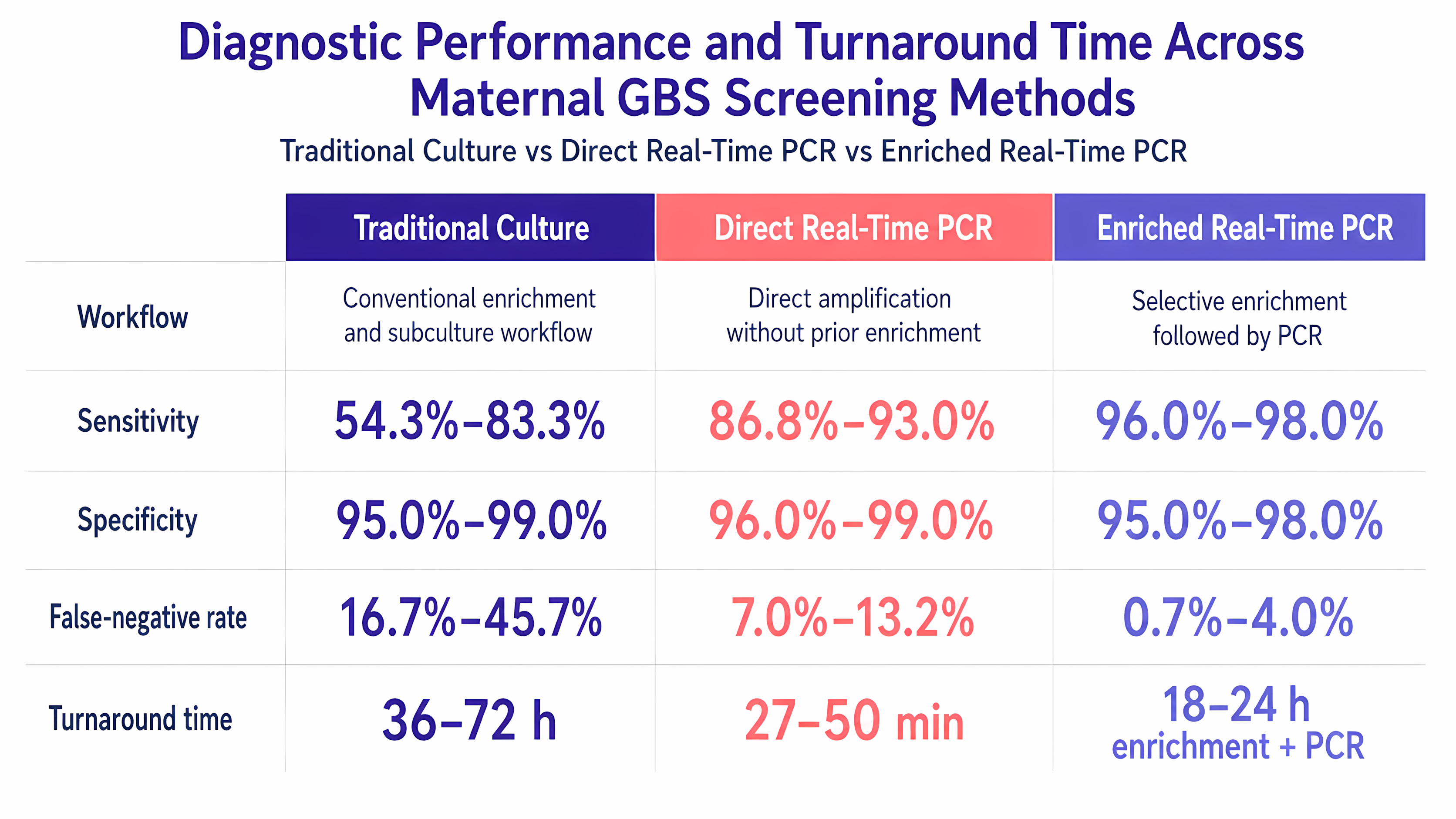
Figure 1. Diagnostic performance and turnaround time across maternal GBS screening methods. Values shown are ranges reported in the cited studies.
A comprehensive meta-analysis evaluating 81 reports across 133 research cohorts confirmed that real-time PCR achieves a pooled sensitivity of 96% (95% CI: 94%–97%), a pooled specificity of 98% (95% CI: 97%–98%), and an area under the Summary Receiver Operating Characteristic (SROC) curve of 0.9915. Subgroup analyses within this meta-analysis illustrate how pre-enrichment steps influence performance:
- Enrichment followed by real-time PCR against culture: Pooled sensitivity of 98% (95% CI: 97%–99%) and specificity of 94% (95% CI: 92%–96%)15.
- Direct real-time PCR without enrichment against culture: Pooled sensitivity of 92% (95% CI: 89%–94%) and specificity of 96% (95% CI: 95%–97%)15.
- Enrichment followed by real-time PCR against composite standard: Pooled sensitivity of 98% (95% CI: 97%–99%) and specificity of 99% (95% CI: 99%–99%)15.
- Direct real-time PCR without enrichment against composite standard: Pooled sensitivity of 93% (95% CI: 87%–97%) and specificity of 100% (95% CI: 99%–100%)15.
Temporal Discordance and the Intrapartum Window
Beyond analytical sensitivity, traditional culture is compromised by biological temporal discordance. Maternal rectovaginal GBS colonization is dynamic, transient, and intermittent2. Although antenatal screening at 36 0/7 to 37 6/7 weeks of gestation is designed to capture status prior to delivery, prospective studies show that approximately 30% of women who test positive for GBS at 35 to 37 weeks clear the organism and become negative by delivery2. Conversely, a similar proportion of women who test negative during antenatal screening acquire GBS colonization prior to labor2.
Because traditional culture requires a multi-day incubation period, testing must occur weeks in advance, introducing a significant lag during which maternal colonization status can shift unpredictably. This temporal discordance creates false-negative classification at delivery, where an antenatally negative mother harbors GBS during labor and transmits the pathogen without receiving IAP2. Direct intrapartum point-of-care PCR can address this issue by executing the assay during labor, delivering results within 27 to 50 minutes and capturing the mother's true colonization status at the exact time of delivery2.
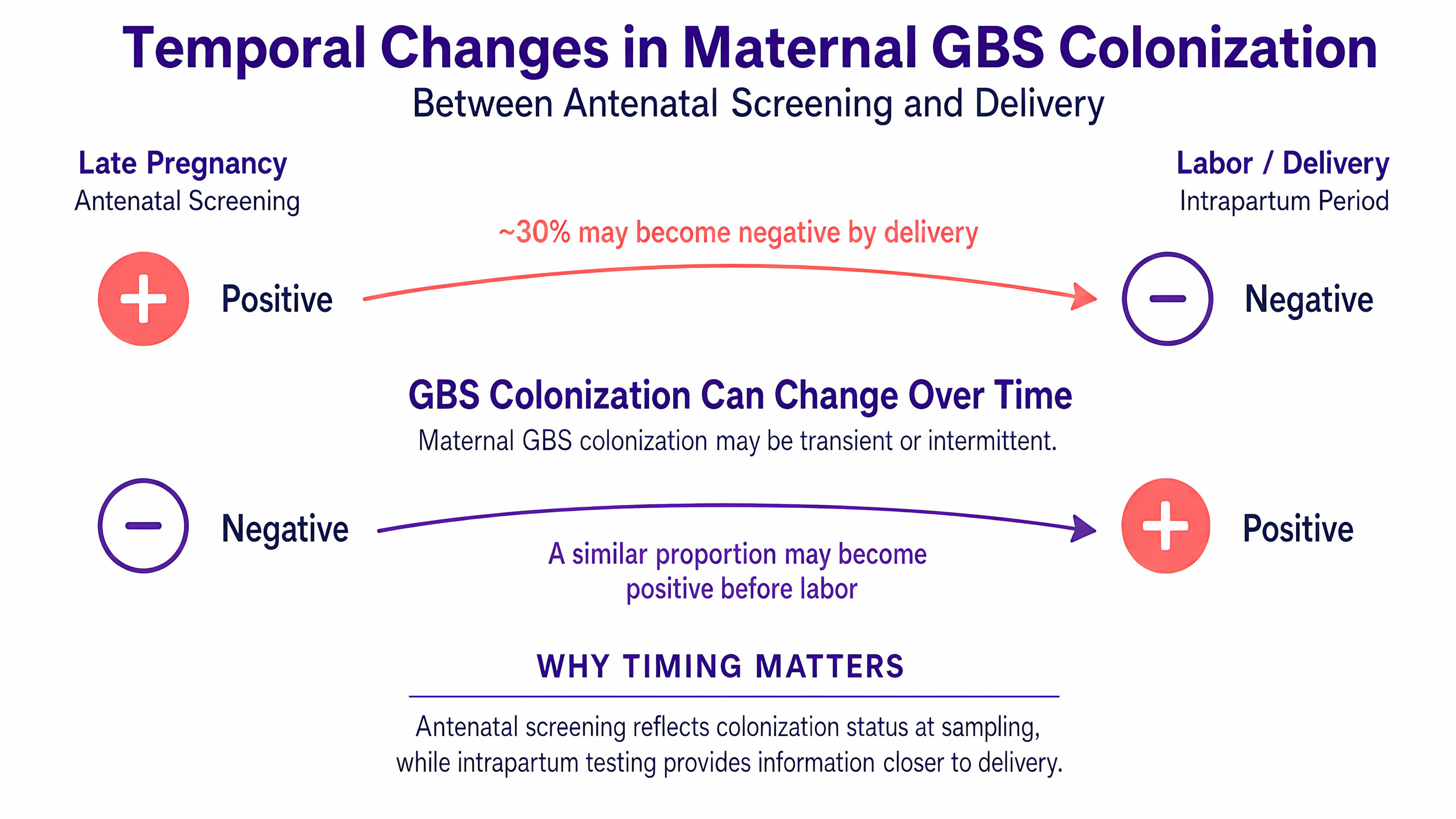
Figure 2. Temporal changes in maternal GBS colonization between antenatal screening and delivery. Maternal GBS colonization can be transient or intermittent, meaning that an antenatal result may not always reflect colonization status during labor.
Health Economic Evaluation and Cost-Effectiveness
Evaluating the adoption of molecular GBS screening requires balancing assay cost against downstream clinical savings. While PCR kits incur higher unit reagent expenditures than traditional culture media, health economic evaluations suggest that molecular testing can achieve institutional cost neutrality or net health system savings by reducing early-onset sepsis cases, neonatal intensive care admissions, and long-term disability costs9.
Real-World Institutional Cost-Neutrality and Sepsis Reduction
A multi-year clinical and economic investigation conducted by El Helali et al. provided landmark evidence regarding the financial impact of transitioning from antenatal culture to point-of-care intrapartum PCR18. An initial intention-to-treat comparison between term deliveries screened via antenatal culture (n=2,761) and intrapartum PCR (n=2,814) established that intrapartum PCR increased maternal colonization detection from 11.7% to 16.7% as a result of superior analytical sensitivity18.
Despite the additional expense of molecular cartridges, the average overall cost per delivery—encompassing screening, delivery management, and infant care—was $1,754 in the intrapartum PCR group compared to $1,759 in the antenatal culture group (P=0.9), indicating that the molecular approach was cost-neutral in this study18.
A subsequent ten-year longitudinal follow-up study (11,226 deliveries under culture vs. 18,835 under intrapartum PCR) demonstrated substantial long-term clinical and financial benefits19:
- Unscreened Deliveries: The proportion of term deliveries occurring without a known GBS status dropped from 3.8% during the antenatal culture period to 0.1% during the intrapartum PCR period (P < 0.001)19.
- Reduction in Neonatal Sepsis: Proven early-onset GBS sepsis rates fell by 79%, dropping from 1.01 per 1,000 live births under culture to 0.21 per 1,000 live births under intrapartum PCR (P=0.026)19. Probable EOGBS cases declined from 2.80 to 0.73 per 1,000 live births (P < 0.001), establishing a combined risk ratio of 0.25 (95% CI: 0.14–0.43)19.
- Hospital Days and Antibiotic Utilization: Total hospital treatment days and antibiotic duration for neonatal GBS sepsis declined by 64% and 60%, respectively19.
- Direct Healthcare Expenditures: Direct annual hospital costs for treating infant GBS infections were reduced from 41,875±6,823 in the culture era to 11,945±10,303 under intrapartum PCR (P < 0.001)19.
- Cost per Infection Averted: The incremental operational cost of implementing point-of-care PCR averaged $49 per newborn, translating to an extra cost of $5,819 (95% CI: $2,909–$10,183) per averted case of early-onset GBS disease—a figure well below standard healthcare willingness-to-pay thresholds19.
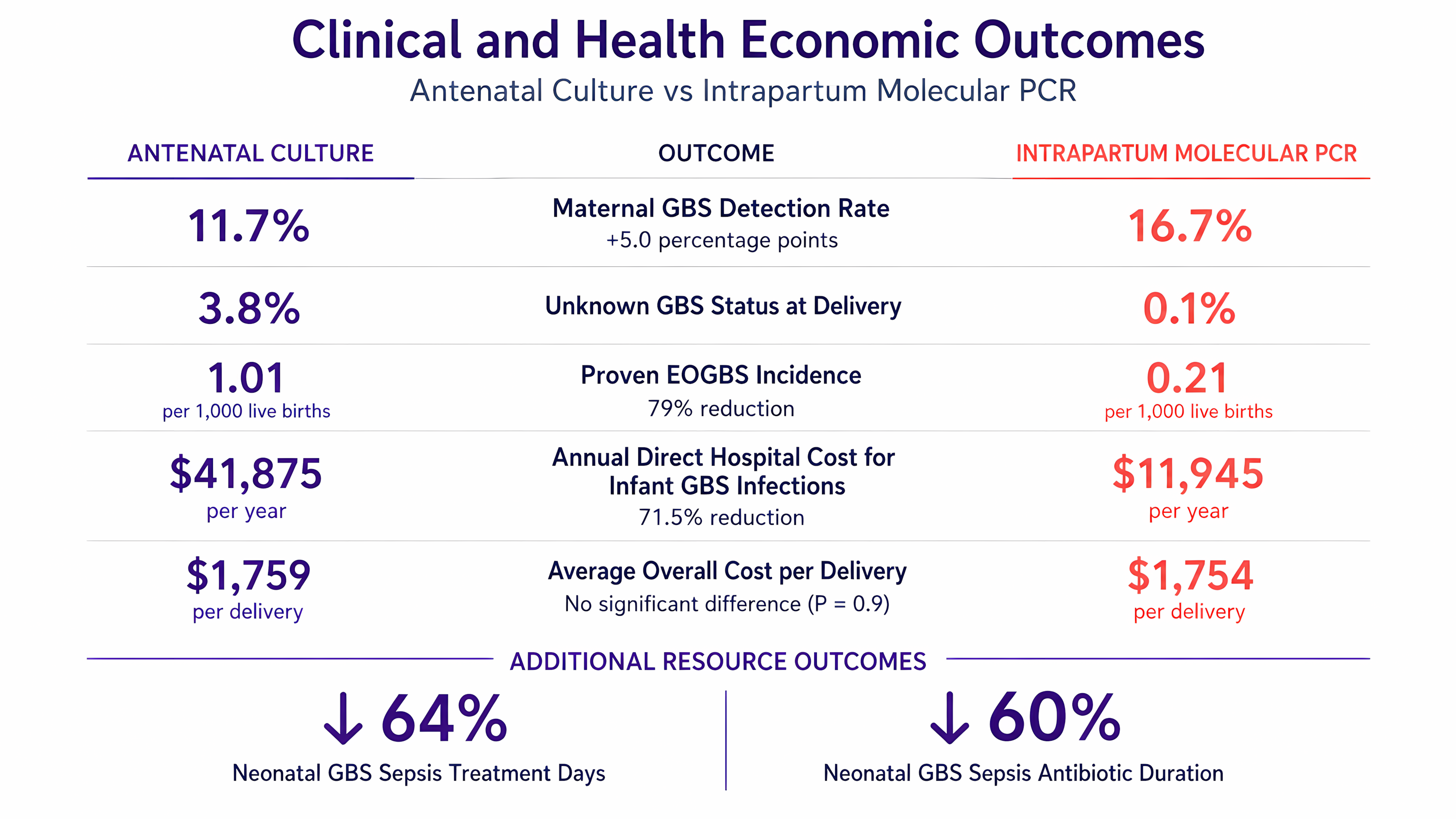
Figure 3. Selected clinical and health economic outcomes reported in studies comparing antenatal culture with intrapartum molecular PCR for maternal GBS screening. Outcomes are study-specific and may vary across healthcare settings.
Decision-Tree Modeling and Quality-Adjusted Life Years
Decision-analytic modeling across international healthcare systems confirms that incorporating real-time PCR improves quality-adjusted life year (QALY) metrics9. Economic evaluations in European populations indicate that pure risk-factor-based prophylaxis (administering antibiotics based on clinical signs like fever or prolonged membrane rupture without universal screening) prevents EOGBS cases at an estimated €7,600 per QALY gained13. Universal culture screening achieves a greater overall reduction in sepsis cases but carries an incremental cost-effectiveness ratio (ICER) of €59,300 per QALY gained due to false-negative cultures leading to unmitigated sepsis13. Integrating real-time PCR lowers the ICER significantly toward standard willingness-to-pay benchmarks (e.g., €20,000 to €25,000/QALY) by preventing high-cost neonatal intensive care stays and severe permanent neurological deficits6.
Systematic reviews of economic evaluations highlight that the net cost-effectiveness of molecular screening depends heavily on baseline maternal GBS prevalence21. In health systems with maternal colonization rates exceeding 15% to 20%, the financial savings achieved by avoiding intensive care management for infected newborns outweigh reagent expenditures, establishing cost dominance (superior efficacy at lower overall cost)21.
Operational Integration and Workflow Frameworks
Implementing molecular GBS screening into clinical practice requires structuring laboratory workflows to align with obstetric timing and antimicrobial stewardship mandates. Practice guidelines issued by the American College of Obstetricians and Gynecologists (ACOG Committee Opinions No. 782 and 797) and the American Society for Microbiology (ASM) define distinct roles for enriched antepartum NAAT and rapid point-of-care intrapartum testing5.
Enriched Prenatal NAAT versus Rapid Point-of-Care Intrapartum NAAT
For routine prenatal screening performed at 36 0/7 to 37 6/7 weeks of gestation, when NAAT is used, laboratory guidance supports an 18-to-24-hour selective broth enrichment step prior to nucleic acid extraction and amplification5. Eliminating pre-enrichment during outpatient screening causes a 5% to 8% drop in diagnostic sensitivity, as low-density bacterial carriage may fail to reach the analytical limit of detection without amplification in broth7. Enriched prenatal NAAT provides high diagnostic accuracy (sensitivity >98%), supporting its use as a highly sensitive option for scheduled outpatient screening where rapid turnaround time is not required5.
Conversely, direct, non-enriched intrapartum rapid NAAT (such as the automated Cepheid GeneXpert system) is designed specifically for point-of-care deployment in labor and delivery suites12. Capable of delivering validated results in 27 to 50 minutes with automated early assay termination for positive specimens, rapid intrapartum PCR addresses key clinical scenarios12:
- Unscreened Parturients: Women presenting in active labor without prior antenatal care or documented screening results receive definitive diagnostic classification rapidly enough to allow for at least 4 hours of targeted intravenous penicillin or ampicillin prophylaxis prior to delivery4.
- Preterm Labor and Precipitous Delivery: Preterm deliveries (<37 weeks) carry a disproportionately high risk of severe neonatal sepsis5. Rapid intrapartum testing ensures immediate diagnostic verification without delaying necessary antibiotic administration5.
- Antimicrobial Stewardship: Risk-based intrapartum protocols traditionally expose 65% to 85% of GBS-negative women with isolated risk factors (such as intrapartum fever or prolonged membrane rupture) to broad-spectrum antibiotics16. Rapid intrapartum PCR provides immediate confirmation of GBS status, allowing clinicians to withhold unnecessary intrapartum antibiotics from non-colonized women and limiting selective pressure for resistant bacterial strains3.
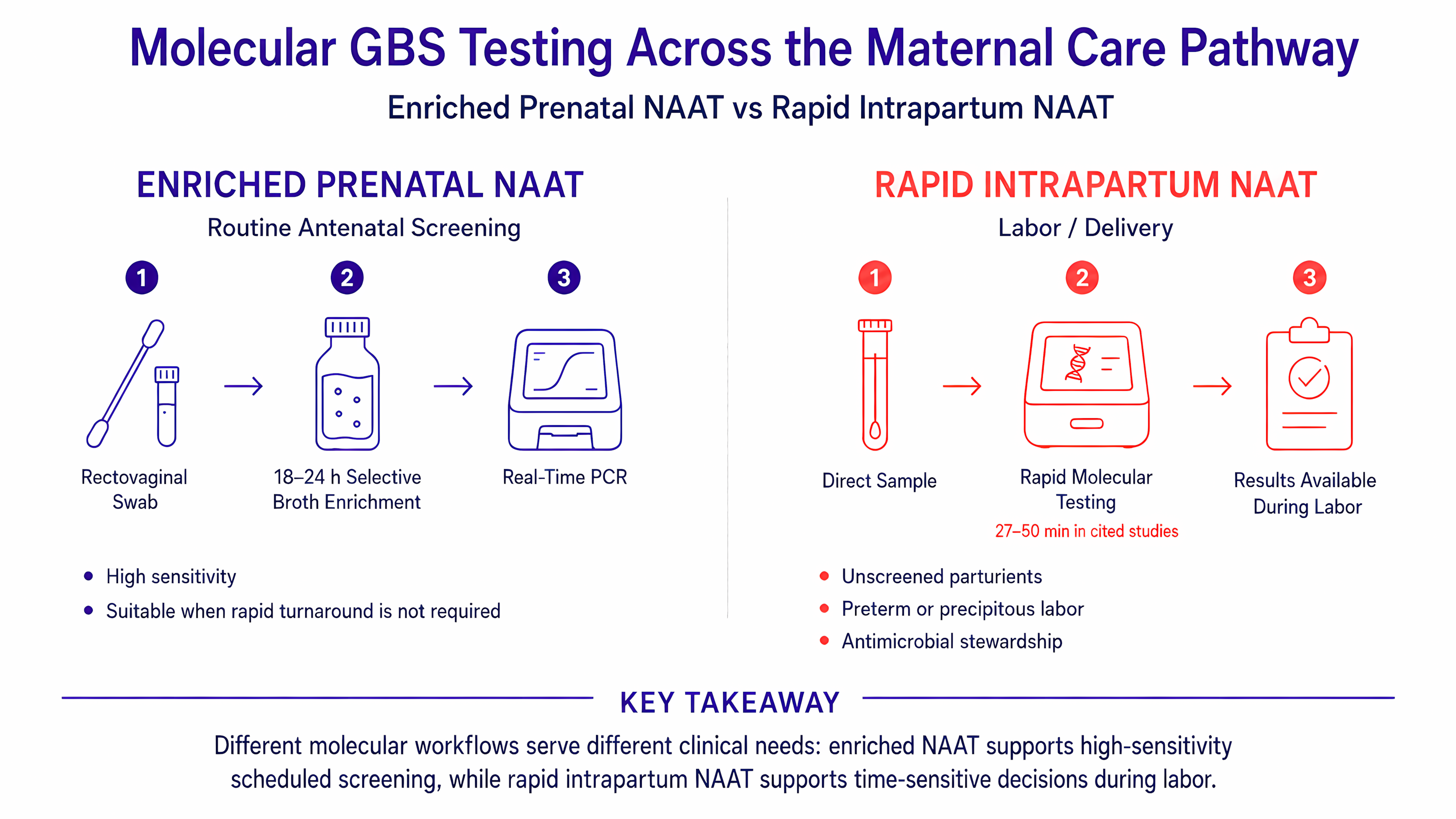
Figure 4. Molecular GBS testing across the maternal care pathway. Enriched prenatal NAAT supports high-sensitivity scheduled antenatal screening, whereas rapid intrapartum NAAT supports time-sensitive clinical decisions during labor.
Operational Barriers and Implementation Challenges
Despite its clinical and economic benefits, transitioning to molecular GBS screening presents operational challenges9:
- Continuous Laboratory Coverage: Providing continuous, 24/7 point-of-care molecular testing in labor and delivery units requires ongoing nursing and clinical staff training, routine device maintenance, and strict adherence to quality control standards9.
- Antimicrobial Susceptibility Testing Limitations: Molecular assays targeting conserved GBS DNA sequences do not provide phenotypic antibiotic susceptibility profiles9. For penicillin-allergic parturients at high risk for anaphylaxis, alternative agents like clindamycin require phenotypic susceptibility testing, necessitating reflex culture or multiplex resistance gene testing4.
- Capital Equipment Expenditure: Purchasing multi-bay molecular diagnostic platforms requires upfront capital investment, which can pose a barrier for community hospitals despite long-term health system cost neutrality9.
Strategic Policy Recommendations and Conclusion
The body of evidence comparing maternal GBS molecular screening to traditional microbial culture demonstrates clear advantages in diagnostic accuracy, clinical outcomes, and health system cost efficiency7. Standard culture methods are limited by false-negative rates ranging from 16.7% to 45.7% and fail to account for transient colonization shifts during late gestation2. Enriched real-time PCR achieves diagnostic sensitivity exceeding 98% with false-negative rates below 4%, while direct intrapartum point-of-care PCR enables real-time testing during labor7. Financially, the higher initial cost of molecular reagents is offset by reductions in neonatal sepsis incidence, intensive care admissions, and long-term disability expenses, supporting the potential for molecular testing to be cost-neutral or cost-saving in some settings18.
To optimize clinical outcomes and resource utilization, health systems and policy makers should consider the following strategic actions:
- Adopt Enriched NAAT for Outpatient Screening: Replace direct agar culture plating with an 18-to-24-hour selective broth enrichment step followed by real-time PCR for routine antenatal screening at 36 0/7 to 37 6/7 weeks, minimizing false-negative classifications5.
- Deploy Rapid Molecular Testing in Delivery Units: Implement rapid point-of-care PCR platforms in labor wards to evaluate unscreened women, unscheduled preterm labor cases, and precipitous deliveries, ensuring timely and targeted antibiotic prophylaxis5.
- Optimize Antimicrobial Stewardship: Utilize negative rapid intrapartum PCR results to withhold unnecessary broad-spectrum intrapartum antibiotics in low-risk women presenting with isolated clinical risk factors, curbing antimicrobial resistance development3.
- Utilize Value-Based Budgeting: Evaluate molecular diagnostic expenditures using an integrated health economic model that factors in neonatal ICU savings and quality-adjusted life year gains, rather than assessing laboratory reagent costs in isolation9.
References
1. Group B Streptococcus detection: comparison of PCR assay and culture as a screening method for pregnant women - PubMed
2. Real-time polymerase chain reaction tests versus antenatal culture tests for the screening of maternal group B Streptococcus colonisation in labour - PMC
3. Group B Streptococcus and Pregnancy - StatPearls - NCBI Bookshelf - NIH
4. Committee Opinion, Number 782, June 25, 2019, Prevention of Group B Streptococcal Early-Onset Disease in Newborns - Maternofetal
5. Prevention of Group B Streptococcal Early-Onset Disease in Newborns - Lippincott
6. The burden of infant group B streptococcal infections in Ontario: Analysis of administrative data to estimate the potential benefits of new vaccines - PMC
7. Evaluation of a sensitive real-time PCR assay for Group B Streptococcus detection in vaginal-rectal swab - PMC
8. Assessment of conventional PCR and real-time PCR compared to the gold standard method for screening Streptococcus agalactiae in pregnant women - PMC
9. Q&A: intrapartum molecular testing for GBS - O&G Magazine
10. Comparison of Three Nucleic Acid Amplification Tests and Culture for Detection of Group B Streptococcus from Enrichment Broth - PMC
11. GBS Screening: An update on guidelines and methods - Contemporary OB/GYN
12. Group B Streptococcus detection in pregnant women: comparison of qPCR assay, culture, and the Xpert GBS rapid test - PMC
13. Cost-effectiveness of different treatment strategies with intrapartum antibiotic prophylaxis to prevent early-onset group B streptococcal disease - ResearchGate
14. Evaluation of polymerase chain reaction for group B streptococcus detection using an improved culture method - PubMed
15. Accuracy of real-time polymerase chain reaction test for Group B Streptococcus detection in pregnant women: A systematic review and meta-analysis - PubMed
16. Xpert® GBS LB XC - Cepheid
17. Challenges and opportunities of universal culture-based Group B streptococcus screening in Hong Kong -- a retrospective cross-sectional study - Authorea
18. Cost and Effectiveness of Intrapartum Group B Streptococcus Polymerase Chain Reaction Screening for Term Deliveries - ResearchGate
19. Point-of-Care Intrapartum Group B Streptococcus Molecular Screening: Effectiveness and Costs - ResearchGate
20. Cost and effectiveness of intrapartum group B streptococcus polymerase chain reaction screening for term deliveries - PubMed
21. The Cost-Effectiveness of Group B Streptococcus Screening Strategies in Pregnant Women for the Prevention of Newborn Early-onset Group B Streptococcus: A Systematic Review - medRxiv
22. The Cost-Effectiveness of Group B Streptococcus Screening Strategies in Pregnant Women for the Prevention of Newborn Early-onset - ResearchGate
23. American Society for Microbiology Provides 2020 Guidelines for Detection and Identification of Group B Streptococcus - ResearchGate
24. Antepartum Screening for Group B Streptococcus by Three FDA-Cleared Molecular Tests and Effect of Shortened Enrichment Culture on Molecular Detection Rates - PMC
