Europe's record-breaking 2026 West Nile virus season highlights expanding transmission, clinical challenges, and the importance of timely diagnosis and coordinated public health action.
A Record-Breaking West Nile Virus Season in Europe
West Nile virus (WNV) has drawn renewed public health attention across Europe in 2026, as reported human infections and geographical spread have reached unprecedented levels.
According to the European Centre for Disease Prevention and Control (ECDC), 1,926 locally acquired human cases had been reported across 19 European countries as of 14 October 2026, with 222 affected areas identified during the transmission season. Italy recorded the highest number of cases (764), followed by Greece (455), France (159), Spain (141), and Romania (121). [1]
By comparison, 1,112 locally acquired human cases were reported across Europe during the entire 2025 transmission season. [2]
Beyond the rising case numbers, the geographical expansion is particularly notable. Greece and France have reported their highest numbers of human WNV cases to date, while detections in Belgium and the Netherlands indicate further northward spread. Belgium has also recorded its first locally acquired human WNV infections. [3]
The 2026 season saw particularly intense transmission during the summer, with activity peaking in August–September before declining. Importantly, ECDC reports no evidence of increased disease severity, despite the record number of reported infections. [3], [4]
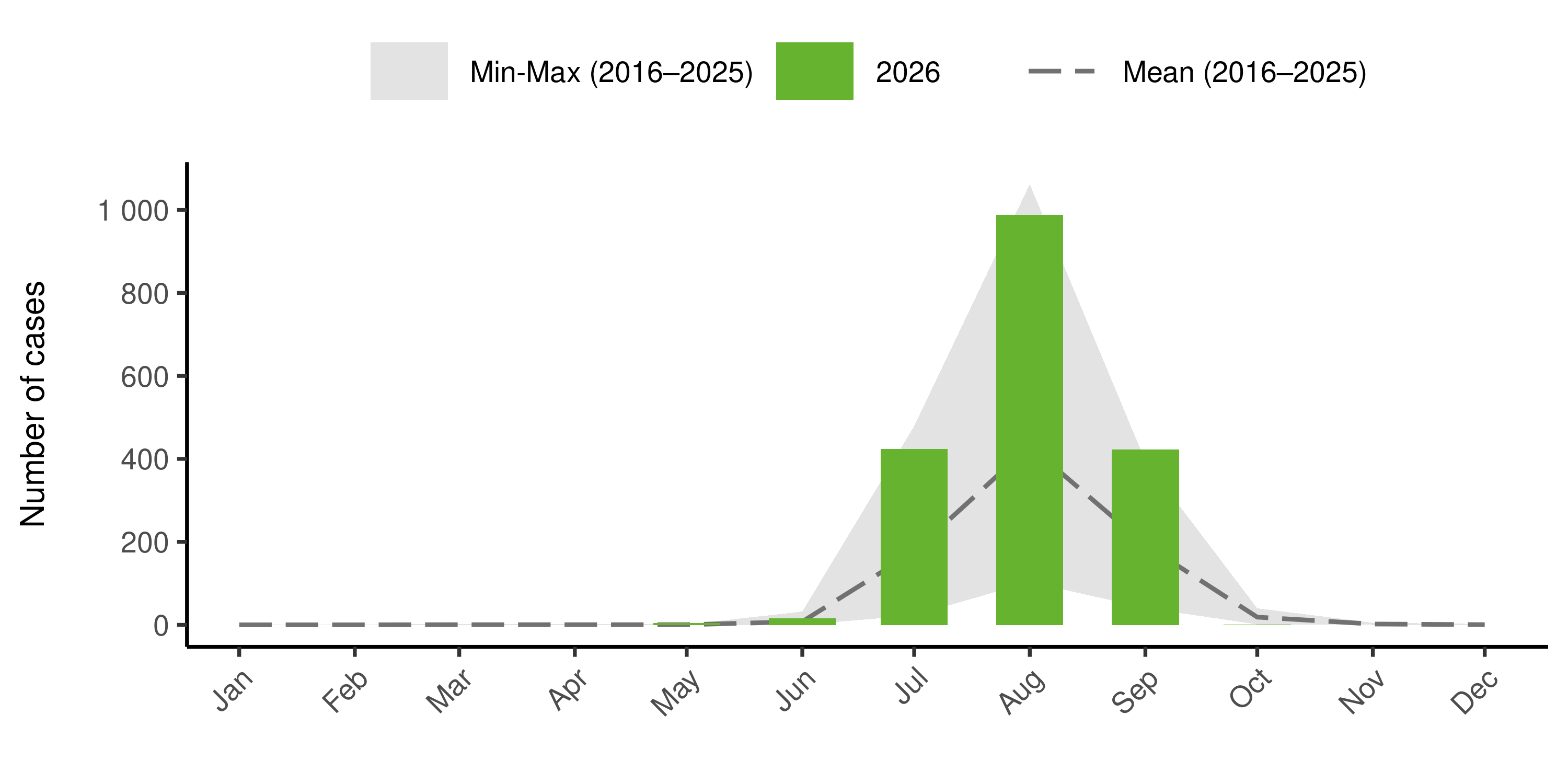
Figure 1. Monthly distribution of locally acquired human West Nile virus cases in Europe in 2026, compared with the historical range and mean for 2016–2025. Data as of 7 October 2026. Source: ECDC and EFSA, West Nile Virus Monthly Surveillance Report, October 2026, original Figure 4.
Understanding West Nile Virus: Transmission and Health Risks
West Nile virus belongs to the genus Flavivirus and is transmitted primarily through the bites of infected mosquitoes, particularly those of the Culex genus.
How Does West Nile Virus Spread?
In nature, WNV circulates between birds and mosquitoes. Mosquitoes acquire the virus when feeding on infected birds and can subsequently transmit it to other birds, humans, and mammals.
Humans and horses are generally considered dead-end hosts, meaning that they typically do not develop sufficient levels of virus in their bloodstream to sustain mosquito-borne transmission.
Although mosquito bites are the primary route of infection, transmission through blood transfusion and organ transplantation has also been documented in rare circumstances. [5]
Figure 2. West Nile virus transmission cycle involving mosquitoes and birds, with humans and horses serving as dead-end hosts. Source: Centers for Disease Control and Prevention (CDC), West Nile Transmission Cycle, 2013. Public domain.
Clinical Manifestations: From Mild Illness to Neurological Complications
Approximately 80% of people infected with WNV develop no symptoms, while around 20% experience West Nile fever, which may include fever, headache, fatigue, muscle aches, nausea, vomiting, or rash.
Fewer than 1% of infected individuals develop severe neurological disease, such as meningitis, encephalitis, or acute flaccid myelitis. Older adults and people with weakened immune systems face an increased risk of severe complications. [6]
European surveillance data illustrate the clinical burden among reported cases. As of 7 October 2026, 59% of reported WNV cases across Europe were classified as having neurological symptoms, while 33.7% were classified under other clinical manifestations and 7% were reported as asymptomatic. [4]
These figures reflect surveillance-reported cases rather than all infections. More severe cases are more likely to be diagnosed and reported, while many mild or asymptomatic infections remain undetected. Therefore, these percentages should not be interpreted as the overall risk of neurological disease among all infected individuals.
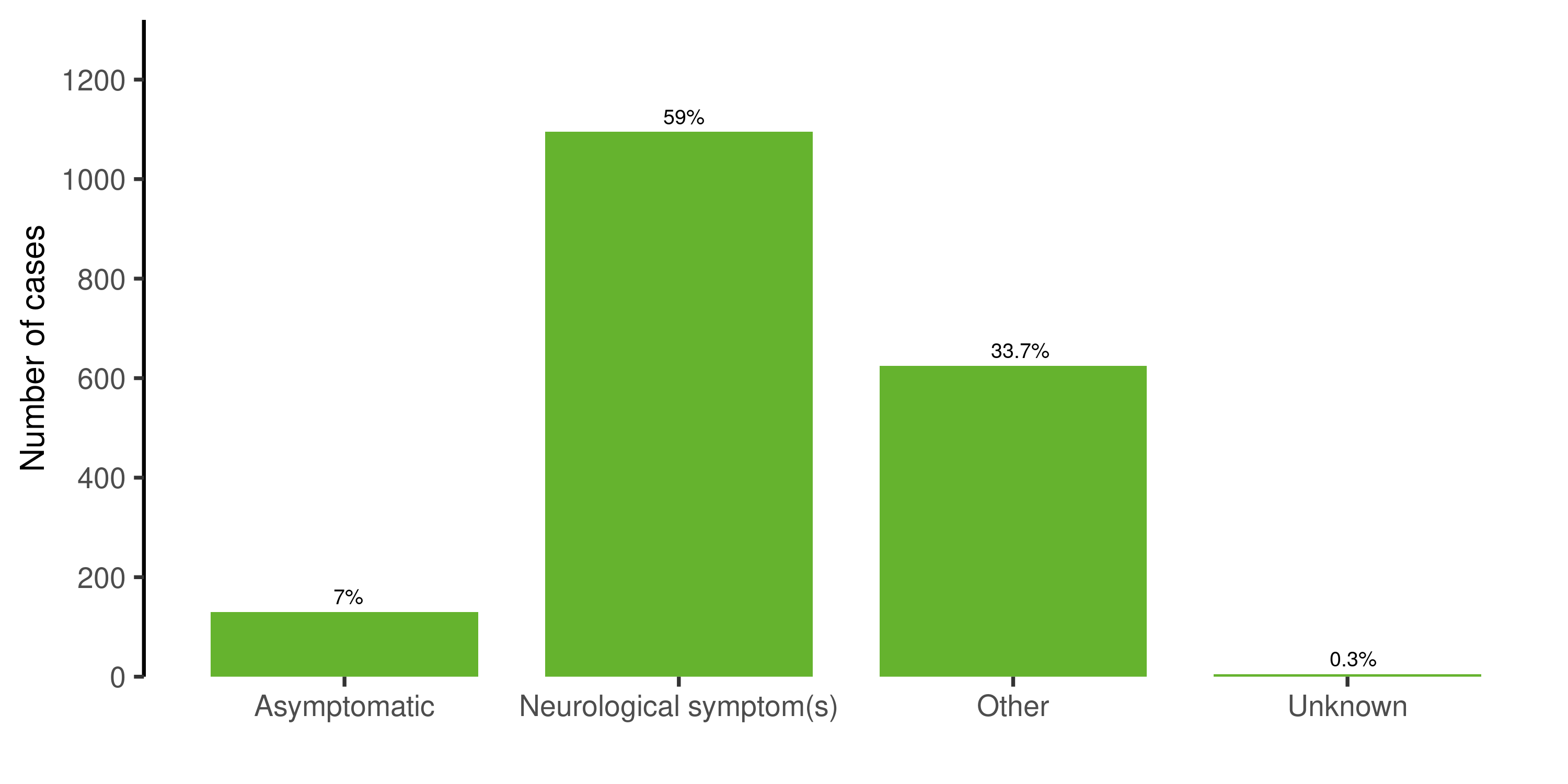
Figure 3. Clinical manifestations among locally acquired human West Nile virus cases reported in Europe in 2026. Percentages represent surveillance-reported cases, not all infections. Data as of 7 October 2026. Source: ECDC and EFSA, West Nile Virus Monthly Surveillance Report, October 2026, original Figure 34.
Diagnosing West Nile Virus: Clinical Assessment and Testing
West Nile virus infection can resemble other causes of fever and neurological illness, making accurate diagnosis challenging. Clinical assessment should consider symptoms, exposure history, and the timing of illness.
For most suspected cases, WNV-specific IgM antibody testing in serum and/or cerebrospinal fluid (CSF) is the recommended initial approach. However, cross-reactivity with related flaviviruses may require additional confirmatory testing.
RT-PCR provides a complementary approach by directly detecting WNV RNA, particularly in certain immunocompromised patients who may have delayed or absent antibody responses.
The usefulness of molecular testing depends on the timing of specimen collection and viral RNA levels. A negative RT-PCR result does not exclude WNV infection. [7]
Selecting appropriate diagnostic methods according to the clinical context can support accurate diagnosis and subsequent public health action.
Prevention and One Health Surveillance
Beyond individual diagnosis, WNV control relies on surveillance across human and animal populations.
Through a One Health approach, ECDC and the European Food Safety Authority (EFSA) monitor human infections alongside WNV activity in birds and horses. These findings help public health and veterinary authorities assess transmission risks, guide prevention measures, and support blood safety decisions in affected areas. [4]
With no licensed human vaccine or specific antiviral treatment currently available, preventing mosquito bites remains essential. Reducing breeding sites, implementing mosquito-control measures, and maintaining public awareness can help limit exposure and transmission. [8]
BioPerfectus: Supporting West Nile Virus Molecular Detection
As part of its vector-borne disease testing portfolio, BioPerfectus provides the West Nile Virus Real Time PCR Kit, a CE-IVD-marked assay designed to detect WNV RNA in human whole blood and serum specimens.
Based on real-time PCR technology, the kit provides a molecular detection option for clinical diagnostic and testing services where WNV RNA testing is appropriate.
Key Product Features
- CE-IVD Marked: CE-marked in vitro diagnostic assay.
- Sample Compatibility: Human whole blood and serum.
- Efficient Testing: 96 samples in 84 minutes.
- Analytical Sensitivity: Limit of detection (LoD) of 5 copies/reaction.
- Internal Control: Included to support the testing process.
The kit is available in 25-test and 50-test configurations, with a sample input volume of 5 μL.
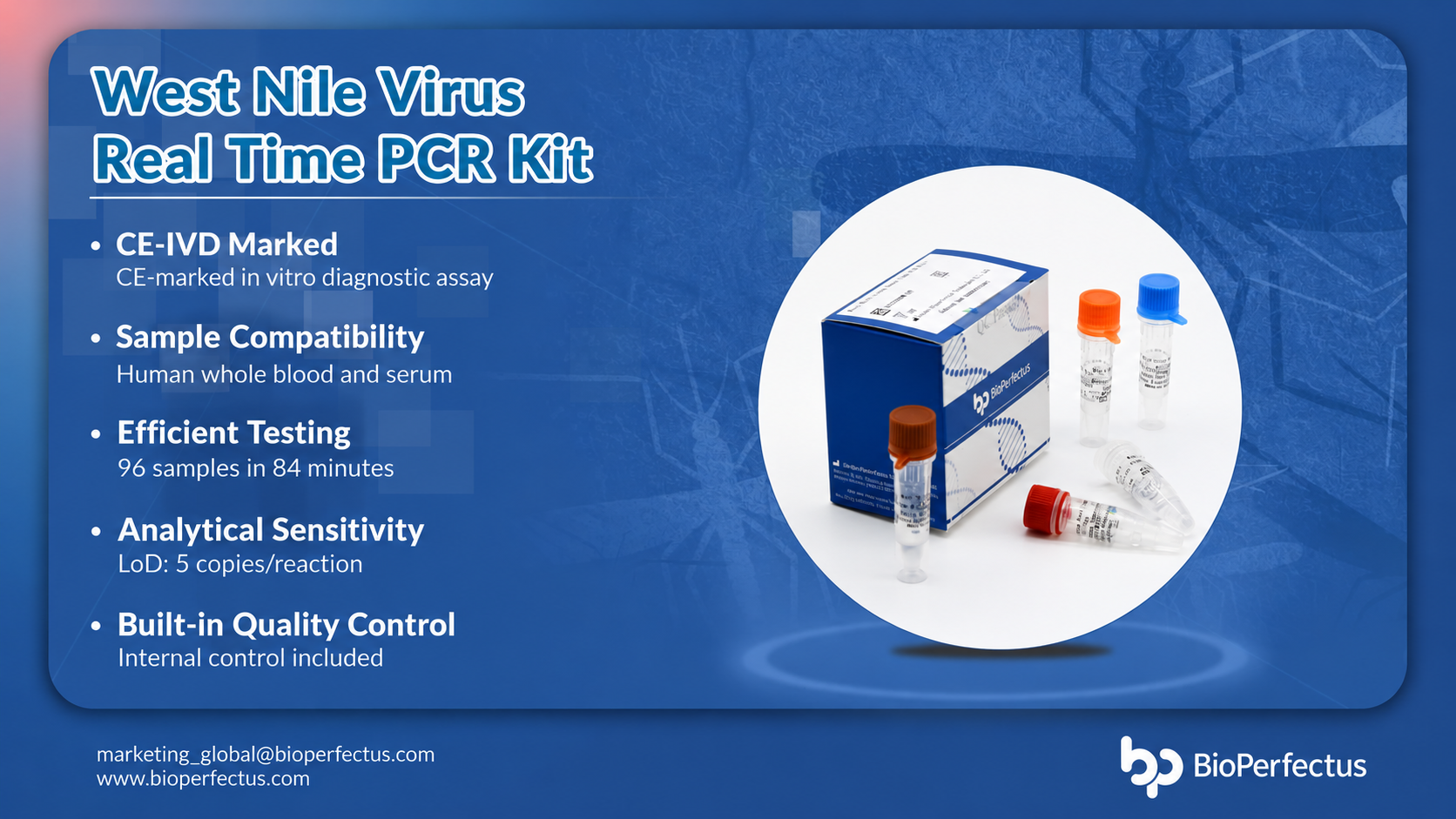
Figure 4. BioPerfectus West Nile Virus Real Time PCR Kit, a CE-IVD-marked assay for the detection of West Nile virus RNA in human whole blood and serum. Source: BioPerfectus official product information.
The assay offers an additional option for WNV molecular testing, with test selection and result interpretation guided by clinical context, specimen timing, and applicable diagnostic recommendations.
Looking Ahead
The 2026 West Nile virus season demonstrates how mosquito-borne infections can expand into new geographical areas, creating challenges for clinical recognition, disease monitoring, and public health response.
As transmission patterns evolve, timely diagnosis, sustained surveillance, and effective prevention will remain essential to understanding infection risks and protecting affected communities.
References
[1] ECDC. Surveillance of West Nile Virus Infections in Humans in Europe, Weekly Report — Week 42, 2026. Published 16 October 2026.
[2] ECDC. Historical Data on Local Transmission in Europe for West Nile Virus.
[3] ECDC. Record-High West Nile Virus Infections Reported Amid Spread to New Parts of Europe. 15 October 2026.
[4] ECDC and EFSA. Surveillance of West Nile Virus Infections in Humans and Animals in Europe, Monthly Report — October 2026. Data as of 7 October 2026.
[5] CDC. West Nile: Causes and How It Spreads.
[6] CDC. Clinical Signs and Symptoms of West Nile Virus Disease.
[7] CDC. Clinical Testing and Diagnosis for West Nile Virus Disease.
[8] CDC. Clinical Treatment and Prevention.
