A 2026 study published in Frontiers in Immunology examined the associations between HPV viral load, disease progression, clinical outcomes, and the tumor immune microenvironment.
Persistent infection with high-risk human papillomavirus (HPV) is the primary cause of cervical cancer; however, the prognostic role of HPV viral load and its association with the tumor immune microenvironment remain incompletely understood.
HPV viral load, defined as the copy number of HPV DNA per unit of tumor tissue, reflects the abundance of the virus in tumor cells. Previous studies have reported associations between higher HPV viral load and greater disease severity or worse clinical outcomes, although conflicting findings remain.
In June 2026, Guo et al. published a retrospective study in Frontiers in Immunology to systematically evaluate the associations between HPV viral load and disease progression, prognosis, and the tumor immune microenvironment in cervical neoplasia.
The study also explored the prognostic value of dynamic viral load changes after treatment, together with associations involving serum markers and sex hormones.
Study design and HPV testing
This single-center retrospective cohort study used data extracted from the electronic medical record system, including demographic characteristics, clinicopathological characteristics, HPV genotyping and viral load, immune parameters, serum tumor markers, sex hormones, treatment, and follow-up. For disease-grade analyses, diagnostic grade was coded as inflammation/benign, LSIL, HSIL, and invasive carcinoma.
HPV viral load was quantified and log10-transformed. Nonlinear segmented regression was applied to determine the optimal cutoff value; the final cutoff was log10 = 5.6, and patients were accordingly divided into low- and high-viral-load groups.
HPV testing in the study
HPV testing in this study was performed using the BioPerfectus Human Papillomavirus Genotyping Real Time PCR Kit.
According to the published Methods, Group H specifically contains primers and a FAM-labeled probe for the human reference gene, while the remaining groups target 21 HPV types. After the run, raw data are imported into the dedicated HPV Nucleic Acid Genotyping Quantitative Analysis Software V1.0. The number of HPV DNA copies and the number of reference gene copies are then computed, and viral load is automatically expressed as copies per cell.
1. HPV viral load increased with higher disease grade
HPV viral load increased significantly with higher disease grade (p for trend < 0.001, Jonckheere-Terpstra test).
The rise was steep from inflammation to HSIL and then plateaued in cancer.
HPV16 was the most prevalent genotype in cancer, while HPV52 and HPV58 were frequently observed in HSIL. The proportion of HPV16 positivity increased monotonically with disease severity (p for trend < 0.001, Cochran-Armitage trend test).
2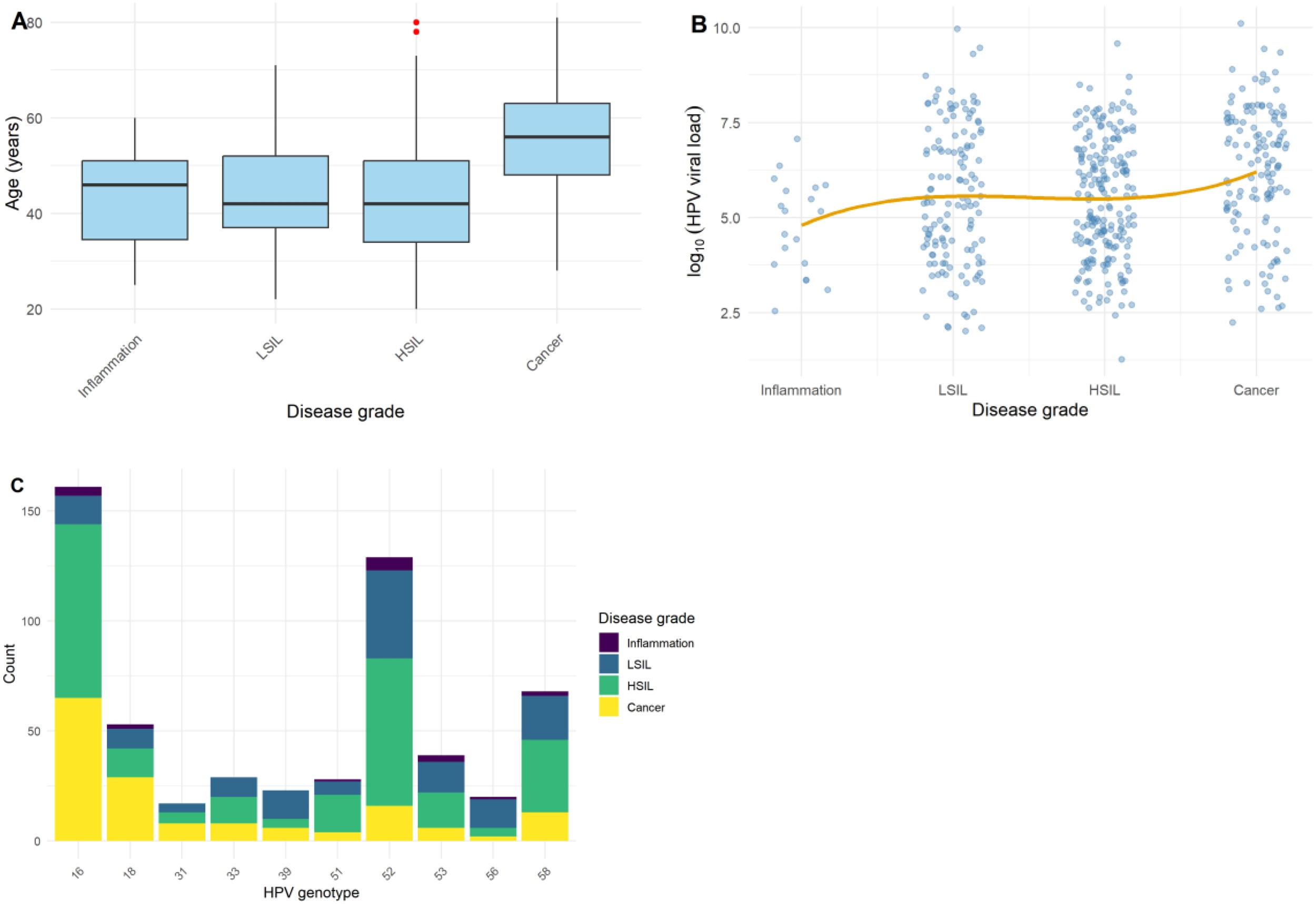
Figure 1. HPV viral load, age, and genotype distribution across the cervical disease spectrum.
These results describe an association between HPV viral load and disease grade. They should not be interpreted as evidence that viral load alone determines cervical disease progression.
2. High HPV viral load was independently associated with recurrence
The median follow-up time was 28 months (range 6–58 months).
Kaplan-Meier curves showed that the high-viral-load group had numerically lower overall survival (OS) and recurrence-free survival (RFS) compared with the low-viral-load group: 5-year OS, 68.5% vs. 87.3% (log-rank p = 0.38); 5-year RFS, 59.3% vs. 82.1% (log-rank p = 0.068).
- 5-year overall survival: 68.5% vs. 87.3%
- 5-year recurrence-free survival: 59.3% vs. 82.1%
The differences did not reach statistical significance.
Multivariable Cox regression, adjusting for age, FIGO stage, lymph node metastasis, and distant metastasis, confirmed high viral load as an independent predictor of recurrence (HR 2.18, 95% CI 1.32–3.61, p = 0.002).
FIGO stage III-IV and lymph node metastasis were also independent prognostic factors.
The study therefore distinguishes the nonsignificant Kaplan-Meier survival differences from the significant multivariable association between high viral load and recurrence.
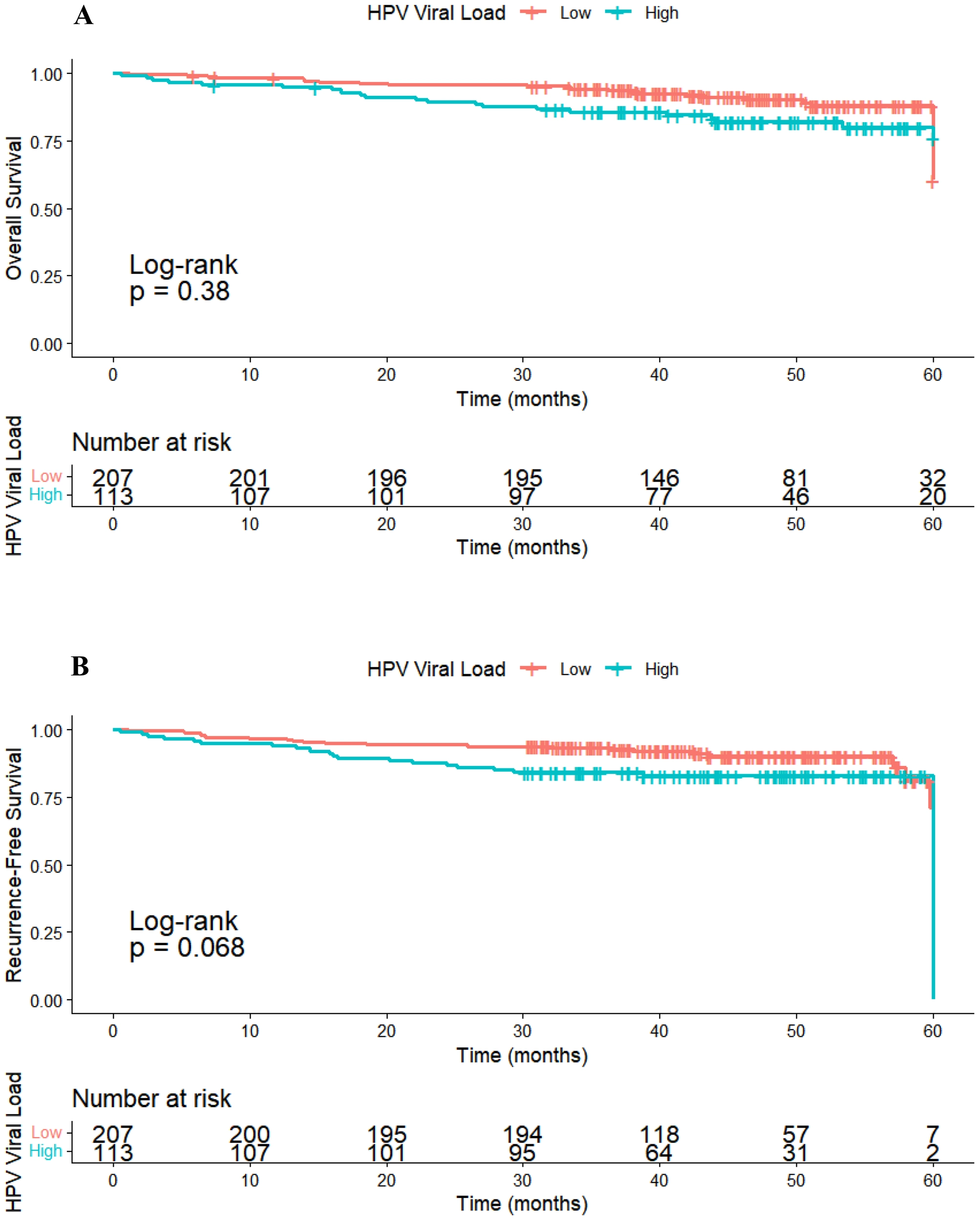
Figure 2. Kaplan-Meier curves for overall survival (A) and recurrence-free survival (B) in low and high HPV viral load groups. Note: The sharp terminal drop reflects the limited number of patients remaining at risk after 50 months.
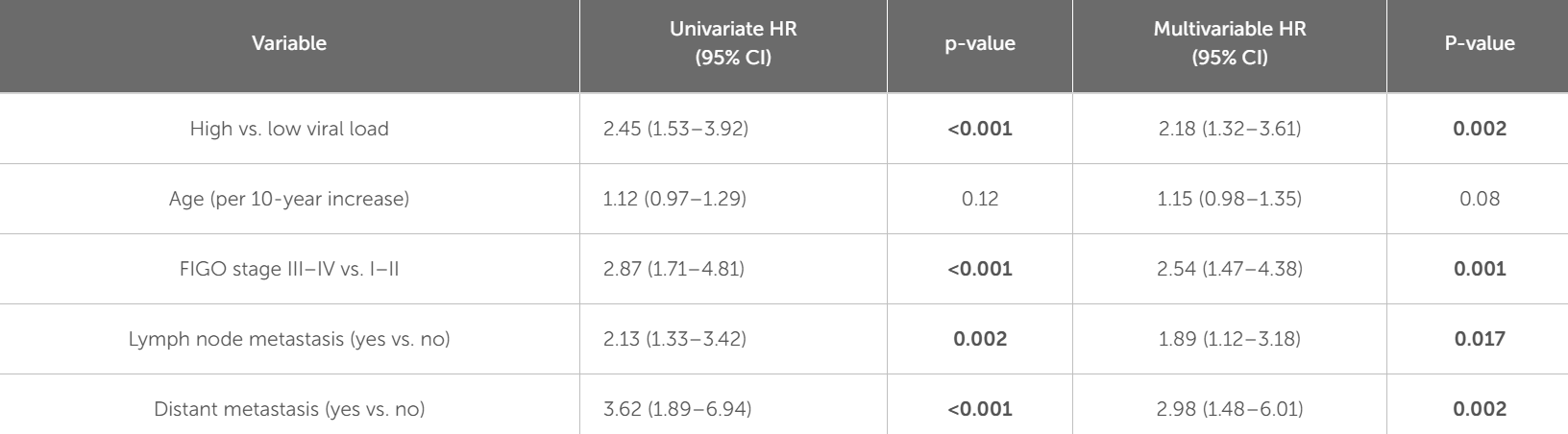
Table 1. Univariate and multivariable Cox regression analyses for overall survival and recurrence-free survival.
3. High viral load was associated with lower T-cell infiltration and higher proliferative activity
Data on immune parameters were available for 70 patients.
The high-viral-load group had a significantly lower proportion of CD3+ T cells (12.1 ± 5.8% vs. 18.3 ± 7.2%, p = 0.001) and a lower CD4+/CD8+ ratio (0.98 ± 0.47 vs. 1.32 ± 0.54, p = 0.01), while the proportion of FOXP3+ Treg cells did not differ between groups (3.5 ± 1.9% vs. 3.8 ± 2.1%, p = 0.62).
The PD-L1 positivity rate (CPS ≥ 1) was significantly lower in the high-viral-load group (36.4% vs. 63.2%, p = 0.045). Ki67 positivity was higher in the high-viral-load group (58.3 ± 21.2% vs. 42.5 ± 18.7%, p = 0.003), while p16 positivity showed a trend toward higher prevalence (89.7% vs. 79.5%, p = 0.07). Sample sizes varied by marker because of missing data.
A TILs score was constructed by summing the z-score-standardized values of CD3+, CD4+, CD8+, and FOXP3+ percentages.
The high-viral-load group had a significantly lower TILs score than the low-viral-load group (−1.2 ± 0.8 vs. 0.9 ± 0.7, p < 0.001). In multivariable Cox models, a low TILs score independently predicted recurrence (HR 2.34, 95% CI 1.28–4.28, p = 0.006), and HPV viral load remained significant after adjustment (HR 1.42, 95% CI 1.02–1.97, p = 0.04).
Cluster analysis identified a "high viral load–low immune infiltration–high proliferation" cluster.
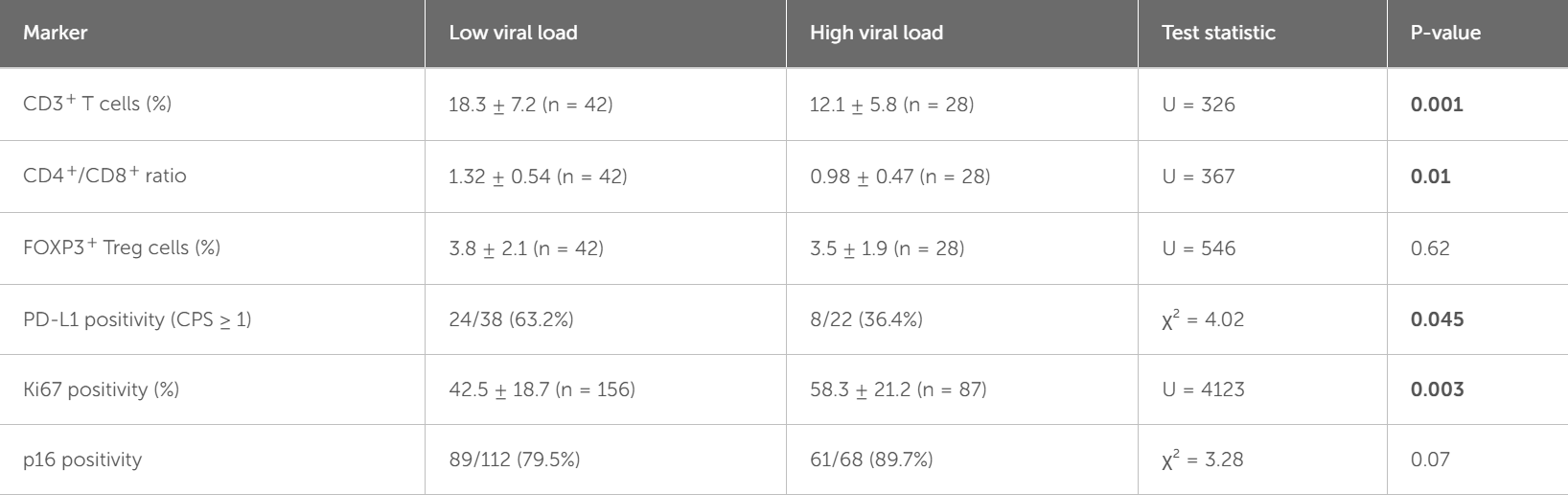
Table 2. Comparison of tumor immune microenvironment markers between HPV viral load groups.
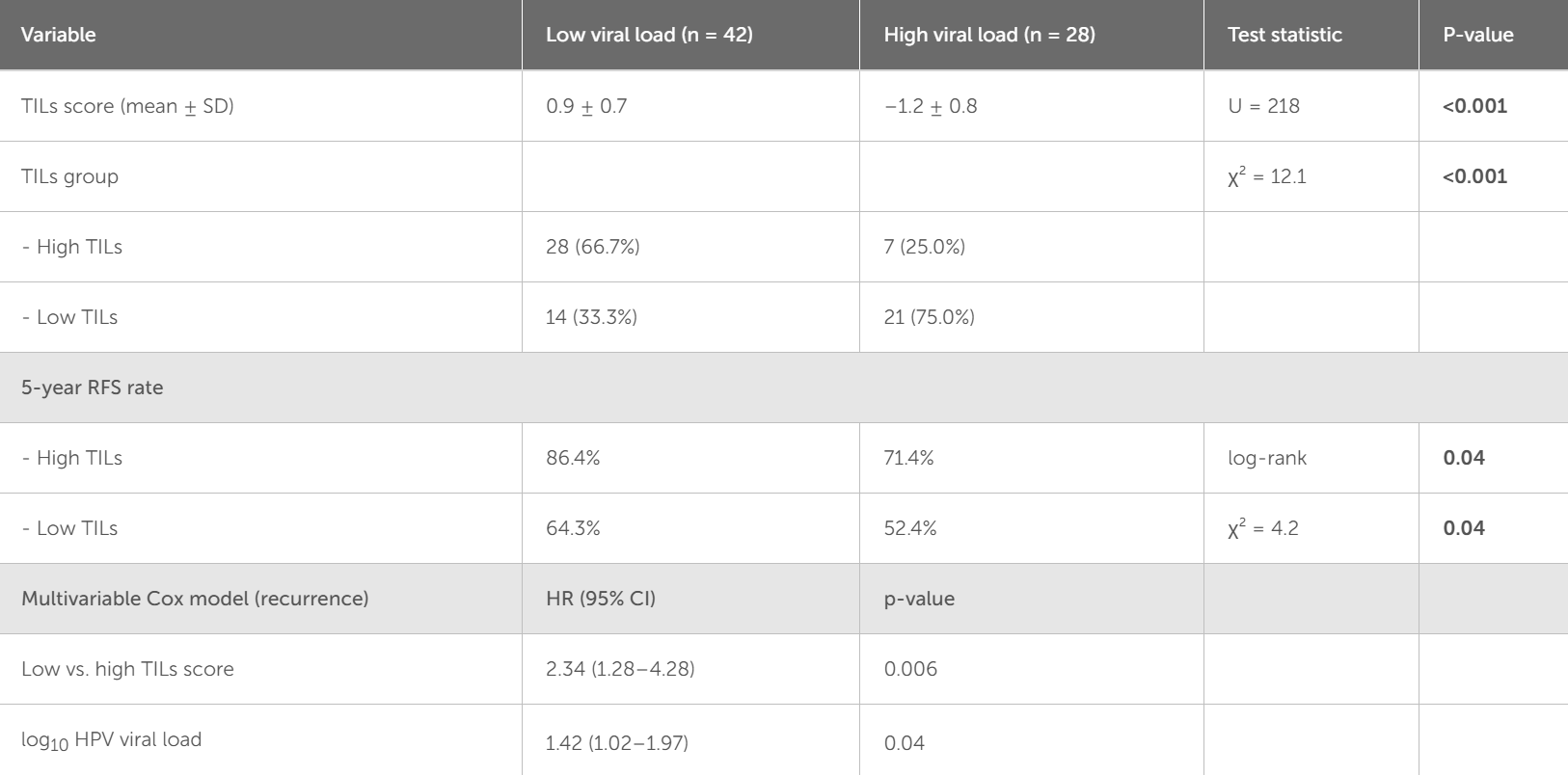
Table 3. Association of TILs score with HPV viral load and prognosis.
Because this was an observational retrospective study, these findings establish associations but do not demonstrate that higher viral load directly causes the observed immune changes.
4. Dynamic changes in HPV viral load and recurrence
Sixty-eight patients had at least two HPV viral load measurements.
The slow-decline/increase group, defined as a rate of change ≥ the median value of −0.05 log10/month, had a significantly higher recurrence rate than the rapid-decline group (32.4% vs. 8.8%, p = 0.02).
Recurrence rates were:
- Rapid-decline group: 8.8%
- Slow-decline/increase group: 32.4% (p = 0.02)
Multivariable logistic regression adjusted for baseline viral load and treatment modality showed an OR of 4.12 (95% CI 1.21–14.0, p = 0.02) for the slow-decline/increase group compared with the rapid-decline group.
This association remained significant after adjustment for baseline viral load and treatment modality.
The authors note that dynamic monitoring of HPV viral load may provide prognostic information, while also emphasizing that the dynamic-analysis sample was relatively small and requires prospective validation.
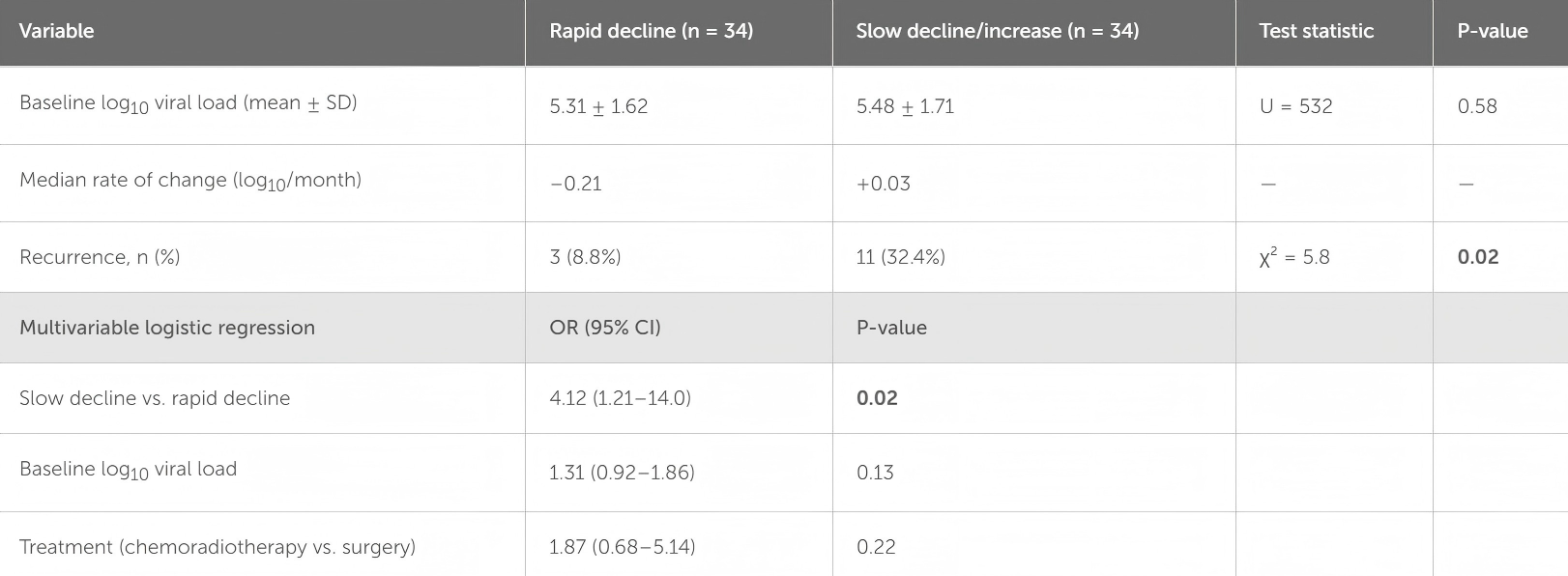
Table 4. Association between dynamic HPV viral load changes and recurrence.
What could quantitative HPV assessment add?
The study was designed to evaluate HPV viral load not only in relation to disease grade, but also in relation to recurrence, the tumor immune microenvironment, and post-treatment change over time.
Across these analyses, higher viral load was associated with higher disease grade and recurrence, while slower post-treatment decline or increasing viral load was associated with higher odds of recurrence.
For molecular diagnostics, these findings support continued investigation of quantitative and longitudinal HPV information as a potential complement to genotype results. They do not establish viral-load monitoring as a stand-alone clinical decision tool.
The study therefore raises three research questions for longitudinal HPV assessment:
- Which HPV genotype is present?
- What is the HPV viral load?
- How does the viral load change over time?
Further prospective validation and methodological standardization will be needed before quantitative HPV monitoring can be broadly incorporated into routine clinical management.
Important limitations
Several limitations should be acknowledged.
First, the retrospective design may introduce selection bias, and the availability of immune parameter data was limited to a subset of patients, reducing statistical power for these analyses.
Second, HPV viral load measurements were not standardized across laboratories, potentially contributing to measurement variability. Third, treatment heterogeneity was accounted for in multivariable models but could not be fully controlled given the observational nature of the study.
Fourth, the sample size for dynamic viral load analysis was relatively small, and these findings require prospective validation. Finally, sex hormone levels were measured only once and may not reflect long-term exposure.
From HPV detection to a more complete molecular picture
The authors conclude that high HPV viral load is an independent predictor of poor prognosis in cervical cancer and is associated with an immunosuppressive tumor microenvironment and increased proliferative activity.
They further propose that incorporating viral load assessment may improve risk stratification and that dynamic post-treatment monitoring may help assess therapeutic response and guide follow-up. These statements should be interpreted in the context of the study's retrospective design and the limitations described above.
For BioPerfectus, the study provides peer-reviewed evidence that the Human Papillomavirus Genotyping Real Time PCR Kit was used within a published research workflow examining HPV genotype, viral load, disease severity, immune features, and recurrence-related outcomes.
Reference
Guo Y, Liu Y, He Y, Zhang Y, Li L, Lu W, Zhang Z. HPV viral load predicts immune exhaustion and prognosis in cervical neoplasia. Frontiers in Immunology. 2026;17:1840435.
