For laboratories considering how to select a PCR machine, this article outlines practical selection criteria for current operations and future growth.
Polymerase chain reaction (PCR) supports molecular diagnostics, scientific research, and clinical testing by amplifying specific nucleic acid targets. Among its commonly used formats, real-time PCR detects fluorescence signals during each cycle, enabling qualitative or quantitative analysis.
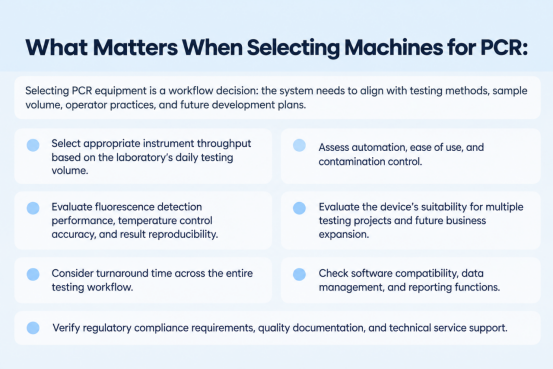
Seven Key Buying Criteria for PCR Equipment
| Selection criteria |
Key considerations |
Purchasing notes |
| Throughput and Workflow Capacity |
Batch size, runs per shift, peak demand |
Size for routine and peak loads; reserve controls and repeat capacity. |
| Accuracy, Sensitivity, and Reproducibility |
Fluorescence capture, thermal uniformity, detector performance |
Review assay-relevant evidence alongside instrument specifications. |
| Speed and Turnaround Time |
Ramp rate, protocol duration, setup and review |
Estimate the full sample-to-result workflow. |
| Automation, Ease of Use, and Contamination Control |
Sample tracking, training, separated work areas |
Confirm automated steps and unidirectional workflow practices. |
| Flexibility and Future Expansion |
Independent blocks, assays, channels, software |
Check concurrent protocols and the requirements for expansion. |
| Software, Data Management, and Reporting |
Raw data, analysis settings, access, export formats |
Demonstrate data review, export, retention, and audit functions. |
| Compliance, Quality, and Service Support |
Intended use, local status, calibration, repairs |
Check training, warranty, and service response. |
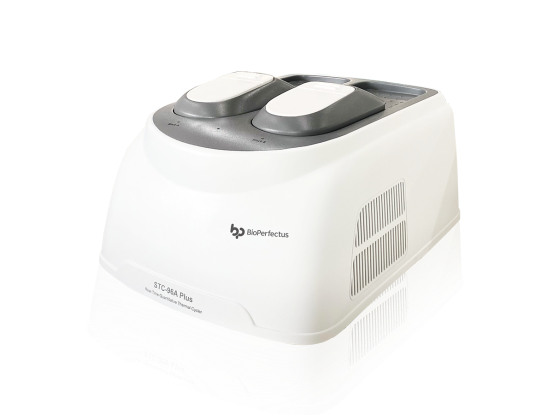 BioPerfectus STC-96A PLUS Real-Time PCR System
1. Throughput and Workflow Capacity
Why it matters: Well count alone does not define shift capacity. Batch size, controls, repeats, extraction capacity, and staffing affect usable throughput.
What to look for: Map routine and peak samples across extraction, PCR setup, amplification, and review. Reserve capacity for controls and repeat runs.
Purchasing tips: Model weekly demand and ask vendors to walk through a representative PCR lab test from receipt to result, including hands-on and queue time. Record typical and peak batches by shift to size sample preparation and amplification together.
2. Accuracy, Sensitivity, and Reproducibility
Why it matters: qPCR variation can arise from temperature accuracy, well-to-well uniformity, fluorescence acquisition, optics, and analysis settings. MIQE 2.0 identifies these as relevant technical variables.
What to look for: Match excitation and detection channels to assay dyes or probes. Review thermal specifications and repeatability evidence for the relevant sample and reagent workflow. For multiplex assays, check signal separation for planned dye combinations.
Purchasing tips: Verify candidate PCR equipment with the laboratory’s own assays and controls. Interpret detection claims within the complete validated method.
3. Speed and Turnaround Time
Why it matters: Total turnaround includes sample preparation, reaction setup, loading, result review, and repeats as well as cycling.
What to look for: Compare assay-compatible duration, maximum ramp rate, batch size, and review time. Account for urgent samples that interrupt scheduled work.
Purchasing tips: Time a representative workflow from sample receipt to approved result when sizing a purchase of real-time PCR equipment. Record setup delays and repeat runs alongside nominal run time.
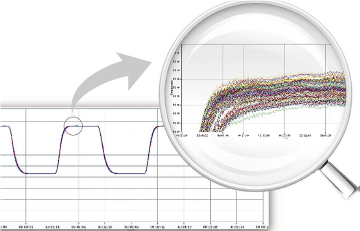
Figure 1. An enlarged section of the temperature curve shows that the temperature variation across all 96 wells is within 0.05°C.
4. Automation, Ease of Use, and Contamination Control
Why it matters: Automation can standardize repetitive pipetting and reduce manual handoffs. Room layout, cleaning, operator practice, and unidirectional workflow also shape contamination control.
What to look for: Identify automated steps, sample tracking, manual transfers, training needs, and cleaning access. Check compatibility with separated pre- and post-amplification areas.
Purchasing tips: Map the instrument into the room and staffing plan. Ask intended users to test routine loading and an exception, such as a failed control, during a demonstration. Include consumable handling and recovery after a stop.
5. Flexibility for Multiple Projects and Future Expansion
Why it matters: Different projects can require distinct protocols, priorities, and sample volumes. Independent reaction blocks can support concurrent work when the schedule calls for it.
What to look for: Check independently controlled blocks, assay programs, fluorescence channels, consumables, and limits on concurrent runs. Multiple channels support multiplex targets within an assay; independent blocks permit distinct programs.
Purchasing tips: Compare planned assays and batch sizes. The STC-96A PLUS Real-Time PCR System has two independently controlled 48-reaction blocks; the STC-96A Real-Time PCR System has a single-block configuration.
6. Software, Data Management, and Reporting
Why it matters: qPCR data need analysis, review, storage, and sometimes transfer to other systems. MIQE 2.0 emphasizes access to raw fluorescence and clear analysis details for re-evaluation and reproducibility.
What to look for: Review analysis methods, export formats, user permissions, audit trails, backups, and relevant laboratory information system compatibility. Check software update management. Confirm how baseline correction, thresholds, and Cq calculations are recorded.
Purchasing tips: Ask for a demonstration of raw-data export, curve review, result interpretation, and prior-run retrieval. Confirm software and computer requirements before installation.
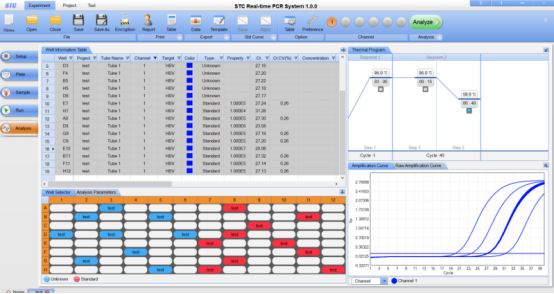
Figure 2. Multi-tasking software interface (analysis screen).
7. Compliance, Quality, and Service Support
Why it matters: Clinical laboratories work within quality and competency frameworks. Intended use, documentation, maintenance, and local registration affect the instrument’s fit. ISO 15189:2022 sets requirements for medical laboratory quality and competence.
What to look for: Confirm local regulatory status, installation and calibration documents, training, warranty, and technical support.
Purchasing tips: Ask lab equipment manufacturers for written service terms covering response times, maintenance, spare parts, and escalation.
STC-96A or STC-96A PLUS: Which Real-Time PCR System Fits Your Lab?
Both systems share 96-well capacity, up to 4.0°C/s ramp rate, 0.1°C temperature accuracy/uniformity, and multi-channel fluorescence detection. Confirm compatibility and performance for the intended assay and use case.
Supporting Real-Time PCR Solution
BioPerfectus also offers solutions covering nucleic acid extraction, PCR testing, and result interpretation to support the workflow needs of different laboratories.
» View BioPerfectus Total PCR Solution
BioPerfectus develops in vitro diagnostic products and molecular testing workflows, with capabilities spanning reagents, instruments, automation, and technical services. BioPerfectus’s portfolio includes real-time PCR systems, along with supporting nucleic acid extraction and PCR setup solutions. Laboratories can evaluate a standalone quantitative PCR instrument or a more complete workflow based on the assay requirements and operational readiness.
Contact BioPerfectus now for product specifications, service details, and a quotation.
