PCR and NGS are two foundational molecular testing technologies in today's clinical and research laboratories. While both analyze nucleic acids, they differ significantly in target scope, throughput, turnaround time, and cost structure. PCR is well suited to rapid detection of known targets, while NGS can provide broad genomic profiling or targeted multi-gene analysis in a single run. The two technologies are not interchangeable substitutes. Instead, they serve distinct and often complementary roles.
So when comparing PCR vs NGS, how can laboratories determine which fits a given application?
PCR vs NGS: Core Fundamentals Comparison
Table 1. Technology Overview
| Dimension |
PCR |
NGS |
| Full name |
Polymerase Chain Reaction |
Next-Generation Sequencing |
| Core principle |
Primer-directed amplification of specific nucleic acid targets through thermal cycling |
Massively parallel sequencing of DNA or RNA-derived library fragments |
| Target scope |
Predefined targets; single targets or focused panels |
Targeted panels, exomes, transcriptomes, metagenomes, or whole genomes |
| Typical applications |
Pathogen detection, genotyping, and gene expression analysis |
Tumor profiling, genomic testing, pathogen genomics, metagenomics, and variant discovery |
| Throughput |
Low to moderate |
High |
| Turnaround time |
Typically hours |
Typically days, including library preparation and analysis |
| Data complexity |
Relatively simple; amplification curves, Ct values, or melt curves |
More complex; sequence data requiring bioinformatics analysis |
| Laboratory infrastructure |
PCR system, extraction workflow, and basic analysis software |
Library preparation equipment, sequencer access, computing, data storage, and bioinformatics support |
| Cost considerations |
Generally lower for focused testing |
Generally higher, with greater equipment and data-analysis requirements |
| Best-fit scenarios |
Routine testing of known targets and targeted screening |
Broad profiling, multi-target analysis, and detection of variants within the validated assay scope |
What Is a PCR Test?
A PCR test uses the polymerase chain reaction to amplify specific DNA sequences, making them detectable even from minimal sample input. Originally described by Kary Mullis in the 1980s, PCR technology has evolved through several key variants:
- Conventional PCR: Amplifies DNA, with results visualized by gel electrophoresis.
- RT-PCR (Reverse Transcription PCR): Converts RNA to cDNA before amplification, enabling detection of RNA viruses and gene transcripts.
- qPCR (Quantitative/Real-Time PCR): Monitors amplification in real time using fluorescent probes, allowing quantification of target nucleic acids.
Today, qPCR-based PCR systems are widely used in infectious disease diagnostics, genetic mutation screening, food safety testing, and environmental monitoring.
Principles and Workflow
A standard PCR workflow proceeds through nucleic acid extraction, reaction setup (combining template, primers, polymerase, and dNTPs), thermal cycling (denaturation, annealing, extension), and signal detection via fluorescence (qPCR) or gel electrophoresis.
Key Features, Advantages, and Limitations
Advantages:
- Rapid turnaround
- High sensitivity and specificity for known targets
- Relatively low equipment and reagent costs
- Simple data interpretation
Limitations:
- Restricted to predefined targets; unable to detect unknown sequences
- Limited multiplexing capacity
- Primer design errors can lead to false negatives
What Is an NGS Test?
An NGS test, or next-generation sequencing test, refers to the use of massively parallel sequencing technology to read millions of DNA or RNA fragments simultaneously. Unlike traditional Sanger sequencing, which processes one fragment at a time, NGS generates large volumes of sequence data in a single run, making it suitable for whole-genome, exome, or targeted panel analysis.
NGS is applied across oncology (tumor mutation profiling), reproductive health (non-invasive prenatal testing), infectious disease surveillance (pathogen whole-genome sequencing), and pharmacogenomics.
Principles and Workflow
The NGS workflow covers sample preparation and nucleic acid extraction, library preparation (fragmentation, adapter ligation, amplification), sequencing on next-generation sequencing equipment, and bioinformatics analysis (alignment, variant calling, interpretation).
Key Features, Advantages, and Limitations
Advantages:
- Broad detection of known and potentially unanticipated variants within the validated assay scope
- High multiplexing: hundreds to thousands of targets per run
- Comprehensive data output supporting diverse downstream analyses
Limitations:
- Longer turnaround time (including data analysis)
- Significant infrastructure requirements (sequencing equipment, computing, bioinformatics expertise)
- Higher per-run cost and more complex quality control
PCR vs NGS: How to Choose
Table 2. PCR vs NGS: Advantages and Limitations at a Glance
| Factor |
PCR |
NGS |
| Speed |
Results in hours |
Typically days, including library preparation and analysis |
| Sensitivity |
High for known targets |
High; detection of low-frequency variants depends on assay design and sequencing depth |
| Target range |
Narrow; predefined targets only |
Broad; targeted panels, exomes, or genome-wide analysis |
| Multiplexing |
Limited |
Extensive; hundreds to thousands of targets |
| Cost per test |
Lower for focused testing |
Higher |
| Capital investment |
Moderate |
Substantial |
| Data interpretation |
Straightforward |
More complex |
| Ideal for |
Routine diagnostics and rapid screening of known targets |
Discovery, comprehensive profiling, and complex cases |
Choosing Between NGS and qPCR: Key Factors
When evaluating PCR vs NGS for a specific application, consider:
- Testing objective: For well-defined targets, qPCR delivers results with speed and precision. For simultaneous multi-gene analysis or broader characterization of variants within a validated assay scope, NGS may be appropriate.
- Throughput: High-volume single-target testing favors qPCR workflows. Multi-target profiling per sample benefits from NGS multiplexing capacity.
- Turnaround time: PCR provides same-day results for time-critical decisions. NGS suits settings where a 1–3 day window is acceptable.
- Budget and infrastructure: PCR systems require less capital and simpler infrastructure. NGS demands sequencing equipment, computing resources, and bioinformatics expertise.
- Data needs: For qualitative or quantitative answers, PCR is sufficient. For variant discovery or large-scale genomic profiling, NGS is preferred.
In practice, many laboratories use both technologies. PCR handles routine, high-volume diagnostic testing, while NGS addresses complex cases requiring broad genomic insight.
BioPerfectus Solutions for PCR and NGS Workflows
For laboratories looking to build or upgrade molecular testing capabilities, BioPerfectus offers products that support both PCR and NGS pre-sequencing workflows.
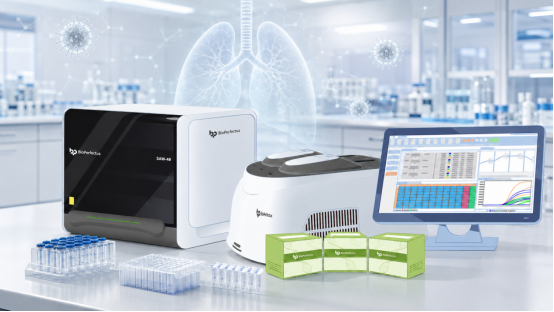
PCR Workflow Solutions for Targeted Testing
BioPerfectus provides an integrated PCR workflow covering nucleic acid extraction, reaction setup, and amplification:
- Nucleic acid extraction systems (SSNP series, SMPE-960): Automated magnetic-bead-based extraction platforms designed to process 1–96 samples per run, helping reduce hands-on time and cross-contamination risk.
- Real-time PCR systems (STC-96A, STC-96A PLUS): 96-well fluorescence-based qPCR instruments with thermal ramp rates up to 4.0 °C/sec and temperature uniformity within ±0.1 °C.
- Automated workstations (SAW-48, SAW-96): Walk-away systems that integrate sample loading, nucleic acid purification, and PCR plate setup in a single closed platform. The SAW-96 can process up to 96 samples in approximately 70 minutes.
- PCR reagent kits: A broad menu of qPCR assay kits covering respiratory pathogens, sexually transmitted infections, HPV screening, and other infectious disease targets.
NGS Workflow Solutions for Pre-Sequencing Preparation
BioPerfectus NGS-related products focus on the critical steps before sequencing:
- Automated library preparation system (SSP-GL01A): An open-system platform that automates RNA reverse transcription, enzymatic fragmentation, PCR amplification, and purification. It supports 1–32 samples per run and is compatible with library preparation kits from multiple manufacturers.
- Fluorometer (FD96): A high-sensitivity device for absolute quantification of DNA/RNA libraries, supporting accurate concentration measurement before sequencer loading.
- Nucleic acid extraction kits: Magnetic-bead-based and spin-column kits for diverse sample types (viral DNA/RNA, whole blood, FFPE tissue, bacteria), which serve as upstream inputs for both PCR and NGS library preparation.
Conclusion
The comparison of PCR vs NGS is not about selecting one technology over the other. Each serves a distinct role defined by testing targets, throughput needs, turnaround time, cost constraints, and laboratory infrastructure. PCR remains widely used for targeted, time-sensitive diagnostic testing. NGS is commonly used for comprehensive genomic profiling and broader variant analysis.
Laboratories benefit from evaluating both options against specific clinical and operational needs.
References:
Mullis K. B. (1990). The unusual origin of the polymerase chain reaction. Scientific American, 262(4), 56–65. https://doi.org/10.1038/scientificamerican0490-56
Goodwin, S., McPherson, J. D., & McCombie, W. R. (2016). Coming of age: ten years of next-generation sequencing technologies. Nature reviews. Genetics, 17(6), 333–351. https://doi.org/10.1038/nrg.2016.49
CD Genomics. Next Generation Sequencing (NGS) vs. PCR. https://www.cd-genomics.com/resource-ngs-vs-pcr.html
